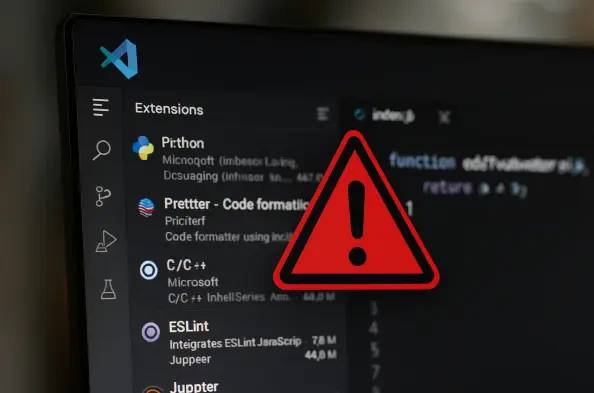
The very tools designed to streamline software development and enhance productivity have become a new battleground for cybercriminals, with the vast ecosystem of extensions for popular editors like Visual Studio Code emerging as a prime attack vector. A recent cybersecurity report has brought to light a targeted malware campaign that leverages the trust developers place in their integrated development environments. This campaign specifically victimizes software engineers by deploying potent information-stealing malware known as Evelyn Stealer. The operation underscores a broader, more alarming trend: the strategic operationalization of attacks against the developer community. These professionals are increasingly viewed as high-value targets due to their privileged access to production systems, cloud infrastructure, and the core intellectual property of their organizations. An attack that successfully compromises a single developer can serve as a critical entry point, creating a domino effect that compromises entire organizational networks and sensitive data repositories, making this a threat with far-reaching implications.
The Anatomy of a Sophisticated Attack
The initial phase of this attack hinges on social engineering, cleverly tricking developers into installing seemingly benign VS Code extensions from the marketplace. Researchers have identified three specific extensions that served as the primary infection vectors: BigBlack.bitcoin-black, BigBlack.codo-ai, and BigBlack.mrbigblacktheme. Disguised as themes or productivity tools, these extensions contain a hidden malicious payload. Once an unsuspecting developer installs one, it silently drops a downloader in the form of a Dynamic Link Library (DLL) file named “Lightshot.dll” onto the system. This downloader is the first link in a multi-stage infection chain. It immediately executes a concealed PowerShell command, a scripting language commonly used for system administration, to connect to a remote command-and-control server. From this server, it retrieves the second-stage payload, an executable file named “runtime.exe,” effectively establishing a persistent foothold on the compromised machine and preparing for the deployment of the primary malware.
To remain undetected by security software and system administrators, the malware employs an advanced fileless execution technique that bypasses traditional signature-based detection methods. Instead of writing the main payload directly to the disk where it could be scanned and identified, “runtime.exe” decrypts the core Evelyn Stealer malware and injects it directly into the memory space of a legitimate, running Windows process called “grpconv.exe.” By hijacking a native system process, the malware can operate under the guise of legitimate activity, making its presence incredibly difficult to spot. This sophisticated method is further bolstered by anti-analysis features; the malware is engineered to detect when it is running within a virtual machine or sandbox environment, which are common tools used by cybersecurity researchers. It also creates a mutex object, a programming mechanism that ensures only a single instance of the malware is active on the system at any time, preventing conflicts and further reducing its digital footprint.
Evelyn Stealer’s Covert Data Heist
Once active on a developer’s machine, Evelyn Stealer begins a comprehensive data-harvesting operation, systematically collecting a wide array of sensitive information. Its primary function is to act as an information stealer, and its target list is extensive. The malware is programmed to capture the entire contents of the system’s clipboard, which can contain passwords, API keys, or private code snippets. It also inventories all installed applications, scrapes cryptocurrency wallet data, and logs all running processes. Beyond system data, it captures screenshots of the desktop, extracts stored Wi-Fi credentials, and gathers detailed system hardware and software information. The malware specifically targets popular web browsers like Google Chrome and Microsoft Edge to exfiltrate stored credentials, session cookies, and browsing history. All of this stolen data is meticulously consolidated into a single compressed ZIP file, which is then exfiltrated over the File Transfer Protocol (FTP) to the attacker’s remote server for analysis and exploitation.
The malware’s browser-hijacking capabilities are particularly insidious, designed to extract information without alerting the user. To access stored credentials and cookies, Evelyn Stealer first forcefully terminates any active browser processes. It then relaunches the browsers silently in the background using a specific set of command-line flags that render the entire operation invisible. These flags execute the browser in headless mode, disable the security sandbox and GPU acceleration to prevent interference, and instruct it to ignore security-related extensions. Crucially, the browser window is positioned off-screen, ensuring that the user sees no visual indication that their browser has been reopened and is being manipulated. This covert process allows the malware to access and exfiltrate sensitive data from the browser’s local storage with a high probability of success, highlighting the meticulous planning behind the campaign and the significant risk it poses to both individual developers and their employers.
A Reassessment of Developer Security Posture
The emergence of this campaign served as a stark reminder of the evolving threat landscape, where the software supply chain and development environments have become critical targets. The incident underscored that even the most trusted and widely used tools could be weaponized, turning a developer’s workspace into a gateway for malicious actors. It became evident that relying solely on the reputation of a platform like the VS Code Marketplace was insufficient for ensuring security. The ease with which malicious extensions were published and downloaded highlighted a need for more rigorous vetting processes and a greater emphasis on developer-centric security education. Organizations were prompted to re-evaluate their security policies, recognizing that the privileged access granted to their engineering teams required a corresponding level of protection and oversight. The attack demonstrated that a compromised developer account was not just an individual security failure but a potential enterprise-wide catastrophe, demanding a strategic shift in how developer toolchains are secured and monitored.