The microscopic architecture of modern graphics processing units now serves as a clandestine gateway for sophisticated attackers to dismantle the security boundaries of an entire operating system. While the tech industry has historically prioritized patching software vulnerabilities, researchers at the University of Toronto have demonstrated that the very hardware powering the AI revolution is fundamentally susceptible to manipulation. Through a method known as GPUBreach, silicon memory once considered a secure foundation was transformed into a tool for total system subversion.
The Silent Corruption of High-Performance Silicon
The persistent assumption that hardware provides an immutable sandbox for software has been shattered by recent findings regarding Nvidia hardware. Researchers successfully induced microscopic electrical interference within GDDR6 memory, proving that physical proximity between memory cells can be exploited to bypass logical security. This vulnerability allows an attacker to transition from simply degrading computational performance to seizing absolute control over the host environment.
Such hardware-level exploits represent a paradigm shift in cybersecurity because they target the physical properties of the chip itself. By manipulating electrical charges, an adversary can alter data without ever triggering traditional software-based alarms. This silent corruption bypasses the standard layers of the operating system, making it nearly impossible for conventional antivirus tools to detect the intrusion before the system is fully compromised.
Why the Shift from CPU to GPU Vulnerabilities Matters
As massive workloads for artificial intelligence and high-performance computing migrate from traditional processors to graphics units, the primary attack surface for malicious actors has shifted accordingly. Modern GPUs are no longer isolated components for rendering graphics; they function as the primary engines of the data center. Consequently, a vulnerability in these units threatens the very heart of current technological infrastructure.
The emergence of GPUBreach signifies that the Rowhammer phenomenon, once viewed as a localized issue for traditional system memory, has evolved into a cross-component threat. In the modern landscape from 2026 to 2028, where GPUs are frequently shared between multiple virtualized tenants in the cloud, this discovery proves that a single malicious user could theoretically shatter the isolation that protects sensitive data.
Deconstructing the GPUBreach Attack Mechanism
The evolution from previous studies, such as GPUHammer, to the more advanced GPUBreach marks a critical transition in exploit methodology. While earlier research focused on disrupting the accuracy of neural networks, this new attack targets the structural integrity of the memory management unit. It is no longer about causing a minor error; it is about rewriting the rules of the system.
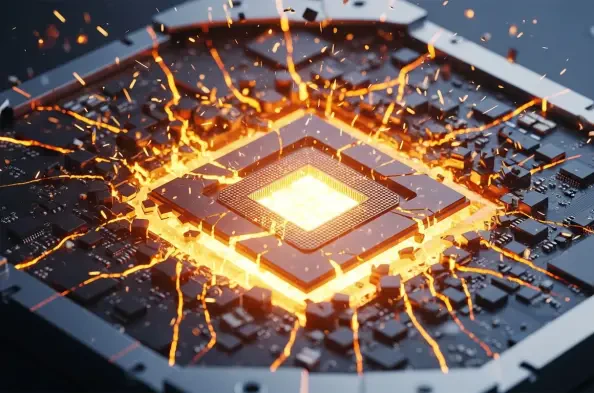
By “hammering” specific rows of GDDR6 memory, an attacker can trigger electromagnetic leakage that forces bits in adjacent rows to flip. The true danger manifests when these bit flips occur within the GPU page tables. By corrupting these maps, the attacker gains the ability to point the GPU toward restricted system memory, effectively granting them unauthorized read and write access to the entire machine.
The Path to Root: Combining Hardware Flaws with Driver Vulnerabilities
A hardware vulnerability often acts as an entry point, but GPUBreach achieves its full potential by chaining memory corruption with flaws in proprietary drivers. In high-stakes cloud scenarios, where users typically operate with restricted permissions, this combination allows for rapid privilege escalation. By exploiting how the driver handles corrupted page tables, researchers successfully spawned a root shell from a low-privileged account.
This capability poses a staggering risk to multi-tenant cloud environments. An attacker on one virtual machine could potentially compromise the underlying physical server, gaining access to the data of every other customer sharing that hardware. The isolation between users, which is the cornerstone of cloud security, becomes a fragile illusion when the hardware itself can be coerced into betraying its users.
Assessing Defenses and Mitigation Strategies
Industry stakeholders have recognized that mitigating hardware-level exploits requires a complex, multi-layered defense strategy. While Error Correction Code memory is often touted as a primary solution, it proved insufficient against the multi-bit flips induced by GPUBreach. Standard protection mechanisms were designed to catch random environmental errors, not the intentional and coordinated patterns of a sophisticated digital assault.
The research community concluded that proactive security measures must extend beyond simple software updates. System administrators were encouraged to implement more aggressive memory refresh cycles and monitor for anomalous access patterns on the GPU. While these steps offered a temporary shield, the discovery highlighted an urgent need for redesigned hardware architectures that can withstand the physical realities of high-density silicon manipulation. Efforts were initiated to integrate more robust hardware-based isolation techniques to ensure that future systems remained resilient against such deep-seated vulnerabilities.