The dramatic reduction in the technical and financial barriers to entry has fundamentally redefined the cryptocurrency landscape as of early 2026. For much of the past decade, the act of securing a blockchain network through mining was a specialized endeavor that required a prohibitive combination of expensive hardware, deep technical mastery, and access to low-cost industrial electricity. However, the industry has now matured into a service-oriented era where the complex mechanics of transaction validation are largely hidden behind intuitive digital interfaces. This shift has successfully democratized the process, making participation possible for a global audience regardless of their technical background or geographic location. By moving away from the “hobbyist in a garage” model, the sector has embraced a more inclusive framework that prioritizes user experience and accessibility over the raw ownership of physical machinery.
The contemporary focus centers on the concept of “easier crypto access,” a movement driven by a collective transition toward the utilization of remote computing power. This evolution has expanded user interest well beyond the traditional confines of Bitcoin, as participants now actively seek ways to accumulate secondary assets and Layer-2 solutions like Arbitrum through simplified online dashboards and mobile applications. By prioritizing seamless user experiences over the operational burdens of industrial-scale hardware management, the market has successfully transformed mining from a niche technical pursuit into a mainstream digital activity. Today, the ability to contribute to network security and earn rewards is as simple as managing a social media profile or a digital banking app, reflecting a broader societal trend toward the “as-a-service” utility model that dominates the modern tech economy.
The Evolution of Mining Infrastructure
Transitioning From Hardware to Remote Services
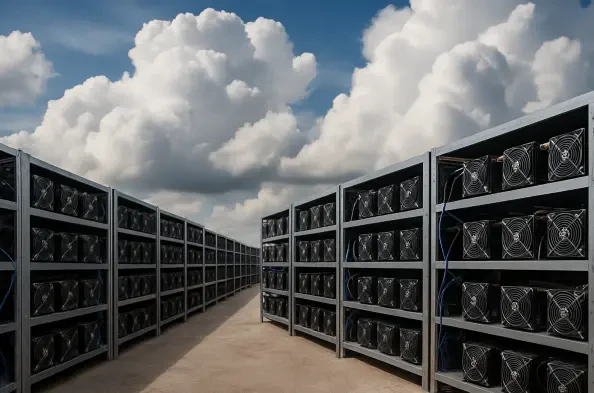
The shift from localized, physical mining rigs to distributed remote infrastructure represents the most significant structural change in the digital asset sector. Traditional mining is now largely viewed as an industrial endeavor, often deemed impractical for the average individual due to the excessive heat, disruptive noise, and constant maintenance required by high-performance application-specific integrated circuits. Cloud mining has effectively bridged this gap by allowing enthusiasts to lease hash power from professional data centers that handle the operational heavy lifting. This transition ensures that the physical complexities of cooling systems and firmware updates are managed by experts in specialized facilities, freeing the end-user to focus entirely on their digital asset strategy. Consequently, the localized mining rig has become a relic of a previous era, replaced by a streamlined, digital-first approach that thrives on professionalization.
This democratization of the mining process creates a “lower-friction” environment where participation is entirely scalable based on individual budgets and risk tolerances. By removing the necessity for massive upfront capital investment in physical equipment that depreciates rapidly, cloud-based models have invited a diverse range of participants to engage with the network’s consensus mechanism. This approach not only provides unprecedented convenience but also offers a level of flexibility that was previously unattainable when users were locked into specific hardware configurations. In 2026, the ability to toggle between different mining algorithms or scale hash power up and down with a few clicks has become the standard. This fluidity allows users to react to market volatility in real-time, ensuring that their participation remains efficient and aligned with the current economic climate without the burden of liquidating physical assets.
The Rise of Scalable Data Center Solutions
Modern cloud mining is built upon the foundation of massive, high-efficiency data centers located in regions with optimal climates and renewable energy sources. These facilities are designed to maximize output while minimizing the carbon footprint, a factor that has become increasingly important to the socially conscious investor of 2026. By centralizing the hardware, these providers can leverage economies of scale that are simply unavailable to individual home miners, resulting in lower operational costs per terahash. This systemic efficiency is passed down to the consumer in the form of more competitive contract pricing and higher potential yields. Moreover, the professional management of these facilities ensures near-constant uptime, protecting users from the downtime risks associated with residential power outages or hardware failures that once plagued the early mining community.
Beyond the logistical advantages, the shift toward professionalized remote infrastructure has facilitated a more transparent and audit-proof ecosystem. Leading providers in 2026 frequently offer live streams of their facilities or third-party audits of their hash power capacities to build trust with a sophisticated global clientele. This transparency is a direct response to the skepticism of the past, proving that the leased power is backed by real-world computing cycles. As these data centers continue to integrate advanced cooling technologies and custom-designed chips, the gap between industrial efficiency and individual capability continues to widen. This trajectory suggests that the future of blockchain security will remain firmly rooted in these centralized hubs of decentralized power, providing the backbone for a digital economy that is both accessible to the masses and robust enough to handle global transaction volumes.
Leading Platforms and Industry Innovations
Diversity in Service Models and Market Integration
Several prominent platforms have emerged as dominant leaders in 2026 by tailoring their offerings to meet the specific demands for transparency and low entry costs. BM Blockchain exemplifies the modern integration of artificial intelligence and scalable infrastructure, offering unique incentives such as signup bonuses to mitigate the initial risks for newcomers. This platform represents the “next phase” of the industry, where computing power is not just a tool for mining but a versatile resource for broader technological applications. By lowering the psychological and financial hurdles to entry, BM Blockchain has set a new standard for how service providers attract and retain users in a highly competitive market. Their focus on blending traditional blockchain features with advanced AI computing demonstrates a forward-thinking approach to the utility of digital infrastructure.
Meanwhile, NiceHash continues to serve as a vital cornerstone of the industry by operating as a high-liquidity marketplace rather than a direct service provider. It connects those who possess excess computing power with those looking to purchase it, ensuring a flexible and decentralized approach to hash power acquisition that adapts to market demand in real-time. This brokerage model is particularly attractive to users who value price discovery and the ability to switch between different mining pools instantly. By facilitating a peer-to-peer exchange of hash power, NiceHash maintains a level of market neutrality that appeals to both institutional buyers and individual sellers. This diversity in service models ensures that the 2026 mining landscape is not a monolith but a vibrant ecosystem where different strategies can coexist and thrive depending on the user’s specific goals and technical comfort levels.
Specialized Product Models and Mobile Integration
Specialized models provided by GoMining and ECOS have further refined the mining experience into a structured, product-like service that appeals to the modern consumer. GoMining has successfully linked digital participation directly to physical infrastructure through innovative tokenization, allowing users to hold a tangible connection to the mining process without the headaches of hardware management. On the other hand, ECOS utilizes a sophisticated contract-based system managed through a centralized service dashboard, providing a predictable environment for users to track their earnings and manage their accounts. These platforms have effectively commoditized mining, turning a complex technical process into a user-friendly financial product. This shift has been instrumental in attracting conservative participants who prefer structured investments over the volatility of traditional DIY mining.
The dominance of mobile technology has also birthed a new generation of “mobile-first” applications, with StormGain leading the charge in 2026. By integrating mining features directly into a sleek, user-friendly app environment, StormGain has successfully captured a demographic that prioritizes convenience and on-the-go account management. This approach reduces the technical requirements of mining to a few taps on a smartphone screen, making it possible to monitor hash rates and withdraw rewards while commuting or traveling. Furthermore, platforms like BitFuFu cater to the more analytical segment of the market by offering comparative marketplaces where various contracts can be evaluated based on duration, cost, and historical performance. This granular level of choice ensures that every type of participant, from the casual phone user to the data-driven strategist, has a dedicated pathway into the digital asset economy.
Defining Themes of the 2026 Market
Consumer Trends and the Mobile-First Mandate
The current mining environment is defined by an uncompromising “mobile-first” mandate, where the ability to monitor earnings in real-time via a smartphone is considered a baseline requirement. This trend toward portability is not merely about convenience; it reflects a fundamental change in how people interact with their digital wealth. In 2026, the “Best Bitcoin Mining App” is a primary search target for new users who expect their financial tools to be as accessible as their social media feeds. This demand has forced platforms to invest heavily in responsive design, biometric security, and push-notification systems that keep users informed of market shifts and payout statuses. As a result, the barrier between the user and the blockchain has become almost invisible, facilitating a continuous and passive engagement with the network that was previously impossible.
This push for portability is closely matched by an increasing desire for asset diversification, as users move beyond the “gold standard” of Bitcoin to explore various ecosystem-specific tokens. There is a notable rise in interest for Arbitrum and other Layer-2 solutions, as participants seek to capitalize on the growth of decentralized finance and smart contract platforms. Modern cloud mining services have responded by expanding their support to include a wider variety of assets, allowing users to build diversified portfolios of mined coins from a single interface. This broader understanding of the crypto ecosystem’s utility signifies that the average user in 2026 is more sophisticated and aware of the value propositions offered by different blockchain networks. The market has moved past the era of maximalism, embracing a multi-chain future where flexibility is the primary driver of user retention.
Transparency and the Incentivization Model
Transparency regarding physical data center locations and energy sources has become a critical metric for establishing trust in the 2026 cloud mining sector. Users now demand greater clarity and accountability from service providers, often requiring proof of hardware existence and verifiable uptime statistics before committing funds. This trend toward “infrastructure clarity” is a direct result of the market’s maturation, as participants become more discerning and wary of opaque business models. Leading platforms have embraced this by providing detailed reports, virtual tours of their facilities, and real-time data feeds of their environmental impact. This level of openness not only secures user confidence but also aligns the industry with global standards for corporate responsibility, ensuring that cloud mining is viewed as a legitimate and sustainable component of the broader financial system.
Furthermore, the industry has universally adopted an incentivization model to lower the psychological barriers for new participants who may still find the technical aspects of the crypto world intimidating. Signup bonuses, “free-entry” points, and educational rewards have become standard tools to attract and onboard users who are curious about mining but hesitant to make a large initial investment. These incentives serve as a low-risk gateway, allowing individuals to experience the mining process and see tangible results before committing significant capital. As the sector continues to evolve, the focus remains firmly on the “as-a-service” model, ensuring that the generation of digital assets is as seamless and rewarding as any other modern utility. This strategic shift toward user-centricity has successfully turned mining into a globally accessible phenomenon, paving the way for the next wave of mass adoption.
Actionable Strategies for the Modern Mining Era
The transition toward accessible cloud mining has established a new set of priorities for anyone looking to enter the digital asset space effectively. To navigate this landscape, participants should prioritize platforms that offer verifiable transparency regarding their physical infrastructure and energy usage, as these factors are the strongest indicators of long-term stability. It was common in previous years to focus solely on the highest projected returns, but the current market rewards those who seek out providers with proven uptime and clear regulatory compliance. Diversification remains a key strategy; rather than focusing exclusively on a single asset, users should leverage the flexibility of modern platforms to spread their hash power across multiple networks, including emerging Layer-2 solutions that offer high utility. This approach mitigates the risks associated with the volatility of any single coin while capturing the broader growth of the blockchain ecosystem.
Looking ahead, the integration of mining with other financial services—such as staking, lending, and automated trading—will likely become the new standard for comprehensive digital asset management. Users who engage with platforms offering these integrated suites will find themselves better positioned to maximize the utility of their mined assets. The shift to a “mobile-first” and “service-oriented” model is not just a temporary trend but a permanent transformation of the industry’s DNA. Therefore, staying informed about technological upgrades, such as the implementation of more efficient AI-driven mining algorithms, will be essential for maintaining a competitive edge. By treating cloud mining as a dynamic component of a broader financial strategy rather than a “set-and-forget” investment, participants can successfully harness the power of decentralized networks to build sustainable digital wealth in an increasingly accessible global economy.