Vernon Yai is a preeminent data protection expert whose career has been defined by a rigorous focus on privacy governance and the mitigation of systemic risks. As a thought leader in the industry, he has pioneered innovative detection and prevention techniques that allow enterprises to safeguard their most sensitive information even in the face of unprecedented disruptions. In an era where geopolitical volatility can manifest as physical threats to digital infrastructure, his expertise provides a critical roadmap for leaders navigating the intersection of cloud resilience and global instability.
The following discussion explores the critical themes of infrastructure vulnerability in conflict zones, the strategic selection of backup regions, and the debunking of the myth that cloud providers bear sole responsibility for disaster recovery. We also examine the shift toward multi-cloud architectures as a response to digital sovereignty and the evolving landscape of regional infrastructure resilience.
Physical threats like drone strikes can cause structural damage and trigger fire suppression systems that lead to significant water damage in data centers. How do you assess infrastructure vulnerability in conflict zones, and what specific steps should teams take to mitigate the risk of simultaneous power and hardware failure?
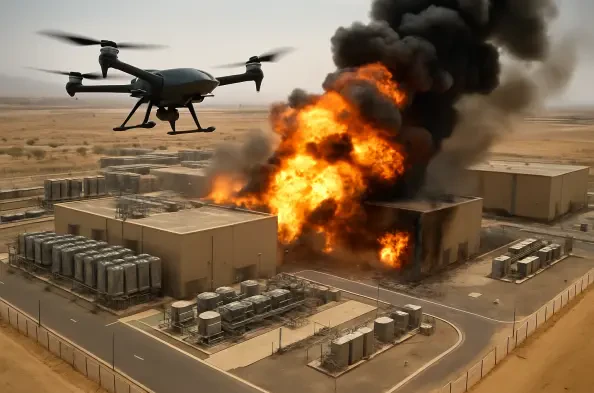
When assessing vulnerability in conflict zones, we have to look far beyond simple software uptime and consider the brutal reality of physical destruction. In recent events in Bahrain, we saw how a single strike doesn’t just cut power; it causes structural damage and triggers fire suppression systems that ruin hardware with water damage. To mitigate this, teams must move away from a single-facility mindset and treat their infrastructure as a sacrificial asset that can be replaced instantly. This involves maintaining real-time data replication to a secondary site at least several hundred miles away to ensure that a local power grid failure or physical strike doesn’t result in total data loss. Organizations must also perform “black start” drills where they simulate the complete loss of a primary facility, ensuring their failover protocols don’t rely on any local hardware surviving the event.
When regional disruptions occur, shifting critical applications to alternate geographical zones becomes a necessity. What criteria do you use to select these backup regions, and how can organizations automate the failover process to ensure data is not lost or corrupted during a sudden facility shutdown?
Selecting a backup region is no longer just about low latency; it is about geopolitical distance and environmental independence. For applications currently residing in the Middle East, such as those in the UAE or Bahrain, the criteria for a backup zone must include being outside the immediate conflict theater to ensure the “failover” isn’t heading toward the same threat. Automation is the only way to handle a sudden shutdown, and this is achieved through Infrastructure as Code (IaC) and automated DNS routing that can swing traffic to a new region in minutes. We emphasize the use of “Active-Active” configurations where data is written to two regions simultaneously, because if you wait for a strike to happen before you start moving data, it is already too late.
Many executives assume cloud providers are inherently resilient enough to make independent disaster recovery plans unnecessary. Why does this misconception persist among leadership, and what metrics or real-world scenarios do you use to convince stakeholders that redundancy must be managed by the customer?
The misconception persists because cloud marketing often emphasizes the “limitless” and “indestructible” nature of the cloud, leading CIOs to believe that the provider handles everything from the physical rack to the application layer. I point to the recent AWS disruptions where the provider explicitly told customers to rely on their own disaster recovery plans because the facilities were physically compromised. This is a stark wake-up call; when 2 data centers in the UAE are taken out of commission, the cloud provider’s global resilience doesn’t help your localized application. I use metrics like Recovery Time Objective (RTO) to show that without a customer-managed plan, “vaporized” data could lead to weeks of downtime, a risk that 75% of business leaders are now becoming increasingly concerned about.
Heightened geopolitical risks and digital sovereignty regulations are driving a shift toward multi-cloud strategies and localized data control. How do you balance the complexity of managing multiple providers with the need for redundancy, and what are the practical cost-benefit trade-offs of maintaining such a distributed architecture?
Balancing this complexity requires a shift toward “digital sovereignty,” where the organization maintains control over its assets regardless of which provider’s hardware they sit on. While more than 4 in 5 companies are now intentionally operating multiple clouds, the overhead is significant because you are essentially managing different security protocols and networking stacks. The cost-benefit trade-off is often seen as an insurance policy; while you may pay 30% more in operational overhead to maintain a multi-cloud footprint, it prevents the 100% loss of service during a regional crisis. For companies operating under strict local regulations, this distributed architecture is the only way to satisfy legal requirements while ensuring that a single provider’s regional outage doesn’t paralyze the entire enterprise.
What is your forecast for cloud infrastructure resilience in volatile regions?
I predict a move toward “de-regionalization,” where critical infrastructure is no longer concentrated in massive, vulnerable hubs within conflict-prone areas. We will see a surge in sovereign cloud solutions where data is not only stored locally to meet regulations but is mirrored in “dark sites” located in politically neutral zones. My forecast is that within the next three years, the “shared responsibility model” will become much more aggressive, with providers mandating that customers prove they have multi-region failover before allowing them to host high-impact workloads in volatile zones. Ultimately, resilience will be measured by how quickly a company can “disappear” from one region and “reappear” in another without a single byte of data being lost to physical destruction.