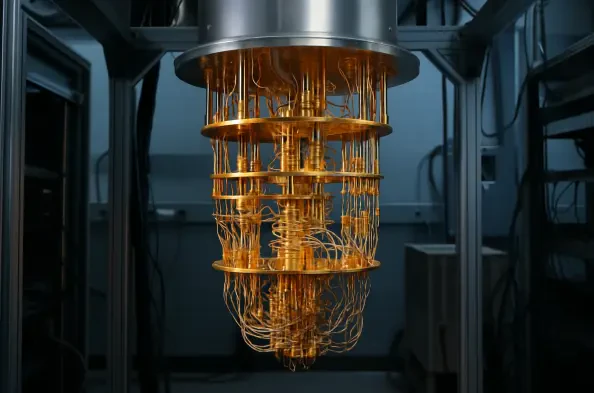
In the silent, high-stakes arms race of the digital age, a new and formidable threat is emerging on the horizon, one capable of shattering the very foundations of modern cryptography. The advent of quantum computing promises to unlock unprecedented computational power, but it also carries the potential to render secure communications and digital assets worldwide vulnerable to attack. Recognizing that this is no longer a distant, theoretical problem, the Ethereum Foundation has taken a monumental step forward, formally announcing a comprehensive initiative to future-proof its network. With the establishment of a dedicated post-quantum security team backed by significant initial funding, Ethereum is proactively building its defenses, signaling a strategic shift from theoretical concern to immediate, actionable priority and positioning itself at the vanguard of a global effort to secure the digital future.
The Strategic Response: Team, Funding, and Vision
Forging the Quantum Shield
The newly formed Post-Quantum (PQ) team represents a significant concentration of expertise, strategically assembled to tackle one of the most complex challenges facing the blockchain industry. Led by the renowned cryptographic engineer Thomas Coratger, the team also includes key contributors like Emile, whose work on the leanVM project is a foundational component of Ethereum’s broader post-quantum strategy. The leanVM, a minimalist zero-knowledge virtual machine, is crucial for building efficient and secure systems that can withstand the computational might of quantum machines. This initiative is not a sudden reaction but the culmination of years of methodical research and development. Justin Drake, a key researcher, emphasized the shift in urgency, noting that after years of “quiet R&D,” post-quantum security is now a top strategic priority. This heightened focus is a direct response to accelerating timelines in quantum development, transforming a long-term research project into a critical, time-sensitive mission to secure the network’s core infrastructure.
The conceptual groundwork for this major initiative was laid years ago, with origins tracing back to discussions at the 2019 StarkWare Sessions on “Et###.0 Quantum Security.” These early explorations evolved significantly, and by 2024, post-quantum considerations had become a central pillar of the “lean Ethereum” vision. This vision aims to create a more streamlined, efficient, and fundamentally secure version of the network, capable of scaling to meet global demand while remaining resilient against future threats. The formalization of the PQ team and its mission represents the operationalization of this long-term vision. It marks the point where extensive theoretical research transitions into practical engineering, with dedicated resources and clear objectives aimed at retrofitting the entire Ethereum protocol. This strategic pivot underscores a deep understanding that network security is not a static achievement but a continuous process of adaptation and pre-emptive fortification against the technological frontiers of tomorrow.
A Calculated Investment in Cryptographic Resilience
To accelerate this critical transition, the Ethereum Foundation is injecting substantial financial resources directly into the cryptographic research community. This support is structured through two distinct competitions, each offering a $1 million prize pool designed to attract top talent and spur innovation in key areas of post-quantum cryptography. The first, the Poseidon Prize, is focused on strengthening the Poseidon hash function. This function is a cornerstone of zero-knowledge systems like zk-SNARKs and zk-STARKs, which are becoming increasingly integral to Ethereum’s scalability and privacy solutions. Ensuring Poseidon is robust against all future attacks, including those from quantum computers, is essential for the long-term integrity of these advanced technologies. The prize incentivizes researchers to rigorously audit, analyze, and harden the algorithm, ensuring it remains a secure and efficient primitive for the post-quantum era.
The second competition, the Proximity Prize, is aimed at advancing research into hash-based cryptography. This field is widely regarded as one of the most mature and reliable avenues for developing quantum-resistant algorithms. Unlike some newer cryptographic approaches, hash-based signatures, such as Lamport signatures and the Merkle Signature Scheme, derive their security from the well-understood properties of cryptographic hash functions, which are believed to be resistant to quantum attacks. By “betting big on hash-based cryptography,” as Justin Drake described it, the Ethereum Foundation is choosing a path of proven security and stability. This strategic choice prioritizes battle-tested cryptographic foundations over more experimental alternatives, reflecting a conservative yet forward-thinking approach to safeguarding the network. The investment is not merely about finding a single solution but about fostering a resilient and diverse cryptographic ecosystem for Ethereum’s future.
From Theory to Practice: A Transparent, Collaborative Rollout
Active Development and Open Collaboration
This quantum-resistance initiative is far more than a statement of intent; it is a project already in active development with demonstrable progress. Multiple collaborative teams are now operating multi-client post-quantum development networks, a critical milestone that proves the functional interoperability of different software implementations. This collaborative ecosystem includes pioneer teams such as Zeam, Ream Labs, and PierTwo working in concert with established consensus client teams like Lighthouse, Grandine, and Prysm. This parallel development model ensures that the transition will be robust and well-tested across the diverse client software that constitutes the Ethereum network. The synergy between these groups is crucial for identifying and resolving compatibility issues early in the development cycle, preventing fragmentation and ensuring a smooth, unified upgrade for the entire network. This hands-on, multi-client approach de-risks the transition significantly.
To maintain momentum and ensure seamless integration across these disparate teams, weekly interoperability sessions are being coordinated by Will Corcoran. These regular meetings serve as a vital forum for developers to synchronize their efforts, troubleshoot technical hurdles, and maintain a consistent implementation of the new cryptographic standards. Furthermore, to deepen the engagement of the wider developer community, Antonio Sanso is set to launch bi-weekly sessions dedicated specifically to post-quantum transactions. These sessions will be open to all core developers, fostering an environment of open collaboration and knowledge sharing. By making the development process highly collaborative and transparent, the Ethereum Foundation is not only leveraging the collective expertise of its vast community but also building consensus and ensuring that the final implementation is as resilient and well-vetted as possible before it is deployed on the mainnet.
A Public Roadmap to a Secure Future
A central tenet of this complex, multi-year transition is a commitment to radical transparency. The Ethereum Foundation plans to publish a comprehensive public roadmap on a dedicated website, pq.ethereum.org, which will serve as the definitive source of information for the entire community. This roadmap will outline key milestones, technical specifications, and expected timelines, providing all stakeholders, from application developers to end-users and investors, with a clear view of the path forward. This open approach is designed to demystify the process, manage expectations, and allow the broader ecosystem to prepare for the upcoming changes in a coordinated manner. The ultimate objective is both ambitious and uncompromising: to execute a complete network migration to quantum-resistant standards with zero loss of user funds and zero network downtime. Achieving this goal requires meticulous planning, rigorous testing, and clear, consistent communication.
The stakes of this transition are immense, as it involves upgrading the cryptographic primitives that secure billions of dollars in digital assets. The process will likely involve a carefully orchestrated series of network upgrades, culminating in a final hard fork that activates the new quantum-resistant algorithms. One of the most critical phases will be the migration of user funds. At some point, ETH holders will be required to move their assets from existing addresses, secured by elliptic curve cryptography, to new addresses secured by post-quantum algorithms. The success of this migration will depend heavily on user education and the development of intuitive, secure tools. By establishing a public-facing portal and maintaining an open dialogue, the Foundation aims to guide the community through this process, ensuring that every user understands the steps needed to protect their assets and participate in securing the future of the Ethereum network.
The Looming Threat and Broader Implications
The Inevitable Quantum Horizon
The accelerated push toward post-quantum security is fueled by the growing consensus that the threat is moving rapidly from a distant, academic possibility to a tangible and foreseeable risk. As far back as November 2025, Ethereum co-founder Vitalik Buterin warned that the elliptic curve cryptography securing the network could become vulnerable as early as 2028. This sentiment is now echoed by experts across the fields of cryptography and quantum physics, who estimate that a quantum computer capable of breaking current encryption standards like ECDSA—used by both Bitcoin and Ethereum—will likely emerge within the next 5 to 15 years. The primary danger stems from Shor’s algorithm, a quantum algorithm that can efficiently factor large numbers, allowing an attacker to derive a private key from its public key with alarming speed. This vulnerability is so widely acknowledged that even traditional financial giants like BlackRock have begun citing the quantum threat in their Bitcoin ETF filings, signaling that institutional awareness is reaching a critical mass.
An even more immediate and insidious danger is the “harvest now, decrypt later” attack strategy. This involves malicious actors collecting and storing vast amounts of currently encrypted data—including blockchain transactions, financial records, and private communications—with the intention of decrypting it once a sufficiently powerful quantum computer becomes available. This means that sensitive data and high-value transactions from today could be retroactively compromised in the future. The mere existence of this strategy makes the need for a quantum-resistant transition urgent even before “Q-Day”—the day a cryptographically relevant quantum computer is publicly announced. Every day that passes with current encryption standards is another day that potentially vulnerable data is being recorded on an immutable ledger, waiting for a future breakthrough to unlock it. This reality transforms the post-quantum upgrade from a preventative measure into a time-sensitive race against both present-day data harvesters and future technological advancements.
A Competitive Edge in a New Era
This strategic pivot does more than just defend against a future threat; it positions Ethereum to gain a significant competitive advantage in the next era of digital finance. Pantera Capital’s Franklin Bi has suggested that traditional financial institutions on Wall Street will face immense challenges in transitioning their fragmented and often archaic legacy systems to post-quantum cryptography. Their adaptation is predicted to be slow, costly, and fraught with operational risk. In stark contrast, blockchains like Ethereum possess a unique, inherent advantage: the ability to coordinate complex, system-wide updates on a global scale through established governance and hard fork mechanisms. This agility could allow blockchains to become “post-quantum safe havens for data and assets” long before traditional systems can catch up, providing a secure alternative for institutional and retail capital while the legacy financial world remains vulnerable for an extended period.
This proactive stance is also fostering broader industry collaboration, creating a united front against the quantum threat. Coinbase, a major digital asset exchange, recently formed a quantum computing advisory board, and the Ethereum Foundation is now an active participant. This coordination among key industry leaders demonstrates a growing collective awareness and a shared commitment to addressing the challenge collaboratively rather than in silos. Beyond the core protocol, the Decentralized Physical Infrastructure Networks (DePIN) sector is also emerging as a critical player. Pioneering projects like Naoris Protocol are noteworthy for their native post-quantum approach. Unlike blockchains that must migrate to new standards, Naoris was designed from the ground up incorporating Dilithium-5 cryptography, a standard already approved by the National Institute of Standards and Technology (NIST). Its testnet has already processed over 105 million post-quantum transactions since January 2025, showcasing the viability and performance of these next-generation security standards in a live environment.
A Coordinated Path to a Resilient Future
For the millions of investors and users who rely on the Ethereum network, the Foundation’s decisive action provided a profoundly positive signal about the ecosystem’s long-term vision and resilience. It demonstrated a culture of proactive foresight, tackling future threats head-on rather than waiting for a crisis to force a reactive response. The allocation of significant financial and human resources underscored a concrete, unwavering commitment to safeguarding the network for decades to come. The multi-year transition process, while complex, was laid out with a clear-eyed understanding of the stakes involved, prioritizing the security of user assets above all else. As the project moved from research into active development, it became clear that this was not merely a theoretical exercise but a meticulously planned engineering feat aimed at reinforcing the very cryptographic bedrock of the decentralized economy. The collaboration across client teams and the open invitation for community involvement ensured the final solution was robust, thoroughly vetted, and ready for the quantum age.