The architectural foundation of the modern digital world has shifted from simple data storage to a high-velocity engine that powers every interaction within the global economy. This transformation is not merely a quantitative increase in server racks or fiber optics but a fundamental qualitative change in how computing resources are orchestrated and consumed. As the primary delivery mechanism for enterprise intelligence, cloud infrastructure has evolved into a dense network of hyperscale environments that prioritize raw computational throughput over traditional storage. This shift serves as the backbone for a new breed of services that demand unprecedented levels of performance, making the cloud the indispensable staging ground for the next decade of technological progress.
Introduction to Modern Cloud Architecture
The current technological landscape is defined by the transition from passive resource hosting to an active, intelligent ecosystem that integrates compute, networking, and security into a singular fabric. Modern cloud architecture relies on decentralized nodes that minimize latency by bringing processing power closer to the end user, while centralized hyperscale hubs handle the heavy lifting of large-scale data processing. This dual approach allows for a flexible environment where organizations can scale their operations almost instantly without the friction of physical hardware procurement.
Relevance in the broader market cannot be overstated, as the cloud now serves as the primary gateway for digital transformation across every sector. By abstracting the complexities of hardware management, providers have enabled a shift toward serverless computing and microservices, which allow developers to focus on functional logic rather than infrastructure maintenance. This evolution has solidified the cloud’s position not just as a tool for storage, but as the central nervous system of the enterprise, facilitating the movement and analysis of data at a scale previously thought impossible.
The Foundations of AI-Driven Cloud Services
Hyperscale Compute: Financial Trajectory
The current market is witnessing a staggering surge in capital expenditure, with the industry’s heaviest hitters projected to invest over $500 billion into infrastructure during the current cycle. This financial commitment is driven by the need for hyperscale environments that can support the massive data throughput required by modern enterprise workloads. These facilities are no longer generic data centers; they are highly optimized environments designed to handle millions of simultaneous operations across globally distributed clusters. The significance of this spending lies in its role as a barrier to entry, where only a few entities possess the liquid capital to build and maintain the massive footprints necessary for global dominance.
Agentic AI: Workflow Orchestration
A pivotal shift is occurring as cloud providers move beyond simple generative models toward the deployment of autonomous agents capable of independent task execution. Unlike traditional AI that requires constant human prompting, agentic systems are designed to navigate complex software interactions and perform multi-step workflows with minimal oversight. Cloud providers are building the technical orchestration layers necessary to manage these agents, ensuring they have the secure access and computational headroom to execute tasks like code refactoring, data synthesis, and automated customer service. This transition transforms the cloud from a repository of information into a proactive collaborator in the business process.
Advanced Hardware Integration
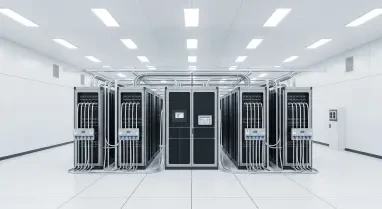
Supporting these sophisticated software layers requires a specialized hardware stack that goes far beyond standard GPU clusters. The industry is seeing a tighter integration of high-performance CPUs, custom-designed silicon for tensor processing, and ultra-low-latency networking fabrics that prevent data bottlenecks during massive parallel processing. Specialized storage solutions are also being deployed to manage the unique input/output requirements of real-time learning. This physical infrastructure must work in perfect harmony with the software, creating a vertically integrated environment where hardware limitations are increasingly mitigated by intelligent resource allocation and workload balancing.
Emerging Trends in Resource Management and Efficiency
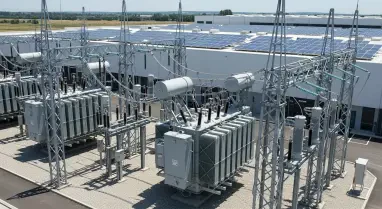
The current era is defined by a shift toward “disciplined expansion” as providers encounter the physical realities of the power grid and equipment shortages. While the demand for compute remains insatiable, the ability to build new facilities is often hindered by local utility constraints and the scarcity of electrical components like transformers. This has forced a pivot toward maximizing the efficiency of existing footprints through advanced power management and liquid cooling technologies. These innovations are not just environmental considerations; they are survival strategies in a market where energy density is the primary limiting factor for growth.
Moreover, the industry is increasingly looking toward modular and edge-based designs to bypass the limitations of traditional centralized hubs. By distributing the load across smaller, more efficient units, providers can tap into diverse energy sources and reduce the strain on individual grid sectors. This trend represents a maturation of the industry, where the focus has moved from “bigger is better” to a more nuanced approach of optimizing every watt of power and every square foot of floor space to ensure continuous service delivery in a resource-constrained world.
Real-World Applications and Sector Deployment
In practical terms, the cloud’s new capabilities are being realized through initiatives like “AWS Transform,” which utilizes AI agents to modernize legacy COBOL systems into cloud-native architectures. This process, which once took years of manual labor, is now being accelerated by autonomous agents that can read, interpret, and rewrite old code with high precision. In the financial sector, this allows institutions to migrate decades-old data silos into modern environments, enabling real-time fraud detection and personalized banking services that were previously hindered by technical debt.
The healthcare and logistics sectors are also deploying these autonomous capabilities to manage multi-step supply chain workflows and patient data analysis. For instance, logistics companies use cloud-integrated agents to reroute shipments in real-time based on weather patterns and port congestion, making decisions that optimize the entire network rather than just a single route. By automating these complex, high-stakes decisions, industries are reducing human error and increasing operational throughput, proving that the cloud is no longer just a place to store data, but a platform for executing business logic at scale.
Challenges and Barriers to Global Expansion
Despite the massive influx of capital, the industry faces significant technical hurdles and physical bottlenecks that threaten to slow the pace of expansion. Data center construction rates have seen a noticeable decline in specific regions due to an inability to secure reliable power capacity. This mismatch between digital demand and physical infrastructure reality creates a volatile environment where companies must compete for limited space. Furthermore, the reliance on a few key hardware suppliers for specialized chips and cooling systems creates a fragile supply chain that is susceptible to geopolitical and economic shifts.
Market obstacles also persist, particularly regarding the massive capital requirements that stifle competition. The sheer cost of entering the hyperscale market means that innovation is often concentrated within a few dominant players, which can lead to vendor lock-in and reduced flexibility for smaller enterprises. Specialized cloud solutions that cater to niche industries may struggle to gain traction if they cannot access the same level of infrastructure investment as the industry giants. These barriers highlight a growing divide between those who own the infrastructure and those who simply consume it.
Future Outlook and Technological Projections
Looking ahead, the trajectory of cloud infrastructure points toward a future where autonomous, production-grade workflows are the default rather than the exception. The massive $500 billion capital investment currently underway is expected to yield breakthroughs in operational efficiency, specifically through the use of AI to manage the cloud itself. We are likely to see self-healing networks and automated resource provisioning that can predict demand spikes before they occur, drastically reducing downtime and lowering the total cost of ownership for end users.
Furthermore, the integration of quantum-resistant encryption and advanced decentralized identity protocols will become standard as the cloud moves toward a more secure, sovereign model. The long-term impact will be a structural transformation where the distinction between “local” and “cloud” compute becomes entirely invisible to the user. As infrastructure continues to prioritize autonomous execution, the cloud will solidify its role as the primary engine for global productivity, capable of managing entire industrial systems with minimal human intervention.
Summary and Final Assessment
The evolution of global cloud infrastructure has moved far beyond its origins as a utility for remote storage, settling into its new identity as a specialized orchestration platform for artificial intelligence. This shift was marked by a transition from static resource allocation to dynamic, agent-driven environments that can autonomously manage complex organizational tasks. While the physical constraints of power and hardware availability presented significant challenges, the industry responded with a newfound focus on disciplined expansion and resource efficiency. These adaptations ensured that the infrastructure could support the next wave of digital transformation, even as the scale of operation reached unprecedented levels.
The strategic verdict on the current state of the technology was clear: the cloud has become the definitive foundation for the autonomous era. Moving forward, the focus must shift toward democratizing access to these powerful tools and ensuring that the physical limitations of the global grid do not stifle the next generation of breakthroughs. Organizations that successfully integrated these cloud-native agentic capabilities gained a decisive competitive advantage, while those who remained tethered to legacy models faced increasing obsolescence. The path toward a fully automated, cloud-powered economy was established, leaving a permanent mark on how the world processed information and executed value-driven work.