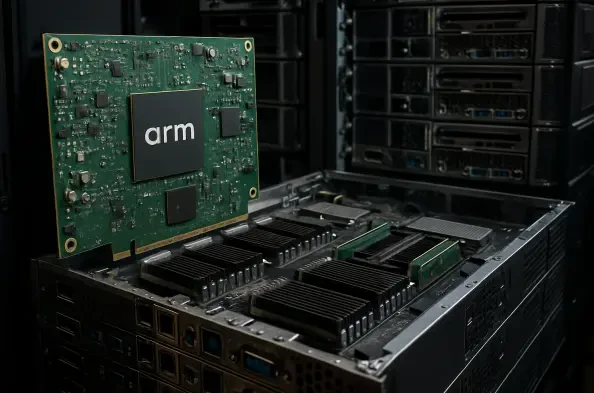
The intersection of legacy mainframe reliability and the agile efficiency of Arm architecture has finally moved from a theoretical pipe dream to a tangible enterprise reality that redefines data center logic. This convergence marks a pivotal moment where the perceived rigidity of the IBM Z series meets the ubiquitous flexibility of the Arm ecosystem. By bridging these two historically disparate worlds, the initiative addresses a fundamental crisis in modern computing: the need for massive AI throughput without the astronomical energy costs typically associated with high-end server environments.
In the current landscape, this technology has emerged as a response to the “inference explosion,” where businesses no longer just train models but must run them constantly in real-time. The hybrid approach combines the massive I/O capacity and security of IBM’s mainframe architecture with the power-efficient instruction sets of Arm. This evolution represents a strategic pivot from maintaining legacy systems to transforming them into vibrant, modern hubs capable of hosting the next generation of enterprise software.
Evolution of the IBM and Arm Partnership
The collaborative efforts between IBM and Arm, reaching a significant milestone in early 2026, were driven by the necessity of modernization within the constraints of established data centers. For decades, the mainframe was viewed as an isolated island, secure but difficult to integrate with modern DevOps workflows. This partnership fundamentally altered that perception by introducing a dual-architecture framework that allows Arm-native applications to reside alongside traditional COBOL-based workloads.
This transition is particularly relevant as organizations face increasing pressure to adopt hybrid cloud strategies. Rather than forcing a binary choice between on-premises mainframes and the public cloud, this integration provides a middle ground. It allows for the seamless migration of containerized workloads, ensuring that the software development life cycle remains consistent regardless of the underlying hardware. This shift has turned the mainframe into a versatile participant in the global technology landscape rather than a specialized relic.
Core Architectural Components and Synergy
Integration of IBM Z Telum II and Spyre Accelerators
The technical backbone of this hybrid system rests on the IBM Z Telum II processor, which serves as the primary engine for transaction processing and core logic. Unlike general-purpose CPUs, the Telum II is designed with on-chip AI acceleration, reducing the physical distance data must travel between the compute core and the inference engine. However, the true performance leap occurs when this is paired with the Spyre Accelerator, a specialized chip designed specifically for complex, high-volume AI models.
This combination allows the system to process massive datasets—such as global credit card transactions—with sub-millisecond latency. The Spyre units operate as a cluster, offloading the heavy mathematical lifting from the main processor. This ensures that even while the system is performing deep-learning tasks, the primary mainframe functions remain unaffected. The synergy here is unique because it eliminates the “off-box” latency that usually plagues AI integrations, keeping the data and the intelligence within the same secure hardware boundary.
Arm Architecture and Software Ecosystem Compatibility
The inclusion of Arm compatibility introduces a level of software flexibility previously unseen in the mainframe world. Because Arm has become the de facto standard for mobile, IoT, and increasingly, cloud-native applications, bringing its architecture to the IBM Z platform opens the door to a vast library of pre-existing tools and microservices. This means that a developer who writes code for an Arm-based cloud instance can, with minimal friction, deploy that same code on an IBM mainframe.
Technically, this is achieved through a layer of hardware-assisted virtualization that mimics the Arm instruction set with high efficiency. It is not merely an emulation but a deep-level integration that allows for near-native performance. This compatibility is a direct answer to the talent gap; new developers who are well-versed in modern languages and Arm-based environments can now contribute to mainframe projects without spending years learning legacy-specific nuances.
Emerging Trends in Hybrid Silicon Design
The broader industry is currently witnessing a massive shift toward custom silicon, where generic processors are being replaced by application-specific integrated circuits. While cloud giants have developed their own Arm-based chips to lower operational costs, IBM has taken a different route by creating a “best-of-both-worlds” hybrid. This trend reflects a move away from the “one size fits all” approach to computing, prioritizing specialized hardware that can handle the specific mathematical demands of generative AI and large-scale data analytics.
Moreover, the focus has shifted from raw clock speed to performance-per-watt. As data centers hit the limits of available power grids, the ability of Arm architecture to provide high throughput with low thermal output has become a critical competitive advantage. This trend is forcing a reimagining of data center architecture, where the goal is to maximize the density of intelligence rather than just the number of servers.
Real-World Applications and Use Cases
One of the most compelling applications of this technology is found in the financial sector, specifically in real-time fraud prevention. By running Arm-based AI models directly on the mainframe where the transaction data resides, banks can analyze every single swipe or click for suspicious patterns before the transaction is even approved. This eliminates the “detect and recover” cycle, replacing it with a “prevent in real-time” capability that saves billions in losses.
Beyond finance, the hybrid platform is gaining traction as a primary alternative for organizations looking to move away from traditional virtualization providers. In the wake of shifting licensing models and rising costs in the server market, many enterprises are using the IBM-Arm hybrid to host their containerized Linux workloads. This allows them to consolidate hundreds of smaller servers into a single, highly efficient mainframe, significantly reducing the complexity of their physical infrastructure while maintaining the flexibility of a modern cloud environment.
Technical Hurdles and Market Obstacles
Despite the impressive performance metrics, the path to widespread adoption is not without its challenges. The primary technical hurdle lies in the complexity of the initial configuration and the need for a specialized understanding of how to balance workloads between the Telum cores and the Arm-compatible layers. Optimization is not always automatic, and organizations must often invest in refining their software architecture to truly reap the benefits of the dual-system design.
Furthermore, market skepticism remains a significant obstacle. Many IT decision-makers still associate the word “mainframe” with high costs and locked-in ecosystems. Overcoming this cultural inertia requires consistent proof that the hybrid model is more cost-effective over the long term than a sprawling, fragmented cloud-only approach. There is also the regulatory landscape to consider; as AI sovereignty laws become stricter, the need to keep data on-premises might clash with some of the more decentralized aspects of the Arm ecosystem.
Future Outlook and Strategic Projections
The trajectory of IBM Arm hybrid computing suggests a future where the distinction between “mainframe” and “distributed” computing continues to blur. Within the next few years, we will likely see even deeper integration, perhaps with Arm cores physically residing on the same substrate as the Telum processors. This would further reduce latency and energy consumption, making the platform even more attractive for edge-of-cloud applications where processing speed is the absolute priority.
Strategically, this partnership signals a move toward a more open hardware ecosystem. As more companies realize that no single architecture can solve every problem, the trend of combining strengths—security from one, efficiency from another—will become the standard. This could lead to a new era of “modular mainframes,” where the hardware can be customized with different accelerators and cores depending on the specific industry needs, from genomic sequencing to autonomous grid management.
Final Assessment and Review Summary
The strategic integration of IBM Z and Arm architectures proved to be a masterstroke in hardware engineering and market positioning. By 2026, it became clear that the initiative successfully addressed the dual pressures of AI modernization and infrastructure cost control. The Telum II and Spyre accelerators provided the necessary muscle for high-stakes enterprise tasks, while the Arm compatibility layer democratized the platform for a new generation of developers.
The transition effectively neutralized the primary arguments against mainframe usage—namely, the lack of flexibility and the difficulty of finding skilled labor. This review confirmed that while the initial setup required a focused strategic investment, the resulting operational efficiency and security offered a compelling alternative to fragmented cloud environments. Ultimately, the technology demonstrated that the most robust way to move forward was not by discarding the past, but by augmenting it with the most efficient tools of the present. Organizations that adopted this hybrid approach found themselves better equipped to handle the volatile demands of a data-driven economy.