While the full power of fault-tolerant quantum computers remains on the horizon, the strategic risk they pose to our digital world is not a future concern but a present-day reality that demands immediate and decisive action from every organization. The conversation has shifted from the realm of theoretical physics to the urgent agendas of cybersecurity leaders, as the timeline for quantum supremacy continues to shrink with each new breakthrough. This accelerating pace forces a fundamental reevaluation of digital trust and security, moving the post-quantum era from a distant possibility to an impending operational challenge that must be addressed with concrete preparation and strategic foresight. The complacency of viewing this as a problem for the next decade is a gamble that puts the long-term security of sensitive data at severe risk.
The Nature of the Quantum Threat
A New Kind of Data Heist “Harvest Now, Decrypt Later”
Adversaries are no longer waiting for quantum computers to become a reality before they begin their attacks; they are actively operating under the assumption of their future arrival. This has given rise to a subtle but highly dangerous strategy known as “harvest now, decrypt later.” Malicious actors, including state-sponsored groups, are currently exfiltrating and storing massive volumes of encrypted data from governments and corporations worldwide. They are patiently stockpiling this information with the explicit intention of decrypting it once a sufficiently powerful quantum computer is available. This changes the entire calculus of data breaches. Information that is securely encrypted today, such as classified government documents, long-term financial plans, intellectual property, and personal health records, is already being compromised. The breach has already occurred; the only thing missing is the key, and its arrival is now seen as a matter of when, not if.
The “harvest now, decrypt later” threat model is particularly insidious because it targets data with a long shelf life, where the value of the information persists for years or even decades. A trade secret or a piece of national security intelligence does not lose its significance overnight, making it a prime target for this form of patient, long-term attack. Consequently, organizations can no longer assess their security posture based solely on present-day threats. They must now consider the future viability of their encryption against a quantum adversary. This long-term vulnerability means that the security of today’s most valuable digital assets is already eroding. The lack of an immediate, visible impact creates a false sense of security, encouraging a dangerous level of inertia among enterprises that fail to recognize that their most sensitive data is already sitting on an adversary’s server, waiting for the dawn of a new computational era.
How Modern IT Makes a Bad Problem Worse
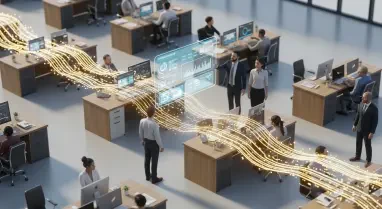
The challenge of preparing for the quantum era is profoundly exacerbated by the inherent complexity of contemporary IT environments. The widespread adoption of multi-cloud architectures has created sprawling, dynamic, and often fragmented digital estates. This complexity makes achieving comprehensive visibility and enforcing consistent security policies—foundational requirements for any security initiative—extraordinarily difficult. For many organizations, their networks are a patchwork of different cloud platforms, on-premises data centers, and countless connected devices, each with its own security configurations. This lack of a unified view creates significant blind spots, hindering the effective implementation of robust security frameworks like Zero Trust and making a systemic migration to new cryptographic standards an almost insurmountable task without a radical change in approach. The very infrastructure designed for agility has become a barrier to security evolution.
Simultaneously, the rapid advancement of artificial intelligence is acting as a powerful threat accelerant. On one hand, attackers are leveraging AI and machine learning to automate the discovery of vulnerabilities, conduct more sophisticated phishing campaigns, and scale their attacks with unprecedented speed and efficiency. On the other hand, AI itself is being used by researchers to accelerate progress in the field of quantum computing, potentially shortening the timeline until a cryptographically relevant quantum computer is built. This creates a formidable pincer movement against enterprise security. Defenses are being tested more rapidly by AI-driven attacks, while the cryptographic foundations of those defenses are being threatened by an AI-accelerated quantum future. This dual pressure significantly compresses the time that organizations have to assess their risk, develop a transition plan, and implement quantum-resistant solutions.
Undermining the Foundation of Digital Trust
The quantum threat is not merely an evolution of existing cyber risks; it represents a fundamental challenge to the very pillars of modern digital security. At its core, the danger lies in the ability of a large-scale quantum computer to solve the mathematical problems that underpin today’s public-key cryptography (PKC). Algorithms like RSA and Elliptic Curve Cryptography are the bedrock of secure communications, data protection, and digital identity across the internet. They are responsible for securing everything from e-commerce transactions and online banking to secure remote access and the integrity of software updates. By rendering these widely used algorithms obsolete, quantum computers threaten to dismantle the mechanisms that ensure confidentiality, authenticity, and integrity in the digital world. This is not just about breaking encryption; it is about shattering the foundational layer of trust upon which our entire digital economy and society are built.
This existential threat to public-key cryptography directly undermines the principles of the Zero Trust security model, a paradigm that has become the gold standard for modern enterprise defense. The core tenet of Zero Trust—”never trust, always verify”—is heavily reliant on strong cryptographic authentication to verify the identity of every user and device attempting to access network resources. Secure logins, multi-factor authentication, and encrypted communication channels are all essential components of a Zero Trust architecture, and all depend on the integrity of PKC. If the underlying cryptography can be broken, the verification process becomes meaningless, and the entire model collapses. An adversary could potentially impersonate legitimate users, forge digital signatures, and intercept and alter sensitive communications at will, making the promise of a secure, verified environment impossible to fulfill. The quantum threat effectively pulls the rug out from under the most advanced security strategy currently in use.
Charting a Course to Quantum Readiness
The First Hurdle You Can’t Protect What You Can’t See
For most organizations, the journey toward quantum readiness stalls before it even begins, blocked by a significant and pervasive problem: a fundamental lack of cryptographic visibility. Enterprises today operate vast and intricate ecosystems of networks, applications, devices, and cloud workloads, all of which use encryption in various forms. However, very few have a comprehensive, up-to-date inventory of where and how these cryptographic assets are deployed. This state of “cryptographic blindness” means security teams are often unaware of which algorithms are in use, where legacy or vulnerable ciphers might be lurking, and which systems depend on cryptography that will be broken by quantum computers. Without this foundational knowledge, any attempt to create a migration plan is based on guesswork rather than data, making it impossible to accurately assess risk or prioritize remediation efforts.
This lack of a clear cryptographic inventory creates a paralyzing effect on an organization’s ability to act. It is impossible to develop a coherent strategy for transitioning to post-quantum cryptography (PQC) without first understanding the full scope of the existing cryptographic landscape. Security leaders cannot answer basic but critical questions, such as which applications will require the most complex updates, which data is most at risk, or how long a full migration will take. This uncertainty often leads to inaction, as the perceived scale and complexity of the problem feel overwhelming. The result is a dangerous state of unpreparedness where organizations continue to build new systems and applications on cryptographic foundations that are already obsolete from a long-term security perspective, digging themselves deeper into a hole that will become exponentially more difficult and expensive to climb out of as the quantum deadline approaches.
Achieving Cryptographic Agility
The essential first step in overcoming this paralysis is to achieve cryptographic agility, which begins with gaining complete and continuous visibility across the entire IT environment. This requires the deployment of advanced tools capable of automatically discovering, identifying, and cataloging every instance of encryption in use—from cloud workloads and APIs to network connections and endpoint devices. By mapping this entire cryptographic footprint, organizations can move from a state of blindness to one of informed awareness. The data gathered can be consolidated into a centralized cryptographic risk dashboard, which provides security teams with a clear, actionable overview of their organization’s posture. This dashboard can visualize which systems are compliant with emerging PQC standards, flag the use of outdated or vulnerable ciphers, and help strategically prioritize the most critical areas for upgrades.
Recognizing that a complete, immediate overhaul of all systems is often impractical, a quantum-readiness strategy must also account for the reality of legacy infrastructure. Many critical systems cannot be easily upgraded to support new PQC algorithms due to their age, dependencies, or operational importance. To address this challenge, innovative transitional technologies like “cipher translation” have emerged. This capability functions as a secure intermediary for legacy systems, effectively acting as a bridge to the quantum-safe future. It can intercept communications from a system using an older encryption standard, translate it into a quantum-resistant format for secure transit, and then translate it back if the receiving system also requires a legacy format. This allows critical but outdated systems to continue operating securely and protects the sensitive data they handle without requiring disruptive and costly immediate replacements.
A Strategic Framework for the Future
The analysis of the impending quantum threat and the current state of enterprise preparedness made it clear that achieving a quantum-safe posture was a complex, multi-year endeavor, not a simple technological fix. It required a comprehensive overhaul of every device, application, and infrastructure component reliant on contemporary encryption standards. The investigation concluded that delaying action would drastically reduce the time available for the necessary assessment, planning, and deployment of new protections, creating an unacceptable level of risk. The core finding was that organizations that treated quantum risk as a distant, future issue were adopting a dangerously complacent viewpoint, ignoring the active “harvest now, decrypt later” campaigns that were already compromising their most valuable long-term data.
Ultimately, the path forward that emerged from this review demanded an immediate and multi-pronged strategy focused on proactive preparation. The first imperative was for organizations to gain full visibility into their own digital and cryptographic footprint to understand the scope of their vulnerability. Following this, enterprises needed to develop a detailed roadmap for the inevitable migration to post-quantum cryptography standards. This plan had to include a thorough evaluation of all systems and infrastructure for their ability to support these new standards without causing major operational disruptions. Finally, it became evident that critical assets, especially those that could not be made quantum-ready in the short term, had to be segmented and isolated to limit potential exposure. It was determined that this combination of visibility, strategic planning, and adaptive mitigation would be the deciding factor between maintaining digital trust and facing catastrophic data exposure in the coming quantum era.