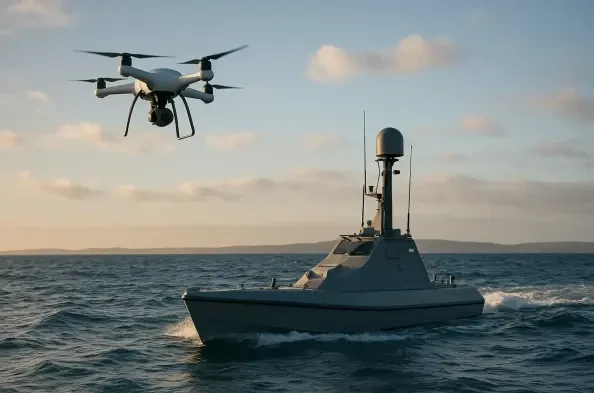
Security infrastructure projects in China are increasingly prioritizing domestic hardware like the Loongson platform to ensure a controllable supply chain for critical satellite communications. As the low-altitude economy matures in 2026, the demand for seamless data backhaul has never been more pressing. Beijing Jianwei Intelligent Technology Co., Ltd. has positioned itself at the vanguard of this shift, addressing the persistent challenges faced by unmanned systems navigating deep canyons and expansive maritime regions. When traditional terrestrial networks fail, these autonomous platforms often become data islands, unable to relay critical sensor information back to command centers. By engineering a satellite intelligent communication terminal that weighs a mere 0.5 kilograms, Jianwei Intelligence has successfully leveraged high-orbit constellations to provide real-time data services for small-scale unmanned platforms that were previously restricted by the weight and power requirements of conventional hardware. This innovation represents a fundamental shift in how the industry approaches the unreachable sensed transmission problem, moving away from bulky, power-intensive equipment toward miniaturized, intelligent nodes capable of operating in the most extreme environments on the planet.
Bridging Technical Gaps in Satellite Communications
Overcoming the Physical Constraints of Terrestrial Networks
The expansion of drone clusters and marine unmanned systems has created an unprecedented volume of sensing data, yet the infrastructure for transmitting this information has historically lagged behind. Existing solutions have often been hindered by physical and technical limitations that render them ineffective for modern autonomous operations. For instance, ultra-short wave radios are inherently limited by the curvature of the Earth, which restricts their utility for over-the-horizon missions. Meanwhile, high-orbit broadband terminals typically require precise antenna alignment, a task that becomes nearly impossible on a swaying offshore platform or a high-velocity drone. Even established services like the BeiDou Short Message system, while excellent for basic positioning, lack the bandwidth necessary for the high-volume data streams required by sophisticated artificial intelligence. Jianwei Intelligence recognized these market gaps as critical failures in the existing communication hierarchy and sought to bridge them by integrating disparate satellite systems into a unified, high-dynamic service framework that maintains connectivity regardless of geographic or environmental obstacles.
The regulatory environment has also shifted to support these technological advancements, particularly following the elevation of satellite internet to a pillar industry in recent government reports. The Ministry of Industry and Information Technology has set ambitious targets to reach 10 million satellite communication users by 2030, with a specific focus on establishing wide-area Internet of Things connections in non-terrestrial regions. By aligning its development with these national priorities, Jianwei Intelligence has moved to solve the technical silos that once created isolated data islands. Their approach eliminates the need for users to carry redundant equipment by providing a cross-satellite real-time data service that bridges wideband and narrowband links. This strategic positioning allows the company to capitalize on the increasing necessity for reliable communication in the sky and deep oceans, ensuring that the explosion of sensing data from autonomous systems can finally be utilized in real-time by decision-makers on the ground, thereby unlocking the full potential of the emerging low-altitude and smart ocean economies.
Integrating High-Performance Domestic Computing at the Edge
At the heart of the technical architecture developed by Jianwei Intelligence is the use of the domestically produced Loongson platform, which provides the high-performance computing power necessary for modern autonomous data handling. By moving away from foreign dependencies, the company has created a terminal that is not only secure but also optimized for the specific demands of the Chinese security and industrial landscape. This terminal runs a proprietary hard real-time operating system designed to rival the performance of industry-standard systems like VxWorks. This software-hardware synergy allows the device to maintain extremely low power consumption—maximum 8W at 12V—while managing complex tasks such as orbit prediction and resource allocation for high- and low-orbit satellite collaboration. This cloud-edge collaborative philosophy shifts the heavy lifting of data processing away from the central server and toward the edge, allowing the unmanned system to react to its environment with minimal latency.
The inclusion of edge-based artificial intelligence represents a significant leap forward in terminal capability. By embedding an AI platform directly into the Loongson-based hardware, Jianwei Intelligence enables real-time target recognition at the source. This means that a maritime drone or a mountain-based sensor can identify specific objects, such as unauthorized vessels or geological hazards, and transmit only the relevant metadata rather than exhausting limited satellite bandwidth with raw video streams. This intelligent filtering is crucial for maintaining operational efficiency over narrowband links like the Tiantong system, which supports data rates between 1.2kbps and 384kbps. By loading specific algorithm models tailored to different environments, the system ensures that the most critical information is prioritized. This architectural choice effectively turns on the data tap for unmanned systems, providing a stable and intelligent link that remains resilient even as satellites move or environmental conditions shift during a mission.
Product Innovation and Performance Benchmarking
Technical Specifications of the Smart Communication Terminal
The physical engineering of the Jianwei terminals, specifically the Desert Cat series, showcases a commitment to extreme miniaturization without sacrificing performance. Measuring only 116mm by 98mm by 28mm, the second-generation maritime satellite intelligent communication terminal is designed to be integrated into even the smallest unmanned platforms. This compact form factor is complemented by a versatile array of interfaces, including Ethernet, CAN, RS232, RS422, SPI, and I2C ports. Such a wide range of connectivity options allows the terminal to interface seamlessly with various sensors and control systems, facilitating encrypted security instruction control and image data backhaul. These features are essential for establishing high-dynamic data links in unpredictable environments, ensuring that the connection remains stable even when the platform is subjected to rapid maneuvers or harsh weather conditions that would typically disrupt standard satellite communication hardware.
Beyond simple connectivity, these terminals are built to withstand the rigors of long-term deployment in remote areas. The hardware has undergone extensive validation, including a 90-day continuous burn-in test in the rugged Mentougou mountainous region, where it proved its reliability under environmental stress. Certification by the Space Center of the Chinese Academy of Sciences further solidifies the product’s standing as a reliable tool for national-level infrastructure projects. The terminal’s ability to operate efficiently across a wide range of latitudes, from 72 degrees north to 72 degrees south, ensures its applicability for global maritime and aerospace missions. This global reach is a critical selling point for international applications, where autonomous systems must traverse vast distances across different jurisdictions. By providing a unified data service that functions across both high and low-orbit satellite constellations, the company has effectively removed the hardware bottleneck that previously limited the operational range of small-scale unmanned vessels and drones.
Competitive Advantages in Hostile Operational Environments
When compared to established industry competitors, the Jianwei terminal demonstrates a clear technological superiority in several key metrics. A primary benchmark is the comparison with the CCOM UAV200 terminal, which has long been a staple in the unmanned aerial vehicle market. The Jianwei solution offers a 3.5x reduction in weight, coming in at 0.5kg compared to the 1.45kg of the UAV200. Furthermore, the power efficiency of the Jianwei terminal is significantly better, requiring only 8W of power compared to the 28W consumed by its competitor. These reductions are not just incremental improvements; they represent a fundamental change in the payload capacity of small drones, allowing for longer flight times or the addition of extra sensors. Unlike rival products that often lack integrated target recognition and struggle with establishing high-dynamic links, the Jianwei terminal provides a comprehensive suite of intelligent features that ensure mission success in hostile or rapidly changing environments.
The emphasis on full domestic substitution for all internal components serves as another major competitive advantage, particularly in the context of national security and critical infrastructure projects within China. By utilizing the Loongson platform, Jianwei Intelligence offers a controllable supply chain that is immune to international trade fluctuations or foreign technological restrictions. This has made the terminal an attractive choice for state-owned enterprises and government agencies involved in large-scale monitoring and emergency management. The terminal’s performance has already been verified in some of the most challenging terrains on Earth, from the Andes Mountains in South America to the vast steppes of Central Asia. These successful international tests have proven that the device can maintain a stable data link even in areas with zero terrestrial coverage. By outperforming the market in both physical specifications and intelligent capabilities, the company has established a new standard for what is expected from satellite communication hardware in the autonomous era.
Commercialization and Strategic Growth
Global Implementation and Validation of Real-Time Data Services
The commercial strategy of Jianwei Intelligence is built on a dual-revenue model that combines direct hardware sales with recurring income from data value-added services. This approach has already led to several high-profile demonstration projects that showcase the practical utility of their satellite solutions. In the offshore sector, a partnership with major telecommunications and energy firms facilitated the implementation of satellite emergency communications at the Yangjiang offshore wind farm. This project demonstrated the terminal’s ability to provide a reliable safety net for critical energy infrastructure located far from the coastline. Similarly, the company has worked with the China Southern Power Grid to provide communication support in complex mountainous regions where traditional cellular signals are blocked by terrain. These real-world applications have provided the necessary data to refine the system’s performance and prove its value to large-scale industrial users across multiple sectors.
Expansion into international markets has been a key priority, with the company leveraging the Belt and Road initiative to test its technology in diverse geographic scenarios. In Kazakhstan, the terminals were used to support smart pasture applications, while in Bolivia, the system underwent rigorous scenario testing in the high-altitude Andes Mountains. These efforts were supported by the Regional Center for Space Science and Technology Education in Asia and the Pacific, highlighting the academic and international credibility of the company’s technology. By establishing a global verification footprint, Jianwei Intelligence has shown that its terminals are capable of providing unified services across a wide range of climates and topographies. This international success is expected to drive significant revenue growth, with projections suggesting an annual output value exceeding 200 million RMB as the company further integrates its hardware with the expanding China SatNet network, solidifying its role as a global provider of autonomous connectivity.
Leadership Pedigree and Future Technological Trajectories
The technological foundations of Jianwei Intelligence were established by a leadership team with deep roots in Beihang University’s Microsatellite Technology Laboratory. Founder Wang Xinsheng, an expert in small satellite technology and aerospace control, brought years of experience leading international space exploration projects to the company. He was joined by Chief Scientist Niu Jianwei, a specialist in computer vision, and Liu Rongke, who focused on the development of 5G-A and satellite internet. This multidisciplinary expertise allowed the company to approach the problem of data backhaul from a holistic perspective, combining spacecraft design, communications engineering, and advanced AI. The recent financing round of 50 million to 100 million RMB was designed to build upon this expertise, funding the development of software-defined satellites and more advanced digital twin systems that will further enhance the capabilities of their communication terminals in the coming years.
The analysis of Jianwei Intelligence indicated that the company successfully addressed the bandwidth limitations of traditional satellite links by focusing on edge intelligence. By filtering and processing data at the source, the terminal ensured that only the most critical information occupied the limited 384kbps Tiantong link, a strategy that maximized resource efficiency. This forward-thinking approach was validated through successful deployments in extreme environments, proving that domestic hardware could outperform established international alternatives. The company moved toward a future where unmanned systems were no longer restricted by geographic boundaries, providing a controllable and highly efficient communication layer for the next generation of autonomous platforms. These strategic steps positioned the firm to remain at the forefront of the satellite IoT revolution, ensuring that they provided the necessary infrastructure for a fully connected, global unmanned ecosystem. The integration of domestic high-performance computing with edge AI effectively solved the data gaps that once hindered the progress of the low-altitude and smart ocean economies.