Every modern iteration of Windows, from the latest Windows 11 builds to legacy Server 2012 R2 installations, was found to be susceptible to this remote network-based attack vector. This disclosure surfaced during the high-stakes environment of the October 2026 Patch Tuesday, where Microsoft released updates for over 1,400 distinct vulnerabilities. Among this massive volume of security fixes, CVE-2026-96951 emerged as the most critical concern because it was identified as a zero-day vulnerability already undergoing active exploitation in the wild. The flaw resides deep within the Windows Shell and targets the Mark of the Web (MOTW) system, which is a foundational security boundary designed to protect users from untrusted files originating from the internet or other external networks. By successfully circumventing this mechanism, threat actors can bypass the visual warnings and technical restrictions that normally alert a user to the presence of potential malware, effectively making malicious files appear as though they were created locally and are therefore safe to execute. This breakdown in the operating system’s trust model represents a significant escalation in the tactics used by modern adversaries to achieve initial access.
Exploitation Tactics: The Intersection of Code and Psychology
Delivery Methods: The Art of Deceptive Phishing
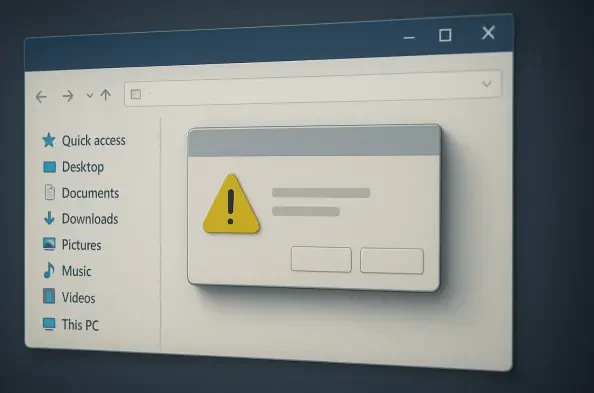
The success of CVE-2026-96951 hinges on a sophisticated blend of technical exploitation and psychological manipulation. Because the vulnerability requires user interaction, attackers typically initiate their campaigns through highly targeted phishing emails or instant messaging platforms. These messages often contain specially crafted attachments, such as document files or archived folders, that appear to be routine business communications like invoices, legal notices, or urgent software updates. Under normal circumstances, when a user downloads and attempts to open such a file, the Windows operating system detects the “Zone.Identifier” alternate data stream—the technical marker for MOTW—and triggers a series of defensive barriers. These include the SmartScreen filter and the “Protected View” in Microsoft Office applications, both of which force the user to acknowledge the risk before proceeding. However, this zero-day allows the malicious payload to strip or ignore these identifiers entirely, meaning the victim is never presented with the standard warnings that might otherwise cause them to hesitate or report the suspicious activity.
Beyond the initial delivery, the technical nuances of how this bypass functions make it exceptionally difficult for traditional signature-based security tools to detect the threat during the early stages of an attack. When the MOTW attribute is successfully bypassed, the operating system treats the downloaded file as a trusted local asset. This trust level extends to how the Windows Shell processes the command injection within the file, allowing the hidden malicious script to execute with the same privileges as the logged-in user. For an attacker, this is a massive advantage, as it removes the need to find a secondary privilege escalation vulnerability immediately upon entry. The silence of the operating system during this process is what makes the exploit so effective; without the visual cues of a security warning, even a security-conscious employee may unknowingly facilitate a full system compromise. This method demonstrates how threat actors are moving away from brute-force entries and instead focusing on silent bypasses that leverage the very tools designed to keep users safe.
Malicious Domains: Leveraging Web-Based Infrastructure
Threat actors are not limiting themselves to email attachments; they are also aggressively utilizing compromised or malicious websites to deliver payloads exploiting this shell vulnerability. By luring victims to these sites through search engine optimization poisoning or deceptive social media links, attackers can trigger downloads that are specifically designed to exploit the Windows Shell’s handling of external commands. While this is not a “drive-by” infection in the strictest sense—since the user must still click to open the downloaded file—the lack of any subsequent “This file came from the internet” warning effectively bridges the gap between a web-based threat and a local execution. These websites often use social engineering prompts that mimic legitimate software portals or corporate intranets, building a false sense of security before the malicious file is even downloaded. Once the user interacts with the content, the vulnerability ensures that the operating system’s built-in reputation checks are bypassed, providing a clear path for the payload to establish a persistent presence on the host machine.
The infrastructure behind these malicious domains is often ephemeral, making it a challenge for network-level defenses to keep pace. Attackers frequently cycle through a large number of domains and use content delivery networks to hide the true origin of the exploit code. Because CVE-2026-96951 blinds the host’s internal reputation systems like SmartScreen, the burden of defense shifts entirely to external firewalls and secure web gateways. If those network-level protections do not have the specific signatures for the malicious site, the Windows host will provide no last line of defense due to the bypass. This creates a dangerous scenario where a single lapse in judgment by a user can lead to the silent installation of ransomware, info-stealers, or remote access trojans. The focus on web-based delivery highlights the global nature of this threat, as any user with an internet connection becomes a potential entry point for an adversary looking to exploit the fundamental trust issues inherent in the current Windows Shell architecture.
Global Impact: Assessing Exposure and Regulatory Action
Systemic Risk: From AI-Assisted Discovery to Enterprise Exposure
The discovery and subsequent analysis of CVE-2026-96951 have highlighted a shift in the vulnerability research landscape, notably involving the use of advanced artificial intelligence models to assist in finding complex flaws. Researchers from various organizations, including individual contributors who utilized Claude to refine their findings, demonstrated that the barrier to discovering deep-seated architectural bugs in the Windows Shell is lowering. This technological democratization means that both defenders and adversaries have access to more powerful tools for identifying vulnerabilities in the software supply chain. The scope of the impact was nearly universal across the Microsoft ecosystem, affecting not only desktop versions of Windows 10 and 11 but also critical infrastructure running Windows Server 2025 and earlier legacy versions. This broad exposure meant that virtually every sector—from healthcare and finance to government agencies—was at risk of initial access campaigns that relied on this MOTW bypass to deliver more destructive secondary payloads.
For large-scale enterprise environments, the existence of this zero-day presented a significant logistical challenge. Many organizations rely heavily on the MOTW system as a primary filter to prevent the accidental execution of unvetted software by employees. When this filter was compromised, the internal security posture of thousands of companies was effectively downgraded overnight. Administrators had to contend with the reality that their existing security awareness training, which often teaches users to “look for the yellow bar” or the security pop-up, was now insufficient against an exploit that specifically silenced those indicators. This vulnerability also exposed the risks inherent in maintaining legacy systems like Server 2012 R2, which, while still supported under certain programs, often lack the more robust architectural defenses found in the latest builds. The realization that a single shell bypass could grant such broad access across diverse versions of Windows forced many organizations to re-evaluate their reliance on built-in OS features as their sole line of defense.
Government Mandates: CISA Directives and Regulatory Urgency
The urgency of the situation was solidified when the Cybersecurity and Infrastructure Security Agency (CISA) added CVE-2026-96951 to its Known Exploited Vulnerabilities catalog almost immediately after the patch was released. This move was not merely a warning; it carried a mandatory three-day remediation deadline for all U.S. federal civilian executive branch agencies. Such a short window is reserved for only the most dangerous vulnerabilities that are actively being used by threat actors to target critical infrastructure. CISA’s intervention served as a global catalyst, signaling to private-sector organizations and international partners that the standard thirty-day patching cycle was insufficient for this specific threat. The rapid response from regulatory bodies underscored the fact that this was not a theoretical vulnerability found in a laboratory setting, but a weaponized tool that was actively eroding the security of the federal supply chain and, by extension, the broader digital economy.
The regulatory pressure exerted by CISA and other international cybersecurity bodies also highlighted the growing expectation for organizations to maintain a high degree of “patching agility.” In the current threat environment, the ability to deploy critical updates within a matter of hours or days has become a core requirement for operational resilience. This mandate forced many agencies and private companies to bypass their standard testing protocols in favor of emergency deployment, a move that is often fraught with technical risk but was deemed necessary given the severity of the active exploitation. The fallout from this zero-day has also prompted discussions among policymakers regarding the security of the Windows Shell and the necessity of more robust, hardware-backed isolation for untrusted content. As government agencies scrambled to meet the three-day deadline, the incident served as a stark reminder of the interconnected nature of modern software security and the critical role that central authorities play in coordinating a global defense against sophisticated zero-day threats.
Advanced Mitigation: Building Resilience Beyond Patching
Behavioral Detection: Monitoring Anomalous System Activity
While installing the official Microsoft security updates is the primary requirement for neutralizing CVE-2026-96951, sophisticated security teams are now looking toward behavioral detection to identify similar bypass attempts in the future. Since the MOTW bypass allows files to execute without traditional warnings, defenders must focus on the activity that occurs immediately after a file is opened. This includes monitoring the Windows Explorer process (explorer.exe) for the creation of unusual child processes, such as cmd.exe, powershell.exe, or any script interpreter like wscript.exe. In a typical user environment, it is rare for a simple file-opening action to trigger the launch of a command-line interface unless the user is a developer or an administrator. By establishing a baseline of normal activity and alerting on these deviations, security operations centers can identify potential exploitation attempts in real-time, even if the specific vulnerability being used is a zero-day for which no patch or signature yet exists.
Another critical behavioral signal involves tracking the execution of files from temporary directories or the user’s “Downloads” folder that lack the expected “Zone.Identifier” metadata. Organizations can leverage Endpoint Detection and Response (EDR) tools to cross-reference the origin of a file with its execution behavior. For instance, if a file is downloaded from an external IP address but does not have the MOTW tag upon execution, it should be treated as a high-risk event. This type of telemetry-driven security moves away from the “all-or-nothing” approach of relying on built-in OS features and instead adopts a zero-trust model at the process level. Implementing detailed logging for the Windows Shell and document processors also provides the necessary forensic trail to investigate how an attacker might have bypassed initial defenses. These behavioral strategies ensure that even if a future bypass is discovered, the attacker’s subsequent actions will be visible to defenders, significantly reducing the dwell time of any potential breach.
Strategic Hardening: Advanced Implementation and Policy Controls
The primary remediation for CVE-2026-96951 was the immediate installation of the October 13, 2026, security updates, which effectively restored the integrity of the Windows Shell’s trust mechanisms. Beyond this essential step, organizations recognized the need for a layered defense-in-depth posture to mitigate the impact of future zero-day exploits. Many administrators implemented Attack Surface Reduction (ASR) rules, specifically those designed to block the creation of child processes by Office applications and prevent the execution of potentially obfuscated scripts. These rules acted as a vital fallback, ensuring that even if a file managed to bypass the MOTW check, its ability to execute malicious commands would be severely curtailed. Furthermore, the adoption of Windows Defender Application Control (WDAC) allowed organizations to enforce strict policies on which binaries were permitted to run, regardless of their origin or trust status, effectively moving the security boundary from a simple “warning” to an enforced “permission” model.
Moving forward, the shift toward proactive isolation technologies and enhanced email filtering became a standard part of the enterprise security architecture. Advanced threat protection systems were configured to strip suspicious attachments or open them in cloud-based sandboxes before they ever reached a user’s inbox, reducing the reliance on the local Windows Shell for safety. The incident also prompted a renewed focus on user education that emphasized the psychological tactics of phishing rather than just the technical signs of a malicious file. By teaching employees to question the context of a message rather than relying on an operating system pop-up, organizations built a more resilient human firewall. Ultimately, the resolution of this zero-day highlighted that while patching is the first line of defense, the long-term safety of the Windows ecosystem depends on a combination of rigorous update management, behavioral monitoring, and the strategic implementation of advanced security policies that assume no single defense is infallible.