In order to prevent the efficiency mismatch attacks that plague device-independent frameworks, the researchers established a strict detection-efficiency threshold for the receiver’s equipment. This foundational step is part of a broader breakthrough in quantum communication achieved by a team at the Beijing Academy of Quantum Information Sciences. Led by researcher Qiang Zeng, the group successfully demonstrated a Transmitter-Device-Independent (TDI) Quantum Key Distribution protocol, a significant leap forward for cryptographic security in 2026. By generating secure keys at a rate of 410 bits per second over a 27-kilometer fiber optic link, the experiment proved that high-level security does not necessitate a sacrifice in performance. The true value of this work lies in its shift toward a zero-trust model, which effectively mitigates vulnerabilities inherent in physical hardware. In the current landscape of quantum networking, where the integrity of every component is under scrutiny, this protocol provides a much-needed bridge between theoretical safety and the practical, often compromised reality of global hardware supply chains. This advancement suggests that future quantum networks will be defined by their ability to verify security through physics rather than through the assumed reliability of the manufacturing process.
Addressing the Trust Deficit in Quantum Hardware
Part 1: Vulnerabilities in Traditional Key Distribution
Traditional Quantum Key Distribution (QKD) frameworks have long operated under the assumption that the hardware used by the sender and receiver is fundamentally trustworthy. However, as the industry moves deeper into 2026, this assumption has become increasingly untenable. Real-world devices are susceptible to various compromises, ranging from subtle manufacturing defects to intentional backdoors or side-channel attacks. While previous scientific efforts successfully developed Measurement-Device-Independent (MDI) QKD to secure the detection side of the network, the transmitter side remained a glaring vulnerability. If the hardware responsible for creating and sending quantum states is untrustworthy, an eavesdropper could potentially gain access to the raw data before it is even encoded. This trust deficit has been a primary hurdle for organizations looking to deploy quantum networks in environments where the provenance of the hardware cannot be guaranteed, making the search for transmitter-side independence a top priority for security researchers.
The core of the problem lies in the difficulty of verifying what happens inside a “black box” transmitter. Earlier attempts to mitigate these risks often utilized One-Sided Device-Independent (1sDI) protocols, which relied on the concept of quantum steering to confirm security. However, these setups were frequently undermined by the signaling loophole. In such scenarios, a compromised transmitter could “leak” information about the user’s input settings back to a malicious source before the signal ever left the station. This violation of the “no-signaling” condition meant that an attacker could manipulate the quantum states in a way that appeared secure to the participants but was actually fully observable by a third party. The inability to ensure temporal and informational isolation within the transmitter hardware meant that 1sDI protocols, while a step in the right direction, could not offer the absolute security required for modern high-stakes communication.
Part 2: The Signaling Loophole: A Critical Failure Point
The signaling loophole represents one of the most sophisticated challenges in quantum cryptography because it targets the logical flow of information rather than just the physical transmission. When a sender (Alice) selects her measurement settings, those choices must remain private until the quantum state has been transmitted. If a local hidden variable or a malicious manufacturer’s code allows the transmitter to “know” Alice’s choices in advance, the entire cryptographic foundation collapses. This vulnerability is especially dangerous because it does not leave the usual traces of eavesdropping, such as increased error rates or decreased photon counts. Instead, the system continues to function normally while the security is secretly bypassed. As we progress from 2026 to 2028, the industry is focusing on closing these conceptual gaps to ensure that quantum networks are truly resilient against internal threats.
To combat this, the TDI-QKD protocol introduces a rigorous framework that decouples the user’s input from the hardware’s internal logic. By focusing on the statistical correlations between the sender and the receiver, the protocol can detect if the signaling condition has been violated. The primary innovation here is the realization that security must be verified externally through non-locality rather than internally through hardware inspections. This approach acknowledges that in a globalized world, it is impossible to audit every transistor or line of code in a quantum transmitter. Therefore, the security of the key must be derived from the laws of physics—specifically through the observation of steering inequalities—rather than from the perceived integrity of the device manufacturer. This paradigm shift ensures that even if a transmitter is actively working against its user, the privacy of the communication remains protected by the fundamental principles of quantum mechanics.
Innovating with Quantum Steering and Photon Storage
Part 1: Leveraging Faithful Quantum Steering for Verification
At the heart of the new protocol is the phenomenon known as quantum steering, which describes the ability of one party to influence the state of another party’s particle through local measurements. Unlike standard entanglement, quantum steering is directional and provides a powerful tool for verifying non-classical correlations in an asymmetric setup. By utilizing “faithful” quantum steering, the researchers were able to prove the presence of genuine quantum links without needing to trust the internal workings of the transmitter. This verification process acts as a mathematical gatekeeper; if the steering inequalities are violated, it provides an ironclad guarantee that the states being distributed are non-classical and that no local hidden state model can explain the results. This provides a clear, actionable metric for security that is independent of any specific hardware implementation.
The integration of quantum steering into the TDI-QKD framework allows for a more flexible and robust security posture. It enables the system to operate under a “transmitter-device-independent” banner, meaning that Alice can use a transmitter from any source, even a potentially hostile one, as long as the steering correlations are verified at the receiver’s end. This is particularly relevant as the quantum internet begins to take shape across 2026 and 2027, requiring interoperability between diverse hardware vendors. By establishing a protocol that relies on the quality of the quantum correlations rather than the identity of the hardware, the research team has created a scalable solution for secure long-distance communication. This method effectively neutralizes the risk of manufacturer-level tampering, providing a universal standard for trust in an era of diverse and distributed quantum infrastructure.
Part 2: Closing the Loophole Through Photon Storage
The most significant technical hurdle overcome by the team was the physical closure of the signaling loophole through the use of a photon-storage mechanism. To ensure that Alice’s choices could not be leaked back to the source or used to influence the outgoing signal, the researchers implemented a fiber-based delay line. This device acts as a temporary “limbo” for the photon, holding it in a 30-meter spool of fiber for approximately 150 nanoseconds. This temporal buffer ensures that the sender’s input settings are only finalized after the photon has been separated from the source. This physical isolation is crucial because it creates a window of time where no signal can travel back to the transmitter to inform its behavior. By the time Alice’s information is processed, the signal intended for Bob is already far enough away that it cannot be altered by any local malicious logic.
This 150-nanosecond delay may seem like a microscopic interval, but in the world of high-speed quantum communication, it is an eternity. The precision required to calibrate a 50-nanosecond measurement interval within this window is a testament to the engineering prowess of the research team. This temporal decoupling effectively solves the problem of “information leakage” that plagued earlier device-independent attempts. By using standard optical fiber for the delay line, the researchers also ensured that the solution remains cost-effective and compatible with existing infrastructure. This practical approach to a complex theoretical problem demonstrates how photon storage can serve as a cornerstone for secure quantum networks. As these delay mechanisms become more refined, they will likely become a standard feature in all high-security quantum transmitters, providing a physical layer of protection that complements the mathematical steering proofs.
Validating Performance Through Experimental Testing
Part 1: Practical Execution Over 27 Kilometers of Fiber
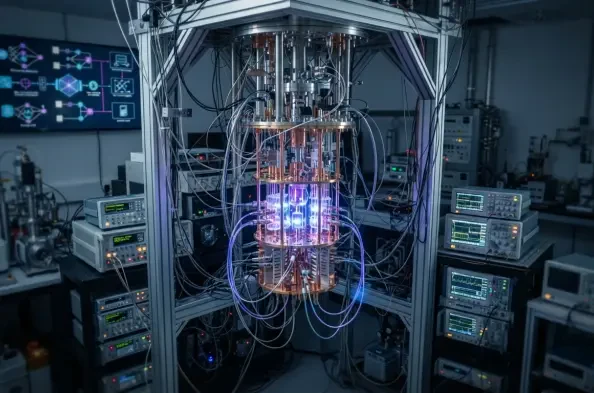
The experimental validation of the TDI-QKD protocol was conducted using a 27-kilometer spool of standard optical fiber, representing a realistic distance for metropolitan quantum networks. In the trial, the team achieved a sustainable key rate of 410 bits per second, which is a significant achievement for a protocol that offers such high levels of security. To maintain this rate, the setup utilized advanced components such as Superconducting Nanowire Single-Photon Detectors (SNSPDs), which provide industry-leading efficiency and extremely low dark count rates. These detectors were paired with narrowband filters to isolate the specific wavelengths of the photons, minimizing environmental noise that could lead to errors. This combination of high-precision hardware and a robust protocol allowed the team to push the boundaries of what was previously thought possible for device-independent communication.
Furthermore, the experiment demonstrated that the protocol could maintain its integrity even in the presence of standard transmission losses. In any fiber optic system, photons are naturally absorbed or scattered as they travel, and this “loss” is the primary enemy of distance in quantum communication. The TDI-QKD protocol’s ability to generate a secure key over 27 kilometers shows that it is highly loss-tolerant, making it a viable candidate for integration into the current telecommunications grid. Throughout 2026, researchers have emphasized that for quantum security to be adopted by the private sector, it must be able to coexist with standard fiber infrastructure. The success of this 27-kilometer trial provides clear evidence that transmitter-device-independence is not just a laboratory curiosity but a technology ready for real-world deployment in urban and regional networks.
Part 2: Hardware Precision and Loss Tolerance Metrics
The success of the 410 bps key rate was not merely a matter of distance, but a result of meticulous calibration across the entire system. The team utilized polarization encoding to represent the quantum bits, a method that is well-suited for maintaining information across standard fiber links. By using the polarization of light, the system could reliably distinguish between different quantum states, which is essential for the steering measurements that underpin the security of the key. The high-end SNSPDs played a critical role here, as their ability to detect single photons with near-perfect accuracy allowed the researchers to maximize the signal-to-noise ratio. This level of precision is necessary to ensure that the “no-click” outcomes—where a detector fails to fire—do not create an opening for an efficiency mismatch attack.
In addition to the detectors, the timing of the entire operation was synchronized with nanosecond precision. The interaction between the 150-nanosecond delay and the 50-nanosecond measurement window required a sophisticated control system to manage the flow of data. This level of synchronization ensured that the protocol remained efficient despite the added complexity of the storage mechanism. The researchers also addressed the statistical challenges of long-distance transmission by using advanced numerical techniques to estimate the potential knowledge of an eavesdropper. By accounting for every possible loss and error, they were able to verify the security of the generated keys with a high degree of confidence. This rigorous approach to hardware precision sets a new standard for how quantum experiments are conducted and reported, emphasizing the importance of detailed metrics in establishing trust.
Formalizing Security and Future Implications
Part 1: Mathematical Frameworks for Secure Distribution
The transition from a proof-of-concept to a formalized security framework is a major outcome of this research. The team relied on the Devetak-Winter bound, a mathematical formula that quantifies the maximum amount of information an eavesdropper could potentially intercept. By applying this bound to the observed correlations between Alice and Bob, the researchers could calculate the exact length of the final secure key. This process effectively “squeezes” out any information that might have been leaked, resulting in a key that is mathematically guaranteed to be private. This formalization is essential for the future of quantum communication, as it provides a standardized way to measure security across different protocols and platforms. Throughout 2026 and into the next few years, these mathematical frameworks will be vital for the certification of commercial quantum equipment.
One of the most notable aspects of the formal security analysis was the treatment of detector inefficiencies. In many traditional QKD setups, if a photon is lost, the data point is simply ignored. However, in a device-independent context, this can lead to efficiency mismatch attacks where an eavesdropper manipulates the losses to hide their presence. The TDI-QKD protocol addressed this by establishing a strict detection-efficiency threshold for Alice’s device, ensuring that the system remains secure even when photons are lost. This focus on “worst-case” scenarios is what makes the TDI framework so much more resilient than its predecessors. It creates a robust defense that does not rely on perfect hardware but instead accounts for the flaws and limitations of real-world components, ensuring that the final cryptographic output is always secure.
Part 2: Shaping a Resilient Quantum Infrastructure
The demonstration of the TDI-QKD protocol established a new philosophical foundation for the development of secure quantum networks. By acknowledging that hardware was a potential liability, the researchers created a system where trust was earned through physical verification rather than assumed through manufacturing reputation. The achievement of a sustainable 410 bps key rate over 27 kilometers proved that this high level of security was compatible with practical performance requirements. The protocol’s design made it highly compatible with other emerging technologies, such as entanglement swapping and measurement-device-independent systems. This flexibility suggested a path toward a fully device-independent quantum internet, where every component could be treated as a black box without compromising the privacy of the users.
The implementation of the fiber-based delay line effectively neutralized the signaling loophole, solving a problem that had hindered previous iterations of one-sided independent protocols. The transition to a formalized transmitter-device-independent framework provided the mathematical guarantees necessary for high-stakes applications in finance, government, and critical infrastructure. As quantum computing technology continued to mature throughout 2026, the demand for such resilient encryption methods increased. The work led by Qiang Zeng and the team at the Beijing Academy offered a clear blueprint for building a secure, trustworthy communication grid. The demonstration confirmed that by combining quantum steering with ingenious hardware solutions like photon storage, it was possible to create a communication system that remained private even in the face of sophisticated internal threats.