
Data Security

Traditional signature-based antivirus software often fails to detect fileless attacks that exploit legitimate system administrative tools to compromise business networks. In the early days of the internet, keeping a small business safe was relatively straightforward, often requiring little more than a periodic scan and a basic firewall. However,

Digital ghosts are currently haunting network perimeters as millions of overlooked internet-connected devices transform into silent conduits for sophisticated cyber espionage operations. Unlike traditional botnets, ClingSTUN represents a transition toward high-precision proxying. This evolution allows attackers to nestle within hardware, turning

The notion that national borders provide a sanctuary from foreign regulations has become an obsolete concept for any British enterprise operating within the interconnected web of the modern global marketplace. With the full enforcement of the EU Data Act now governing the landscape, United Kingdom firms are discovering that geographic separation

In-app notifications and a 24/7 support infrastructure provide immediate communication channels for users during critical software updates. In the current cybersecurity environment, the rapid pace of threat evolution requires antivirus providers to push updates frequently, yet this necessity often creates a friction point with system stability.

In a server-side encryption model, data is usually transmitted via an encrypted tunnel like HTTPS before being locked away using keys controlled by the service provider. This approach has dominated the digital landscape for years because it offers a seamless user experience where the provider manages all the technical heavy lifting, including key
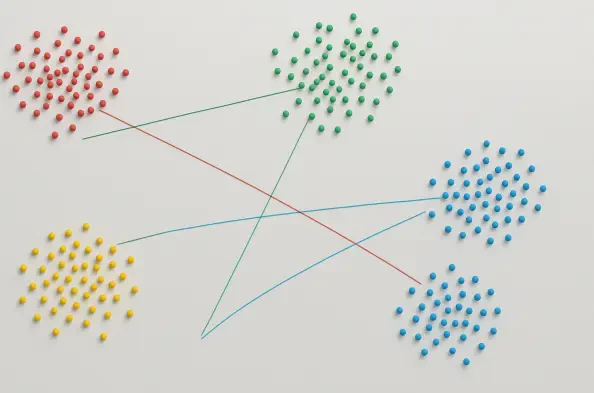
Global prototype matrices in DPAS-Net stabilize the training process by accumulating information across an entire dataset rather than relying on noisy mini-batches. This foundational innovation addresses a persistent headache in the field of unsupervised learning, where multi-view clustering (MVC) attempts to synthesize insights from diverse data