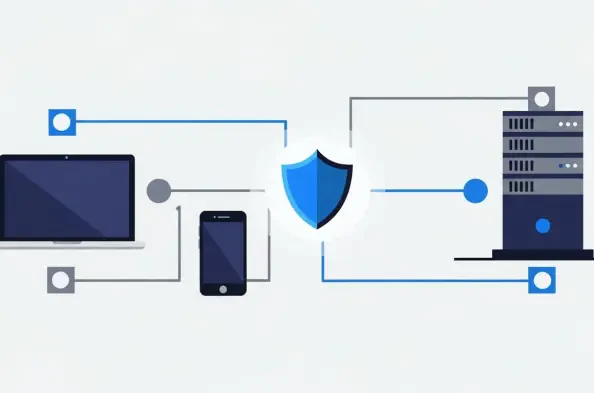
The complete dissolution of the traditional corporate network boundary has forced a fundamental reckoning within the global cybersecurity community as decentralized workforces and cloud-integrated systems redefine the landscape. Every smartphone, laptop, and server now serves as a potential entry point for highly motivated threat actors, creating a vast and porous attack surface that defies legacy protection methods. Because remote work is no longer a temporary adjustment but a permanent operational reality, the historical reliance on a single secured perimeter has become a dangerous liability. Organizations must now grapple with a reality where sensitive data is accessed from hundreds of different locations, often via residential networks that lack enterprise-grade security protocols. This shift necessitates a move toward endpoint-centric defense strategies that do not rely on where a device is located but rather on how that device is behaving in real time. Consequently, modern security mandates a solution that can provide granular visibility into every transaction, regardless of the physical or virtual environment.
The Inherent Failure: Why Legacy Systems No Longer Protect
Traditional antivirus software is increasingly viewed as a relic of a simpler era because it relies almost exclusively on signature-based detection to identify potential threats. This methodology operates much like a database of known fingerprints; if a specific piece of malware has not been previously cataloged and assigned a signature, the security software remains entirely blind to its presence. In a landscape where thousands of new malware variants are generated daily, this reactive posture is fundamentally incapable of stopping zero-day exploits or sophisticated custom code. Furthermore, the reliance on physical file scanning means that any threat not manifesting as a traditional executable file will bypass the system without triggering a single alert. This gap in protection has left many organizations vulnerable to the most common types of modern intrusion, as attackers have moved far beyond the predictable patterns of the early digital age. The industry now recognizes that stopping a threat requires more than just a list of known offenders; it requires an active understanding of intent.
The rise of fileless malware and “living off the land” tactics has further exposed the critical vulnerabilities of signature-reliant defense mechanisms. Modern attackers frequently avoid the hard drive entirely, instead executing malicious scripts directly within a system’s volatile memory or hijacking legitimate administrative tools like PowerShell and Windows Management Instrumentation. Because these techniques involve the use of authorized software that is already permitted to run on the machine, traditional antivirus programs see no reason to intervene. This allows hackers to move laterally through a network, escalate privileges, and exfiltrate data while remaining completely invisible to standard security tools. The danger of these stealthy approaches cannot be overstated, as they turn a company’s own infrastructure against itself. To counter such sophisticated methods, security professionals have had to pivot away from identifying what a file is and toward analyzing what a process is doing. This transition marks the move from static prevention to dynamic detection.
Artificial Intelligence: The New Foundation of Behavioral Monitoring
The primary advantage of AI-powered EDR lies in its sophisticated ability to perform continuous, real-time behavioral analysis across every endpoint in an organization. By utilizing advanced machine learning algorithms, these systems can establish a highly detailed baseline of what constitutes normal activity for every specific user and device on the network. This involves monitoring everything from typical login times and file access patterns to the specific ways an application interacts with the operating system kernel. When a process deviates from this established norm—perhaps by attempting to encrypt a large volume of files or by initiating an unusual outbound connection—the AI identifies the anomaly instantly. Unlike a human analyst who might overlook a minor discrepancy, the machine learning model can process millions of data points simultaneously to spot the earliest indicators of a breach. This proactive approach allows organizations to identify threats based on suspicious actions rather than waiting for a match against a known database of malicious code.
Beyond simple anomaly detection, modern EDR platforms excel at synthesizing vast amounts of telemetry data into a coherent narrative that human security teams can act upon. In many IT departments, the sheer volume of security alerts leads to a phenomenon known as alert fatigue, where critical warnings are buried under a mountain of low-priority notifications. AI mitigates this risk by connecting disparate events that might seem harmless in isolation but indicate a coordinated attack when viewed together. For example, a single failed login might be a typo, but a failed login followed by a registry modification and an unauthorized network scan is a clear sign of an active intrusion. By correlating these events automatically, the system provides a high-level context that allows responders to distinguish between minor technical glitches and genuine security emergencies. This synthesis of information transforms raw data into actionable intelligence, ensuring that security personnel spend their time investigating real threats rather than chasing false positives.
Rapid Intervention: Automating Containment and Forensic Investigations
In the high-stakes world of modern cybersecurity, speed is the most critical factor in determining whether an incident remains a minor inconvenience or becomes a catastrophic data breach. AI-powered EDR significantly reduces the “dwell time” of an attacker by initiating automated, proactive steps to contain a threat the moment it is identified. Instead of waiting for a human administrator to log in and assess the situation, the EDR agent can instantly isolate an infected laptop from the rest of the corporate network or kill a malicious process before it can spread. Some advanced solutions even offer the capability to automatically roll back unauthorized changes, restoring modified or encrypted files to a previous safe state. This level of automation is essential in an era where automated ransomware can spread through a network in a matter of seconds. By handling the initial containment steps, the EDR system buys precious time for the security team to perform a more thorough investigation and plan a comprehensive recovery strategy.
The forensic capabilities provided by EDR systems offer a secondary but equally vital layer of protection through the creation of a comprehensive “black box” recording. Every action taken on an endpoint—every file opened, every network connection made, and every command executed—is meticulously logged and stored for retrospective analysis. This deep visibility is crucial for performing an accurate post-mortem after a security event, as it allows investigators to trace the attack back to its original point of entry. Whether a breach began with a sophisticated phishing email, a compromised set of credentials, or a previously unknown software vulnerability, the EDR data provides the evidence needed to close the gap. Understanding the specific mechanics of an intrusion ensures that an organization can implement targeted fixes to prevent the same attacker from using the same doorway in the future. This data-driven approach moves cybersecurity from a state of constant reaction to one of strategic improvement, where each incident serves to strengthen the overall posture.
Strategic Integration: Designing a Resilient Security Architecture
While the capabilities of AI-powered EDR are undeniable, the technology is most effective when it is integrated into a broader, multi-layered “Defense in Depth” strategy. EDR should not be viewed as a replacement for other security measures but rather as the final, most sophisticated line of defense within a modern stack. It works in concert with network-level firewalls that filter incoming traffic, identity management systems that enforce multi-factor authentication, and ongoing employee awareness training. For instance, if a user accidentally bypasses the network gateway by clicking a malicious link in a personal webmail account, the EDR is the tool that detects the resulting anomalous behavior on the physical device. This layered approach ensures that even if one defense mechanism fails, others are in place to catch the threat before it can reach the core server environment. A resilient architecture is one where each component shares intelligence, creating a unified front against increasingly diverse and persistent digital adversaries.
Choosing the right EDR platform requires a careful evaluation of detection speed, the depth of automation, and the overall ease of system integration. An effective solution must be able to communicate seamlessly with existing Security Information and Event Management (SIEM) systems and incorporate external threat intelligence feeds to stay ahead of global trends. Furthermore, the user interface should be designed to provide clear, intuitive visualizations that help investigators understand complex attack paths at a glance. Organizations must also consider the performance impact on the endpoints themselves, ensuring that the security agent provides robust protection without hindering the productivity of the employees using the devices. By selecting a platform that balances technical power with operational efficiency, businesses can build a security foundation that is both proactive and sustainable. The goal is to create an environment where security enhances the business process rather than becoming a bottleneck, allowing for growth without compromising safety.
Operational Outcomes: Actionable Steps for Institutional Resilience
The transition toward AI-powered EDR became a mandatory evolution for organizations that prioritized long-term survival in an increasingly hostile digital environment. By moving away from static, signature-based tools, security leaders adopted a more dynamic posture that recognized the fluidity of modern cyber threats. The most successful implementations focused on configuring automated response playbooks that reduced human intervention during the initial phases of a breach. These organizations moved to integrate their endpoint telemetry with broader network monitoring to create a single source of truth for their security operations centers. This holistic view allowed for a more rapid identification of lateral movement and privilege escalation, which were previously the most difficult stages of an attack to detect. The result was a measurable reduction in the time required to neutralize threats, which directly translated to lower recovery costs and less operational downtime for the entire enterprise.
Looking back at the implementation phase, the most effective strategy involved treating EDR data as a continuous feedback loop for improving overall security hygiene. Teams utilized the forensic insights gained from minor incidents to harden their configurations and refine their identity access management policies. They also prioritized the training of specialized personnel who could interpret the AI-generated narratives, ensuring that the human element remained a strategic part of the defense cycle. The shift toward this technology also necessitated a reevaluation of vendor relationships, favoring those who offered open APIs and robust integration capabilities with existing cloud infrastructures. Ultimately, the adoption of AI-driven endpoint defense provided the visibility and resilience needed to support a truly distributed workforce. By embracing these advanced tools, institutions transformed their endpoints from liabilities into proactive sensors, securing their operations against the complexities of the modern landscape while maintaining business continuity.