The rise of the Digital Operational Resilience Act is forcing financial institutions to move beyond standard encryption and adopt hardware-level data isolation. For decades, the cloud security industry prioritized perimeter defenses and network-level firewalls, yet a profound structural vulnerability persisted deep within the silicon. While information remained relatively secure while stored on high-capacity drives or traversing fiber-optic cables, it was forced to enter a vulnerable state the moment a processor needed to perform a calculation. To manipulate data, the central processing unit traditionally required it to be in an unencrypted, readable format known as plaintext. This requirement meant that anyone with administrative access to the physical host or the underlying management software could theoretically intercept sensitive records or cryptographic keys. Confidential computing represents a paradigm shift by establishing a cryptographically secured environment within the hardware itself, ensuring that even during active processing, data remains shielded from unauthorized observers.
Bridging the Gap in Cloud Encryption
To appreciate the significance of this technological leap, one must examine the triad of data security states: at rest, in transit, and in use. Modern enterprises have largely mastered the protection of data at rest through robust disk encryption and data in transit via sophisticated transport layer security. However, the phase when data is actively being processed by the system’s memory has remained a significant security blind spot. Historically, when a cloud server loaded an application into its random-access memory, that information was effectively naked to the host operating system and hypervisor. This vulnerability created an inherent risk where a compromised cloud infrastructure or a rogue data center employee could scrape memory for credentials or private health records. By utilizing hardware-level isolation, confidential computing ensures that the data remains scrambled until it reaches the execution core of the CPU, effectively closing the final major gap in the traditional enterprise security lifecycle.
This technological shift is effectively ending the era of contractual trust that once defined the relationship between businesses and cloud service providers. For the last several years, organizations relied on service-level agreements, legal contracts, and periodic SOC 2 audits as their primary defense against provider-level data exposure. These measures provided a sense of security, but they ultimately relied on human policy and the integrity of the provider’s operational staff rather than physical impossibilities. As the regulatory landscape tightens and cyber threats become more sophisticated in 2026, the reliance on such promises has become increasingly untenable for high-stakes operations. Enterprises are now demanding architectural proof of isolation that is backed by the laws of physics and mathematics rather than the wording of a legal document. This transition allows companies to move their most sensitive workloads to the public cloud while maintaining absolute certainty that their intellectual property is mathematically isolated from any outside interference.
Inverting the Traditional Security Model
The fundamental architecture of cloud security is undergoing a complete inversion thanks to the adoption of confidential computing. Traditionally, security mechanisms like sandboxing and container isolation were designed primarily to protect the cloud provider’s physical infrastructure from potentially malicious or unstable code belonging to the customer. Technologies such as lightweight virtual machines and hypervisor-level isolation were built to prevent a single compromised application from crashing an entire server or gaining access to other tenants’ data. Confidential computing flips this model by establishing a secure perimeter that protects the customer’s specific workload from the cloud provider’s own infrastructure. This creates a scenario where the host platform serves as a blind utility, providing the necessary power, cooling, and hardware resources without ever having the technical capability to inspect the payloads it is processing. This shift represents a move toward zero-trust principles at the hardware layer, where no entity is granted implicit access to information.
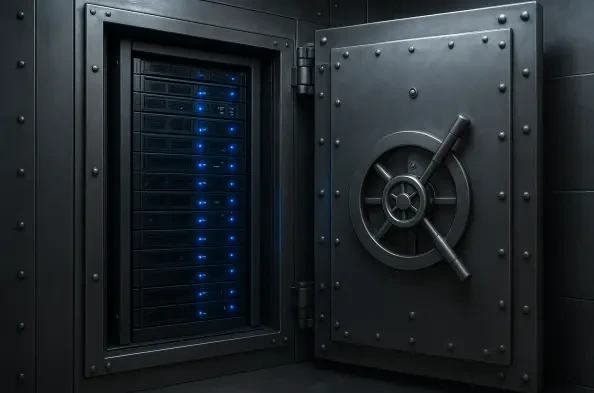
This high-level isolation is achieved through the implementation of Trusted Execution Environments, or TEEs, which function as cryptographically hardened enclaves inside the processor. A helpful analogy is to envision a bank where the cloud provider owns the physical building and the massive vault, yet the customer is the sole possessor of the unique key to their specific safety deposit box inside. Even if the bank manager possessed the highest level of clearance, the mechanical design of the vault would physically prevent them from viewing or touching the contents of the box. In the digital realm, this is accomplished through hardware-managed encryption keys that are entirely invisible to the host operating system, the hypervisor, and even the cloud provider’s firmware. By sequestering the memory assigned to a specific task within these encrypted enclaves, the system ensures that the information remains inaccessible to any other process running on the machine, thereby neutralizing the threat of memory-scraping attacks or kernel-level compromises.
Industry Adoption and Strategic Implementation
In the initial stages of its development, confidential computing was often viewed as a complex and niche solution due to the requirement for developers to rewrite their applications using proprietary software development kits. This created a high barrier to entry and led to significant concerns regarding vendor lock-in, as code written for one manufacturer’s chips would not function on another’s. However, the industry has recently converged around open standards, most notably through the expansion of the Confidential Containers project within the Cloud Native Computing Foundation. This initiative has successfully democratized access to hardware-level security by allowing organizations to package their existing, unmodified container images and deploy them directly into hardware-attested enclaves. As a result, the transition to confidential environments no longer requires a massive engineering overhaul, making it a viable standard for mainstream enterprise teams that need to secure their sensitive operations without incurring the technical debt of a complete software refactor.
While not every routine web application necessitates such extreme measures, specialized sectors have found this technology to be an essential component of their long-term digital strategy. Financial institutions and global healthcare networks are increasingly utilizing these secure enclaves to satisfy the rigorous data residency and privacy mandates that characterize the regulatory environment of 2026. Furthermore, technology firms are leveraging confidential computing to protect the proprietary logic and weights of their artificial intelligence models during high-stakes inference tasks. This hardware-level protection also enables a new era of collaborative data science, where multiple competing organizations can perform joint analysis on a shared dataset—such as detecting cross-bank fraud patterns—without any party ever gaining access to the raw, private data of the others. By ensuring that the data is only decrypted inside the secure processor core, businesses can collaborate on sensitive projects that were previously considered too risky or legally complex to pursue.
Balancing Performance and Control
The integration of confidential computing required organizations to carefully weigh the benefits of absolute privacy against specific operational trade-offs that surfaced during implementation. Because the hardware was tasked with the constant encryption and decryption of data as it moved across the isolation boundary, many teams observed a measurable impact on system performance. For workloads that relied heavily on high-frequency input and output operations, such as large-scale relational databases, the throughput occasionally dropped by ten to twenty percent. Additionally, the inherent blindness of the host system presented significant challenges for traditional observability and monitoring strategies. Since the underlying operating system could no longer inspect the memory of the protected container, many standard debugging tools and performance agents ceased to function. Engineering teams responded by re-architecting their monitoring stacks to operate from within the secure vault itself, ensuring that visibility was maintained without compromising the fundamental integrity of the hardware isolation.
The final success of these security implementations relied heavily on how organizations managed their encryption keys and established their attestation protocols. It was determined that true data sovereignty was only possible when a business maintained exclusive control over its cryptographic keys through Keep Your Own Key strategies, rather than delegating that authority to a third-party cloud provider. Those who successfully navigated this transition focused on verifying the hardware-generated certificates to ensure that their code was running on genuine, untampered silicon. Looking ahead, the focus shifted toward integrating these hardware protections into the very beginning of the software development lifecycle to prevent late-stage deployment friction. Decision-makers learned to prioritize open-source standards to maintain flexibility and avoid being tethered to a single hardware vendor. By treating hardware-level data isolation as a foundational requirement rather than a premium feature, enterprises moved into a new era where they processed their most valuable assets with total confidence and exclusive control.