By chaining CVE-2026-109618 with a local privilege escalation, attackers gain the elevated rights necessary to install networking implants and pivot to internal virtual machines. This discovery, detailed by Check Point Research on November 12, 2026, highlights a sophisticated campaign targeting internet-facing Security Gateways. The exploitation relies on a critical nine-day window between the release of official PHP security fixes and the first observed compromises of unpatched portals. While initial reports focused on the remote code execution flaws themselves, the true danger lies in how effectively these vulnerabilities serve as a foundation for a broader, more destructive intrusion. Once an attacker bypasses the initial perimeter, the transition from an application-layer vulnerability to a full-scale hypervisor wipe occurs with alarming speed and precision.
The gravity of this situation is amplified by the fact that the two primary PHP bugs, known collectively as PHP2Shell, carry a CVSS score of 9.2. This high rating reflects the unauthenticated nature of the exploit, which allows threat actors to execute code on sensitive network gateways without any prior credentials or session tokens. For organizations relying on these gateways to manage remote access through Mobile Access portals, the exposure is immediate and severe. The campaign demonstrates that modern defense cannot simply rely on patching the specific service that is initially targeted. Instead, the focus must shift to the entire attack surface, as the subsequent stages of the chain involve escalating privileges within the local operating system to gain the root-level control required for more permanent installations and internal movement.
1. The Systematic Progression of the Breach Chain
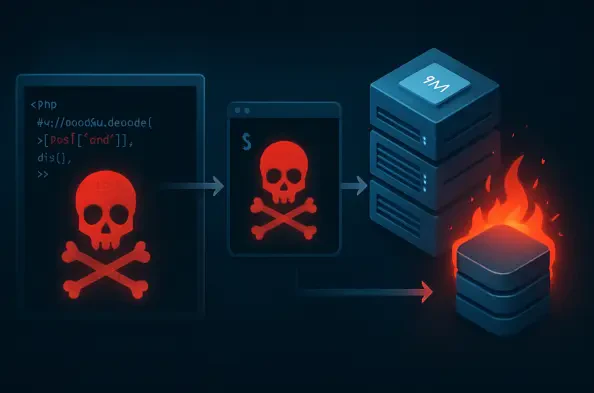
The intrusion sequence begins with the exploitation of PHP2Shell vulnerabilities on the Check Point Mobile Access portal, providing an initial foothold. However, code execution at the application level typically lacks the permissions required to modify system-level binaries or access protected network segments. To overcome this, threat actors leverage CVE-2026-123039, a local privilege escalation bug found within the Gaia OS Dynamic CLI. This specific vulnerability allows the attacker to move from a limited user context to a root-level administrator, effectively taking complete control of the security gateway’s underlying operating system. With root access established, the environment becomes an open platform for the attacker to install persistence mechanisms, such as PHP web shells and custom Linux backdoors, which ensure continued access even if the initial exploit vector is closed.
Once the gateway is fully compromised and persistent access is secured, the attackers move into the lateral movement phase. By utilizing the trust relationship between the security gateway and the internal network, the actors pivot toward high-value infrastructure, specifically VMware ESXi hosts. This movement is typically performed via SSH, using credentials that may have been harvested from the compromised gateway or obtained through other means within the network. After reaching the hypervisor, the final and most damaging stage of the attack occurs. The deployment of the destroy_v6 wiper tool initiates a recursive deletion process that targets virtual machine data and configuration files. This results in an immediate and catastrophic loss of services, often accompanied by the placement of politically themed notes that leave no doubt about the attacker’s destructive intent.
2. Technical Foundations of the PHP Memory Corruption
The primary driver of this attack chain is a pair of remote code execution flaws within the PHP runtime environment, identified as CVE-2026-109618 and CVE-2026-109619. The first of these, CVE-2026-109618, is categorized as a memory corruption vulnerability triggered during out-of-memory conditions. When the PHP interpreter fails to allocate sufficient memory for an incoming request, it can be forced into an unstable state where internal data structures are only partially initialized. If an attacker carefully shapes the memory environment through a series of malformed requests, they can influence the cleanup process that occurs when the request fails. This allows the actor to steer the execution flow toward malicious code, effectively hijacking the process before the interpreter can safely terminate the faulty session.
In contrast, CVE-2026-109619 exploits what is known as a stale global state, specifically affecting environments where PHP is deployed using the mod_php module with certain error-reporting configurations. By manipulating global variables that persist across requests, attackers can cause the interpreter to rely on outdated or malicious data during execution. This vulnerability is particularly potent in appliance-based environments like security gateways, where PHP is often used to provide the user interface and management portals for remote workers. Because these portals must be exposed to the public internet to function, they become prime targets for automated scanning and exploitation. The combination of these two flaws ensures that attackers have multiple paths to achieving code execution, making the initial breach of the gateway highly reliable against unpatched systems.
3. Mechanisms of Persistence and Network Tunneling
Following the successful escalation to root privileges on a Gaia-based gateway, the attackers deploy a persistent Linux backdoor known as TSGA. This malware is designed to be stealthy, often adopting naming conventions that mimic legitimate system processes, such as CPconfigdaemon or slot_CPconfigdaemon. This camouflage helps the implant evade detection by administrators who might only be performing cursory checks of active process lists. TSGA is not merely a passive listener; it serves as the primary command-and-control hub for the attacker, ensuring that they can return to the device even after a reboot or a service restart. By embedding itself deeply into the system’s startup routines, the backdoor maintains its presence on the perimeter until it is manually identified and removed.
The most critical component of the TSGA implant is the TSProxy module, which is often dropped as a shared library named /lib/libcpfwcommon.so. This module provides a sophisticated, encrypted SOCKS-style proxy capability that allows the attackers to tunnel traffic through the gateway and into the internal network. By masquerading as legitimate traffic, TSProxy enables the threat actors to bypass traditional network monitoring and internal firewalls that might otherwise flag unusual lateral movement. This proxying capability is what allows the attackers to reach the VMware ESXi hosts, as it provides a secure bridge between the public-facing gateway and the private management network. Without this capability, the attackers would be limited to the gateway itself, but with TSProxy, the entire internal infrastructure becomes reachable and vulnerable to further exploitation or data destruction.
4. Execution of the Virtualization Wiper Stage
The endgame of the PHP2Shell attack chain is characterized by the deployment of the destroy_v6 wiper tool on targeted VMware ESXi hosts. This tool is specifically engineered to target the virtualization layer, where it can cause the maximum amount of damage with the minimum amount of effort. By pivoting from the compromised gateway to the ESXi management interface over SSH, the attackers execute the wiper with the intent of permanently deleting virtual machine disks and metadata. The tool recursively scans the filesystem, overwriting data to prevent recovery and deleting essential files required for the hypervisor to boot or manage its virtual guests. This level of destruction is far more severe than traditional ransomware, as there is no opportunity for data recovery through payment; the goal is total service disruption.
During the destruction process, the attackers often leave behind a text file titled DREAM_ANNEXATION.txt, which serves as a signature of the campaign. The presence of this file on a wiped host is a clear indicator of the specific threat group’s involvement, although it provides little in the way of actionable recovery. The choice to target ESXi hosts is a strategic one, as hypervisors often host dozens or hundreds of virtual servers, including databases, application servers, and domain controllers. Wiping a single ESXi host can effectively take down an entire business unit’s operations in a matter of minutes. This highlights the critical risk of maintaining open network paths between internet-facing security appliances and the management interfaces of core virtualization infrastructure, which should always be isolated on dedicated, highly restricted segments.
5. Timeline of Disclosure and Observed Exploitation
The timeline of the PHP2Shell campaign illustrates the incredible speed at which modern threat actors operate once a critical vulnerability is disclosed. On October 21, 2026, PHP released patches for the affected versions, and Check Point simultaneously activated IPS protections to help shield its customers. However, the window for proactive defense was remarkably short. By October 22, global scanning and exploitation attempts were already being detected at a scale that touched approximately 10% of organizations worldwide. This rapid onset of activity forced security teams to scramble, often before they had the opportunity to test and deploy the necessary patches in their production environments. The attackers were essentially racing against the defenders to find and exploit as many vulnerable gateways as possible before they were secured.
The first confirmed successful exploitations of unpatched gateways were observed as early as October 30, 2026, just nine days after the initial disclosure. This period represents the “danger zone” for administrators who rely on traditional patch management cycles, which often extend into weeks or even months. By the time Check Point Research published the full details of the attack chain and the destroy_v6 wiper on November 12, many organizations had already been breached. The timeline concludes with the release of the November Jumbo Hotfix, which provided a comprehensive solution for the various flaws utilized in the chain. This sequence of events serves as a stark reminder that in the current threat environment, the delay between a patch release and a full-scale destructive attack can be measured in days, not weeks.
6. Identifying the Vulnerable Enterprise Infrastructure Range
Determining the scope of exposure requires a detailed inventory of both the security gateway firmware and the version of PHP running on those systems. Check Point has identified a wide range of affected products, including Security Gateways running versions R80 through R82.20, as well as several Spark Firewall branches. The vulnerability is specifically tied to the Mobile Access portal, meaning that any gateway with this service exposed to the internet is a potential target. Organizations must verify their current firmware levels and determine if they are running the unpatched versions that were active during the peak of the exploitation window. It is not enough to simply have a firewall in place; the configuration and patch level of that firewall are what determine its effectiveness against these specific RCE and privilege escalation attacks.
In addition to the gateway firmware, the underlying PHP builds are also a source of risk for organizations that may have integrated these versions into other parts of their infrastructure. Vulnerable versions include PHP 8.2 through 8.5, specifically within the ranges that were active prior to the October 21 fixes. While the most visible attacks have targeted Check Point gateways, any application using these specific PHP builds in a mod_php configuration with display_errors disabled could theoretically be vulnerable to similar memory corruption exploits. For this reason, a comprehensive scanning and update strategy must be employed across the entire enterprise, ensuring that every instance of the PHP runtime is brought up to the latest secure standard. This prevents attackers from finding secondary entry points if the primary gateway is successfully hardened.
7. Strategic Mitigation and Post-Incident Recovery Steps
The first and most important step for any administrator is the immediate application of the November Jumbo Hotfix to all affected Management Servers and Security Gateways. This hotfix addresses the underlying PHP vulnerabilities and the Gaia OS privilege escalation bug, effectively breaking the two most critical links in the attack chain. Prioritization should be given to any gateway that has its Mobile Access portal reachable from the public internet, as these are the primary targets for initial access. Beyond patching, it is essential to verify that IPS protections are not only enabled but also configured to block the specific signatures associated with PHP2Shell. This provides a necessary layer of virtual patching for systems that cannot be taken offline immediately for a full firmware update.
Once the gateways are secured, the focus must shift to hunting for indicators of compromise within the network. Administrators should scan their systems for the presence of the TSGA backdoor processes and the TSProxy shared library, while also checking for any unauthorized listeners on TCP port 11072. If any evidence of an intrusion is found, a full incident response protocol must be initiated, which includes rotating all stored credentials and SSH keys that may have been compromised. On the virtualization side, the most effective defense is to completely isolate ESXi management interfaces from the gateway network. By disabling SSH on hypervisors and requiring a secure, multi-factor jump host for all administrative access, organizations can ensure that a perimeter breach does not lead to the total destruction of their virtual environment.
8. Critical Considerations for Recovery and Attribution
When assessing the aftermath of a PHP2Shell attack, organizations must distinguish between the initial breach and the subsequent lateral movement. A frequent question is whether VMware ESXi itself is vulnerable to the PHP exploits; the answer is no, as the hypervisor is merely a victim of the attacker’s ability to move through the network after seizing the gateway. Verification of a breach should focus on the specific artifacts left behind by the malware, such as the CPconfigdaemon process or the DREAM_ANNEXATION.txt files on destroyed hosts. Because the wiper stage results in total data loss, the only viable path to recovery is through off-site, immutable backups. If backups were accessible to the compromised gateway or the hypervisor management network, they may have been destroyed along with the production data, making recovery impossible.
The question of who is behind these attacks remains a subject of ongoing investigation. While some researchers have pointed to similarities between the TSGA malware and other known frameworks, there is currently no official attribution to a specific threat actor or nation-state. The use of politically themed notes may be a distraction or a false flag, and defenders should focus on the technical signatures of the attack rather than speculative attribution. Ultimately, the PHP2Shell campaign demonstrated that the vulnerability of a single edge device could lead to the complete erasure of an organization’s core server infrastructure. Security teams that recognized this threat early and implemented strict network segmentation between their firewalls and their hypervisors were the only ones who avoided the most catastrophic outcomes of the wiper stage.