An analyst encountering a virtualized file will find that the original instructions are gone, replaced by the internal workings of a custom virtual machine dispatcher and its handlers. This specific security suite operates as a sophisticated barrier that prevents unauthorized actors from deciphering how an application functions at its most fundamental level. In the current landscape of 2026, software protection has evolved from simple obfuscation into deep architectural redesign. While developers utilize this technology to safeguard their trade secrets and prevent licensing bypasses, the same mechanisms are frequently adopted by threat actors to hide malicious payloads from security scanners. The dual-use nature of this software creates a recurring tension between legitimate intellectual property protection and the ongoing needs of malware researchers. By transforming standard executable code into a proprietary format, the tool ensures that even the most skilled reverse engineers must spend months of effort to uncover logic that would otherwise be visible in minutes.
Logic Transformation: The Role of Code Mutation
The process of mutation serves as the foundational layer of defense, focusing on the literal rearrangement and complication of native instructions. Instead of altering the language the processor speaks, mutation focuses on rewriting the logic into a “spaghetti” structure that preserves functionality while destroying readability. In practice, this means a simple mathematical operation or a logical check is replaced by hundreds of unnecessary, convoluted branches and junk instructions. To a human analyst looking at a disassembler, the resulting output appears as a chaotic web of jumps and redirects that lacks any discernible pattern. This technique specifically targets static analysis, where researchers attempt to read the code without executing it. By making the binary significantly more complex, mutation increases the computational overhead for decompilers, often causing them to produce erroneous or incomplete results. This ensures that the developer’s intent remains hidden behind a wall of noise.
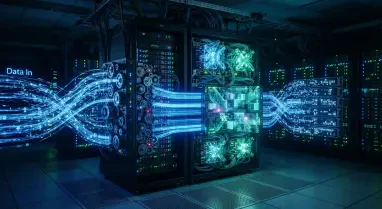
Building on the foundation of mutation, the virtualization engine represents the peak of this security suite’s capabilities. Rather than merely shuffling native instructions, virtualization strips them away and replaces them with a custom bytecode that is entirely unique to each protected file. This bytecode is not understandable by any standard processor; instead, it requires a specialized virtual machine dispatcher that is embedded directly into the application. When the protected function is called, the dispatcher takes over, interpreting the bytecode and executing the corresponding handlers one by one. This approach effectively moves the execution logic into a “black box” where the original processor instructions never exist in a readable form within the system’s memory. For an investigator, the challenge shifts from understanding the application to reverse engineering an entirely new, undocumented CPU architecture. This creates an immense barrier to entry, as the logic is no longer tied to the predictable patterns of x86 or ARM instruction sets.
Defensive Architectures: Virtualization and Strategic Application
Implementing such high levels of protection often involves a calculated trade-off between security and operational efficiency. Because virtualized code must be interpreted by an internal engine, it naturally runs slower than native machine code. In the high-performance environment of 2026, developers must be selective about which parts of their software receive this “Ultra Mode” treatment, which combines both mutation and virtualization. High-value components, such as proprietary encryption algorithms, license validation routines, and sensitive data processing loops, are typically the primary candidates for full virtualization. Conversely, performance-critical sections of the code, like user interface rendering or real-time networking, might only receive light mutation to ensure the user experience remains fluid. This strategic application allows a program to remain fast and responsive while keeping its most vital intellectual property under heavy guard. The ability to fine-tune these settings per function is what makes the tool so versatile for modern builds.
Beyond the internal transformation of code, the software provides a suite of environmental safeguards designed to detect and neutralize analysis attempts. One critical feature is import protection, which masks the system APIs that the program calls during its operation. Normally, an analyst can infer a program’s functionality by looking at the libraries it uses; for instance, calls to networking APIs suggest communication with a server. By hiding these links, the protector prevents researchers from building a map of the program’s external dependencies. Furthermore, the suite includes active anti-debugging and anti-virtualization triggers that scan the environment for tools like OllyDbg or specialized research sandboxes. If the program detects it is being monitored, it can immediately terminate execution or switch to a benign code path to hide its true purpose. These checks ensure that the software does not reveal its inner workings while under the scrutiny of a controlled laboratory setting, maintaining a high level of operational security.
Analytical Hurdles: Detection and Forensic Reconstruction
The widespread adoption of these protection techniques has a significant impact on the cybersecurity ecosystem, particularly regarding antivirus detection. Because the tool is so effective at hiding code, security engines often struggle to distinguish between a legitimate protected application and a malicious one. This leads to frequent “false positives” where a heuristic scanner flags a file simply because it is protected by VMProtect. Antivirus vendors have responded by categorizing such files as suspicious by default, forcing legitimate software developers to engage in a constant cycle of whitelisting and digital signing. For organizations, this means that every new release must be manually submitted to security vendors to ensure it is not blocked by enterprise-grade firewalls. This tension highlights the difficulty of maintaining security in an era where the same tools that protect innovation are also used to facilitate cyberattacks. The presence of the protector itself becomes a signal that a file contains hidden information.
For a reverse engineer, the encounter with a virtualized binary necessitates a complete change in strategy, moving away from standard disassembly toward a process called devirtualization. This is a highly technical undertaking that involves mapping the custom bytecode back to its logical equivalents in a native instruction set. Researchers must first isolate the dispatcher and identify how each handler operates, effectively creating a manual translation table for the unique virtual architecture. While specialized tools and services have emerged by 2026 to assist with this reconstruction, they are far from perfect. Even when the logic is successfully mapped back to a readable format, the original source-level metadata, such as variable names, developer comments, and structural formatting, is lost forever. The result is a logical skeleton that, while functional, lacks the contextual nuances of the original source code. This ensures that even a successful “crack” of the protection does not grant full access to the developer’s original creative process.
Practical Deployment: Balancing Protection and Accessibility
The effectiveness of this protection suite is further enhanced by its broad compatibility across multiple operating systems and hardware architectures. Whether an application is built for Windows, Linux, or macOS, and whether it runs on traditional x86-64 or modern ARM64 processors, the protection mechanisms remain consistent. This cross-platform utility makes it a preferred choice for companies managing diverse software portfolios in 2026. However, relying solely on a protector is rarely enough for a comprehensive security posture. Organizations should view these tools as one layer of a “defense-in-depth” strategy that also includes strong code signing, secure boot processes, and regular vulnerability assessments. By integrating the protector early in the development lifecycle, teams ensured that security was baked into the architecture rather than added as an afterthought. This proactive approach helped mitigate the risk of zero-day exploits being discovered through reverse engineering, as the entry barrier for attackers remained prohibitively high throughout the software’s lifecycle.
In summary, the deployment of advanced software protection served as a vital deterrent against the unauthorized analysis and replication of critical digital assets. Developers who integrated these layers of mutation and virtualization successfully increased the cost of attack for rival entities and malicious actors alike. The conclusion of these security efforts was a more resilient software environment where intellectual property remained shielded from casual observation. For those looking to implement similar safeguards, the most effective path involved a balance of high-level virtualization for sensitive logic and standard signing for broader file integrity. By 2026, the industry recognized that while no protection was entirely unbreakable, the goal was to make the effort required to break it exceed the potential reward. This strategic positioning ensured that software remained a secure medium for innovation, even as the tools used by analysts continued to advance in complexity. Practical next steps for developers included the regular rotation of protection keys and the monitoring of emerging devirtualization trends.