
Data Quality Management

Coordinated efforts between healthcare vendors and hospital administrators are essential to replace legacy hardware before quantum-based attacks become a reality. In early 2026, the digital health landscape has reached a precarious tipping point where the standard encryption protecting patient lives is under the looming shadow of quantum

Unmanaged database copies lead to copy sprawl, which increases both the corporate attack surface and the associated software licensing costs for the business. As organizations navigate the complex technological landscape of 2026, data masking has evolved from a secondary compliance requirement into a foundational pillar of enterprise security and

Law enforcement agencies must prioritize the arduous task of data cleansing to prevent miscarriages of justice caused by faulty algorithmic conclusions. As police departments across the nation grapple with shrinking budgets and a steady rise in digital-heavy criminal activity, the pressure to deploy sophisticated artificial intelligence solutions
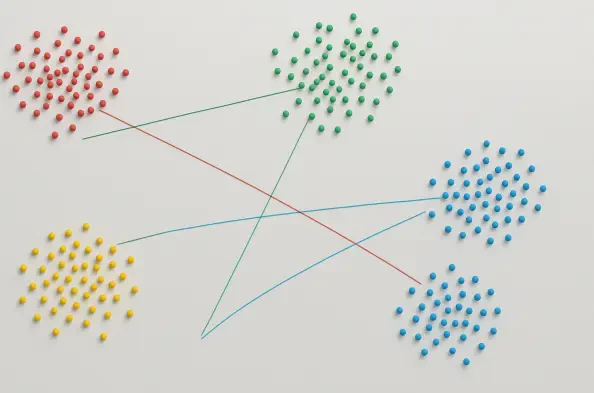
Global prototype matrices in DPAS-Net stabilize the training process by accumulating information across an entire dataset rather than relying on noisy mini-batches. This foundational innovation addresses a persistent headache in the field of unsupervised learning, where multi-view clustering (MVC) attempts to synthesize insights from diverse data

The persistent fragmentation of enterprise data ecosystems is encountering its most formidable challenger yet as a unified semantic standard transitions from a niche experiment into a global industrial necessity. This shift is driven by the formal alignment of major cloud providers and platform vendors around Apache Ossie, an open-source

The gap between a recorded intervention time and the actual physiological response can lead to the training of brittle AI models that may fail in real-world clinical settings. In the high-stakes environment of the neurocritical care unit, where patients battle traumatic brain injuries, every second counts and every data point matters.