The global technology landscape is currently grappling with a seismic shift in hardware availability, as the insatiable demand for artificial intelligence reconfigures the traditional server market. Vernon Yai, a seasoned expert in risk management and infrastructure governance, joins us to dissect how industry leaders are navigating a world where conventional components have become rare commodities. This conversation explores the tactical maneuvers of major hardware providers as they balance skyrocketing costs against the desperate need for AI-capable infrastructure, providing a rare glimpse into the high-stakes negotiations defining the next era of data processing.
The industry is witnessing a massive reallocation of wafer capacity from traditional server memory to high-bandwidth memory to support AI infrastructure. How is this structural disruption fundamentally changing the way manufacturers approach their production lines?
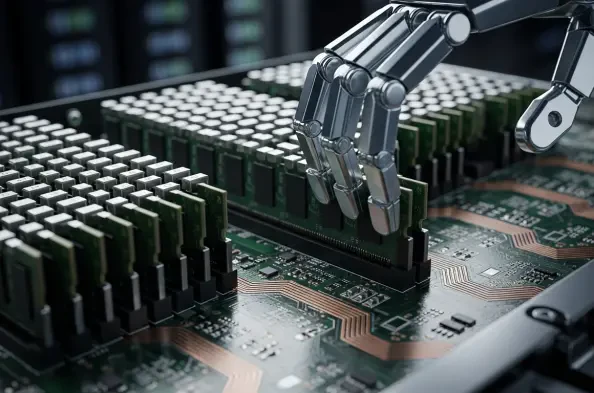
We are no longer looking at a standard cyclical dip in the market; instead, we are witnessing a permanent reordering of global manufacturing priorities. Manufacturers are aggressively shifting their limited wafer capacity toward high-bandwidth memory because that is where the AI-driven demand sits, which leaves the conventional memory that enterprises rely on for standard software in a state of starvation. This crunch creates a visceral tension in the supply chain where every single wafer is a contested resource. Leaders like Jeffrey Clarke have noted that this isn’t just about making more parts, but about finding them in a market that has fundamentally changed its DNA. The struggle is palpable as companies realize that the traditional “just-in-time” models are being replaced by a frantic scramble for any available capacity to fulfill a growing backlog.
As memory shortages drive up commodity costs, how are major players like Dell and HPE differentiating their supply chain strategies to protect their margins and customer relationships?
The strategies we are seeing are a fascinating study in contrast, with Dell choosing to prioritize their largest strategic customers while passing these sharp commodity increases directly down the line. It is a grueling environment where pricing is being adjusted almost daily, a pace that creates significant financial pain for the end consumer but allows the company to maintain a tight grip on its margins. HPE, on the other hand, is leaning heavily into long-term agreements with memory partners to lock in capacity years in advance to avoid being left empty-handed. They are working in a tight-knit coordination with channel partners to navigate lead times that are stretching further than we have seen in years. Despite these hurdles, the financial results are staggering, with Dell reporting a total revenue jump of 88% year-over-year to a massive $43.8 billion, proving that even in a shortage, the premium on hardware is immense.
With infrastructure costs rising and supply becoming increasingly constrained, what shifts are you observing in how enterprise customers are committing to long-term IT investments?
The fear of being left behind in the AI arms race has created a “buy now at any cost” mentality among enterprise leaders. We are seeing large-scale customers move away from flexible, short-term purchasing to locking in three-to-five-year deals just to guarantee they have the physical hardware to run their operations. Antonio Neri has pointed out that there is no “cliff” in sight; companies are actually accelerating their procurement because they recognize that waiting only leads to higher prices and longer waits. Even with the sequential 15% rise in hardware revenue for AI cloud providers, which reflects those higher average selling prices, the appetite for infrastructure remains unsated. It is a high-pressure environment where budgets are being stretched to the breaking point, yet the perceived risk of technological obsolescence outweighs the immediate sting of inflation.
What is your forecast for the memory market and its impact on server availability through 2026?
I anticipate that the supply-demand imbalance will remain the defining characteristic of the server market well into 2026, as manufacturers struggle to keep pace with the exponential growth of AI data centers. We will likely see a bifurcated market where conventional server memory remains a “bottleneck” component, forcing many enterprises to either pay a significant premium or delay their standard infrastructure refreshes. The trend of three-to-five-year long-term agreements will become the standard requirement for any organization hoping to secure predictable lead times. Ultimately, the revenue growth we are seeing today—like the 88% jump at Dell—suggests that while the supply chain is strained, the financial floor of the industry has been permanently raised. Companies that do not secure their memory pipelines now will find themselves facing not just higher costs, but an absolute lack of the physical components necessary to compete.