
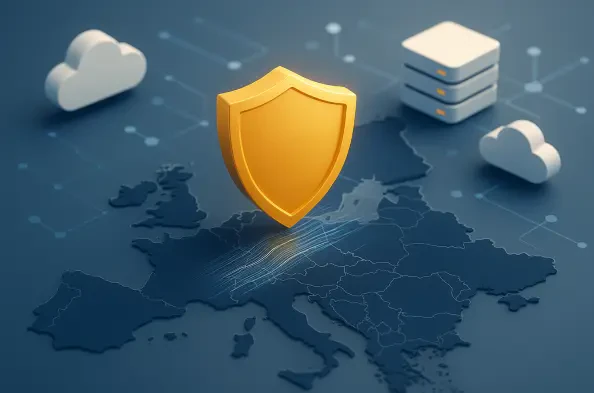
The Tech Sovereignty Package represents a major strategic shift toward building a self sufficient European digital landscape that resists external influence. This legislative push targets the heavy dependence on American cloud service providers that currently dominate over seventy percent of the regional market. Brussels is now enforcing strict localization mandates that require mission-critical information to be stored and processed exclusively within the borders of the European Union. These measures aim to neutralize the extraterritorial reach of foreign laws, such as the U.S. CLOUD Act, which previously allowed American authorities to request data held by U.S. firms regardless of physical location. By prioritizing domestic infrastructure, the EU is not merely regulating technology but is actively redefining the geopolitical boundaries of the digital era. This transition creates a complex environment where legal compliance becomes as vital as technical performance for any global entity operating within the continent.
Strengthening the European Cloud Certification Scheme
The core of this regulatory overhaul lies in the enhanced European Cloud Certification Scheme, which introduces rigorous high-level security requirements for providers servicing essential entities. Under these new rules, cloud operators must demonstrate complete immunity from non-EU jurisdictions to qualify for the highest tier of security clearance. This means that a provider’s head office and decision-making processes regarding data management must be located within the European Union, a move that directly challenges the operating models of hyperscalers like Amazon Web Services and Microsoft Azure. These companies are now forced to restructure their corporate hierarchies and technical operations to maintain their foothold in lucrative public sector contracts. The emphasis is no longer just on encryption standards; it is fundamentally about who holds the legal keys to the kingdom. Consequently, the certification process has become a barrier to entry for firms that cannot decouple their European operations from global parent organizations.
The economic ripple effects of these sovereignty rules are forcing a major realignment of the global technology market as American firms seek joint ventures with local partners. To remain competitive, several U.S.-based giants have entered into complex licensing agreements where European companies own and operate the actual infrastructure using the American firm’s software stack. This “trusted partner” model allows for the utilization of advanced cloud features while ensuring that legal control remains firmly within European hands. However, critics argue that this approach still leaves a degree of technical dependency on foreign code, prompting the EU to invest heavily in the Gaia-X initiative to foster indigenous alternatives. The goal is to move beyond mere legal compliance toward a state of technological independence where the underlying hardware and software are developed within the European ecosystem. Such a transition requires billions in venture capital and a coordinated effort to bridge the innovation gap across the continent.
To ensure stability during this transition, organizations adopted several critical strategies that prioritized long-term resilience over short-term convenience. Decision-makers conducted comprehensive data mapping exercises to determine which specific datasets required the highest level of sovereign protection versus those that could remain in standard public clouds. This hybrid approach allowed companies to maintain operational efficiency while complying with the strict new mandates. Furthermore, businesses invested in localized encryption key management systems that remained entirely under their control, effectively decoupling data security from the cloud provider’s geographic location. Technical teams also focused on developing interoperable workloads that could be moved between different sovereign providers to avoid vendor lock-in. By taking these proactive steps, the European business community successfully navigated the initial waves of regulatory enforcement and built a more robust, independent digital infrastructure. These actions proved that sovereignty was a fundamental component of modern risk management.





