The relentless acceleration of computational power and the pervasive integration of autonomous intelligence have transformed the once-steady discipline of information technology into a high-stakes arena where hesitation is often the precursor to institutional irrelevance. Within the boardrooms of modern global enterprises, the conversation has shifted away from mere maintenance toward a frantic search for agility. However, the path to a transformed digital landscape is frequently obstructed by the ghosts of previous technical decisions, leaving organizations caught between the need for speed and the weight of legacy systems.
Recent industry data reveals a sobering reality for those attempting to overhaul their technical foundations. Despite massive investments and the ubiquity of digital roadmaps, the majority of modernization efforts fail to deliver the anticipated value, often collapsing under the pressure of poor planning or cultural resistance. This failure is not merely a technical glitch; it represents a significant strategic risk that can drain capital, erode market share, and demoralize the most talented engineering teams. Understanding the mechanics of these failures is essential for any leader tasked with steering a legacy-heavy organization into a future defined by efficiency and intelligence.
Beyond the 70% Failure Rate: Why Modernization Is No Longer Optional
Seven out of ten digital transformation initiatives fail to meet their intended goals, according to industry research from McKinsey. For the modern Chief Information Officer (CIO), these are not just abstract statistics; they represent millions of dollars in sunk costs and missed opportunities in an environment where technological agility determines market survival. In the current landscape of 2026, transitioning from legacy systems has moved beyond the realm of keeping up with trends. It has become an existential requirement for organizations looking to harness the power of artificial intelligence and cloud-native resilience. Those who remain tethered to rigid, monolithic architectures find themselves unable to integrate the latest breakthroughs in autonomous computing, effectively locking themselves out of the next wave of productivity gains.
The cost of inaction has risen exponentially as the gap between legacy capabilities and modern requirements widens. Organizations that previously viewed their IT departments as cost centers now realize that technical infrastructure is the very backbone of the customer experience. When a legacy system fails or slows down, the impact is immediately felt in customer retention and brand reputation. Consequently, the push for modernization is driven by a necessity to create a flexible foundation that can pivot as fast as the market demands. This shift requires a departure from the “fix it when it breaks” mentality toward a proactive, continuous evolution of the entire technical ecosystem.
Moreover, the complexity of modern cybersecurity threats has rendered many older systems indefensible. Legacy code often lacks the native hooks required for modern zero-trust security models, leaving deep vulnerabilities that can be exploited by increasingly sophisticated bad actors. Modernization, therefore, serves as a primary defense mechanism, allowing organizations to bake security into the infrastructure rather than attempting to patch it on as an afterthought. By moving toward a more transparent and modular architecture, CIOs can achieve a level of visibility and control that was impossible under the old paradigm of siloed, opaque legacy stacks.
Navigating the Shift: From Discretionary Upgrades to Existential Necessity
The current technological landscape is defined by the rapid ascent of generative AI and the increasing demand for operational stability. As legacy infrastructures become more expensive to maintain and harder to secure, the pressure to modernize has reached a breaking point. However, true modernization is not a simple hardware refresh or a software update; it is a fundamental shift in how a business operates. Transitioning away from “technical debt”—the accumulated cost of choosing an easy solution now over a better solution that takes longer—is a prerequisite for meaningful innovation. Understanding why these projects fail is the first step toward building a resilient, future-ready enterprise that can withstand the shocks of a volatile global economy.
Operational stability is no longer just about uptime; it is about the ability of a system to scale and adapt without human intervention. The legacy mindset of manually provisioning servers and managing complex middleware is being replaced by autonomous, self-healing platforms that require a complete rethink of the IT operating model. This shift demands that CIOs look beyond the data center and consider how technology facilitates every touchpoint of the business journey. When modernization is viewed through this lens, it ceases to be a discretionary project and becomes the primary vehicle for delivering a competitive advantage.
Furthermore, the surge in data generation has made old processing methods obsolete. Legacy systems often struggle to handle the sheer volume and velocity of data required for real-time analytics and machine learning applications. Modernizing the data architecture is not just about moving files to the cloud; it involves re-engineering how data is ingested, cleaned, and utilized across the enterprise. Without this fundamental overhaul, even the most advanced AI tools will produce flawed results, leading to poor decision-making and wasted resources. The necessity of this shift is clear: organizations must modernize their foundations or risk becoming data-rich but insight-poor.
Decoding the Eight Critical Errors That Stagnate Technical Growth
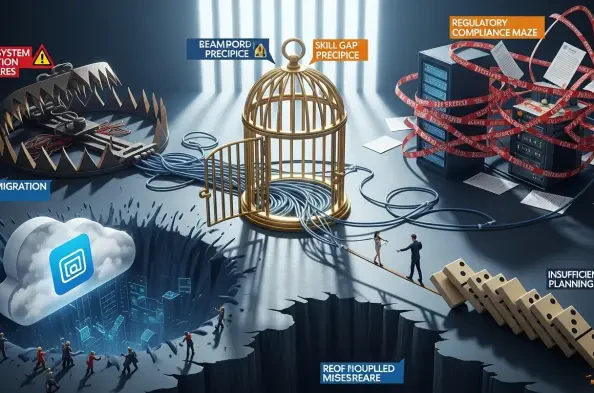
The path to modernization is littered with systemic traps that can derail even the most well-funded projects. The “Legacy Stack Trap” occurs when new AI tools are bolted onto outdated code, creating a hybrid mess that is impossible to scale and difficult to maintain. This approach often results from a desire to see immediate results without doing the hard work of decommissioning obsolete systems. Meanwhile, the “Cloud Finish Line Myth” leads many leaders to believe that migration is the end of the journey, rather than just the beginning of a continuous optimization cycle. Organizations that fall for this myth often find that their cloud costs spiral out of control while their actual performance gains remain marginal because they failed to refactor their applications for a cloud-native environment.
Another common pitfall is neglecting data quality—the invisible foundation of all modern systems. Many modernization projects focus on the “plumbing” of the network while ignoring the “water” flowing through it. If the data is fragmented or inaccurate, the new system will simply automate the production of errors at a faster rate. Furthermore, leaders often fall for the “Big Bang” fallacy, which attempts to replace entire ecosystems at once rather than using an incremental, intentional approach. These massive, all-or-nothing projects are highly prone to failure because they are too large for the organization to absorb, leading to massive disruptions and eventual abandonment of the initiative.
The remaining errors involve human and structural factors that are often overlooked. The “Governance Gap” arises when autonomous agents are deployed without strict access controls, expanding the organization’s attack surface. There is also the “Business Value Disconnect,” where technical milestones are celebrated even when they fail to move the needle on key performance indicators like revenue or customer satisfaction. Finally, neglecting “Cultural Resistance” and “Emotional Debt” can lead to a workforce that is quietly hostile to change. When employees are burned out by previous failed IT promises, they are unlikely to embrace the next major shift, no matter how technically superior it might be. Avoiding these eight traps requires a holistic strategy that balances technical precision with organizational empathy.
Expert Insights on Overcoming Technical and Emotional Debt
Seasoned IT leaders emphasize that modernization is as much a human challenge as it is a technical one. Industry veterans like Bill Pappas of MetLife and Doug King of ePlus highlight the danger of working in silos, stressing that a lack of cultural buy-in can sabotage the most advanced tools. When the IT department operates as an island, it loses touch with the actual needs of the business, resulting in solutions that are technically impressive but practically useless. Expert consensus suggests that the most successful modernization efforts are those that involve cross-functional teams from the beginning, ensuring that every technological change is anchored in a real-world business requirement.
A unique hurdle often overlooked is “emotional debt”—the cynicism felt by staff after years of failed IT promises or poorly executed transitions. John Boesen of Plan A Technologies points out that this psychological baggage can be more difficult to clear than outdated code. To address this, experts suggest using “future postmortems” to identify these hidden friction points early. In this exercise, teams imagine a scenario where the project has failed and work backward to determine the causes. This proactive honesty allows leaders to address cultural skepticism and technical risks before they become insurmountable obstacles, ensuring the team is psychologically aligned with the technical roadmap.
Moreover, true leaders in this space recognize that technical debt is a constant reality that must be managed, not ignored. The goal is not to eliminate debt entirely but to manage it in a way that does not stifle innovation. This involves making conscious trade-offs between speed and long-term stability, while always keeping a clear eye on the eventual need for refactoring. By fostering an environment where engineers feel empowered to speak up about technical bottlenecks and where leadership values long-term health over short-term “hacks,” organizations can build a sustainable culture of modernization that survives long after the initial project is completed.
A Strategic Framework for Sustainable Enterprise Modernization
To avoid these traps, CIOs must pivot from being technical gatekeepers to cross-functional strategists. This requires a commitment to radical simplification, stripping away legacy complexity rather than layering new tech on top of it. Simplification is not just about deleting old code; it is about rethinking the entire architecture to ensure that every component serves a clear, modern purpose. CIOs should establish robust AI governance that treats autonomous agents as first-class digital identities with strict access controls and human oversight. This ensures that as the organization becomes more automated, it does not become more vulnerable to unforeseen risks or ethical lapses.
The most important aspect of a sustainable framework is the rigorous alignment of technical milestones with tangible business KPIs. Modernization should never be treated as an end in itself; it must be tied to outcomes such as increased revenue growth, improved customer retention, or faster time-to-market for new products. By measuring success through the lens of business value, IT leaders can move modernization from being viewed as a cost center to being recognized as a strategic investment. This approach also helps in securing long-term funding and executive support, as the benefits of the transformation are articulated in a language that the entire C-suite understands.
The successful transitions realized by forward-thinking leaders demonstrated that modernization functioned best when treated as a continuous evolution rather than a destination. These organizations prioritized data integrity and governance as the essential fuel for their systems, ensuring that every algorithmic decision was based on a solid foundation of truth. They also addressed the human element by actively clearing emotional debt and fostering a culture where change was seen as an opportunity rather than a threat. By adopting an incremental, value-driven approach, these enterprises avoided the catastrophic “Big Bang” failures of the past and instead built a modular, resilient infrastructure. In the end, the most effective strategies were those that balanced technical rigor with organizational agility, allowing the business to navigate the complexities of a digital-first economy with confidence and precision. This historical shift in perspective turned modernization from a recurring nightmare of failed projects into a sustainable engine for institutional growth and innovation. Managers learned that the ultimate goal was not just to have the newest software, but to have the most adaptable organization possible. Consistent refinement and a focus on radical simplification became the hallmarks of the elite enterprise, ensuring that technical debt was never allowed to accumulate to the point of paralysis again. Reflecting on these milestones, it became clear that the most enduring transformations were those rooted in a shared vision that unified the technical and the human across every layer of the business.