Information with a long shelf life, such as healthcare records or genetic data, is already at risk due to the cheap cost of modern digital storage for adversaries. The United States government recently escalated its commitment to data sovereignty through Executive Order 14412, pushing federal agencies toward a unified cryptographically relevant quantum defense. This transition addresses more than just a routine software upgrade; it highlights a disconnect between the engineers building digital walls and the privacy officers responsible for the sensitive data stored within them. As the gap between technical capability and policy implementation widens, the risk to individual liberty increases, making it imperative to bridge the divide between technical security and qualitative data management. Modern architectures currently rely on a delicate balance between symmetric and asymmetric encryption, which must be reevaluated in the shadow of quantum advancements that threaten to disrupt the stability of the global digital ecosystem.
The Quantum Leap in Computing Power
Understanding the Qubit and Superposition
The vulnerability of our current digital world lies in the fundamental difference between how classical and quantum computers process information. Standard computers use bits, which function as binary switches existing as either a zero or a one, creating a linear path for problem-solving. Quantum computers, however, utilize qubits that leverage the principle of superposition, allowing them to exist in multiple states simultaneously rather than being confined to a single binary value. This capability enables them to perform massive parallel calculations that were previously considered impossible. By exploring every possible solution to a mathematical problem at once, a quantum machine can navigate complex algorithms with a level of efficiency that classical hardware simply cannot replicate. This shift represents a move from sequential logic to a multi-dimensional framework that fundamentally changes data manipulation, making traditional boundaries of computational complexity obsolete for modern adversaries.
Beyond the basic mechanics of superposition, the interaction between entangled qubits further amplifies the processing potential of these emerging systems. In a classical environment, increasing the number of bits leads to a linear increase in power, but in a quantum system, each additional qubit provides an exponential boost to the machine’s capabilities. This allows for the execution of Shor’s algorithm, which was specifically designed to factor large prime numbers that form the basis of RSA encryption. While today’s supercomputers would require thousands of years to crack a standard 2048-bit key, a sufficiently powerful quantum computer could theoretically achieve this in mere seconds. This leap in performance does not just speed up existing processes; it creates a new paradigm where the mathematical locks currently protecting global finance are essentially transparent. The transition from bits to qubits is the primary driver behind the urgent need for a new cryptographic standard that can survive in a post-classical world.
The Timeline to Q-Day
The theoretical danger to our encryption standards was proven decades ago by Peter Shor, who developed an algorithm specifically designed to break the asymmetric encryption methods we rely on today. At the time, his work was academic, as the hardware required to run such a complex process did not yet exist. However, the rapid advancement of superconducting circuits and trapped-ion technology has brought us to a juncture where theoretical threats are becoming tangible engineering challenges. Experts in the field monitor progress toward “Q-Day,” the specific moment when a quantum computer becomes powerful enough to shatter current encryption standards. This milestone is no longer a distant possibility but a looming deadline that dictates the pace of modern cybersecurity policy. The transition involves moving away from the mathematical problems that quantum machines excel at solving, such as integer factorization, and toward lattice-based cryptography that remains secure even against highly advanced quantum adversaries.
As we navigate the landscape of 2026, the timeline for Q-Day is becoming clearer, with many researchers predicting that the threshold for breaking RSA-2048 could be reached as early as 2035. While current quantum machines are still hindered by stability issues and low qubit counts, the technology is advancing at an accelerating pace through increased investment. Stability and error correction remain the primary hurdles, yet breakthroughs in logical qubits suggest that the era of reliable quantum computing is closer than previously anticipated. This accelerating trajectory makes the modernization of digital defenses an urgent priority for both government agencies and private corporations. Waiting for the technology to mature before acting would be a mistake, as the systems built today must be able to protect data well into the next decade. The focus has shifted to the industrialization of quantum-resistant protocols, ensuring that the infrastructure remains resilient against the arrival of a relevant quantum computer.
Immediate Risks and Future Defenses
The “Harvest Now, Decrypt Later” Strategy
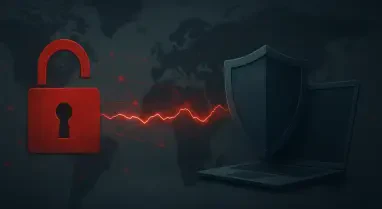
A common misconception is that quantum computing is a problem for the distant future, but the threat to privacy is active and compounding in the present day. Malicious actors and state-sponsored entities are currently utilizing a “harvest now, decrypt later” strategy, where they intercept and store vast amounts of encrypted sensitive data from across the internet. Even though these adversaries cannot read the information with current technology, they are banking it for the day quantum processors reach maturity. This means that any data transmitted today using standard asymmetric encryption is essentially being archived in an unreadable format that will eventually be unlocked. This strategy targets high-value targets, including government communications and corporate intellectual property, creating a ticking time bomb for data privacy. The act of stealing the data has already occurred; the only thing missing is the key, which the progress of quantum physics is guaranteed to provide in the coming years.
The real-world impact of this harvesting strategy depends heavily on the “shelf life” of the data being collected by these adversaries. For example, a session token for a bank login might lose its value within minutes, rendering it useless even if decrypted years from now. However, other categories of information, such as social security numbers, genetic profiles, and classified intelligence, remain sensitive for an individual’s entire life or even across generations. If this stolen data includes information that remains sensitive for decades, the privacy breach has essentially already happened in the eyes of the victim. Privacy stewards must therefore view the current landscape not as a period of safety, but as a race to implement quantum-resistant encryption before more high-value data is permanently compromised. The persistence of data sensitivity transforms the quantum threat into a present-day privacy crisis that requires immediate intervention from those responsible for managing long-term assets.
The Transition to Post-Quantum Cryptography
The technical implementation of new encryption standards cannot succeed without the qualitative insights of privacy professionals who understand the nuance of data value. While cybersecurity teams provide the mechanical tools for protection, privacy experts manage data classification and the long-term sensitivity of personally identifiable information. Fostering collaboration between these two groups is essential for a successful migration to post-quantum cryptography, as it allows organizations to prioritize their most vulnerable assets. Some data requires immediate protection with lattice-based algorithms, while other less sensitive information can wait for a phased rollout. By identifying high-priority assets, privacy stewards ensure that the most critical information is the first to be protected by quantum-resistant standards. This unified defense strategy breaks down the silos that exist between security and compliance, creating a resilient framework for the protection of individual rights in a hostile digital environment.
Collaborative Solutions: Integrating Privacy with Security
Actionable steps were taken to inventory all encrypted assets and evaluate the specific mathematical foundations of existing security protocols. Organizations began the systematic transition to NIST-approved post-quantum algorithms, such as ML-KEM and ML-DSA, ensuring that new data was shielded from future decryption. Privacy officers worked alongside IT departments to determine which legacy data sets required re-encryption or deletion to mitigate the risks associated with historical harvesting. These proactive measures were not merely technical adjustments; they represented a shift in how society valued the long-term integrity of private information. By treating the quantum threat as a present-day reality, leaders successfully minimized the impact of adversarial data collection. The migration toward a quantum-safe infrastructure provided the necessary safeguards to maintain trust, ensuring that when powerful quantum computers emerged, the data harvested by adversaries remained nothing more than useless noise.