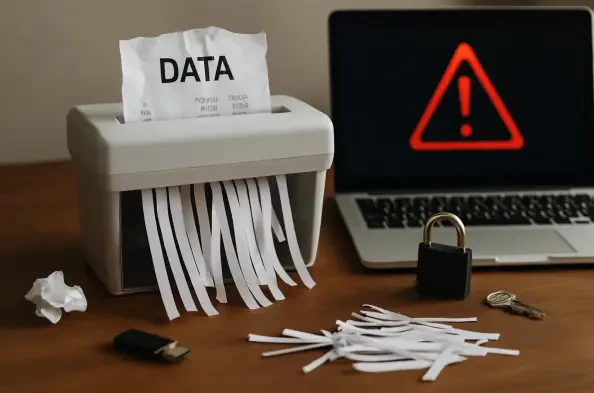
NIST standards now clarify that a successful purge must render data unrecoverable even through robust laboratory techniques, a benchmark that many legacy magnetic erasure tools can no longer achieve. As government agencies and defense contractors retire thousands of storage units each year, a dangerous complacency has taken root in the physical security sector. Historically, a hard drive that could no longer spin up or connect to a host system was deemed sanitized, but modern forensic analysis proves this assumption false. The rapid evolution of storage density has outpaced the physical capabilities of older magnetic degaussing equipment, creating a scenario where sensitive data remains physically etched on platters despite the drive’s total mechanical failure. This paradigm shift requires a radical reassessment of how organizations define the end-of-life process for digital assets. The current landscape demands a move away from legacy methods toward rigorous, technically validated sanitization protocols that address the underlying magnetic properties of contemporary hardware.
Addressing Technical Obsolescence in Storage Media
Understanding the Risks: High Coercivity
Modern hard drives are engineered for incredible stability and high data density, which requires significantly stronger magnetic fields to alter their states compared to older models. This physical property, known as coercivity, refers to the resistance of a ferromagnetic material to changes in magnetization. As manufacturers have squeezed more terabytes into smaller form factors, they have been forced to increase the coercivity of the platters to prevent neighboring bits from interfering with one another. Consequently, a degausser manufactured even a decade ago may lack the peak field strength necessary to overcome the magnetic resistance of a 2024-era or 2025-era high-capacity drive. When the magnetic field is insufficient, the data is not truly randomized; it remains in a latent state on the disk surface. This technical mismatch creates a massive security vulnerability for entities that assume their existing hardware is sufficient for modern storage media.
The result of using underpowered sanitization tools is a false positive for security that can mislead even experienced IT managers. In many cases, an outdated degausser might possess enough power to scramble the drive’s servo tracks or damage the sensitive read-and-write heads, effectively killing the drive for normal operational use. To a standard computer or a basic diagnostic tool, the drive appears non-functional and unreadable, leading the technician to believe the data is gone forever. However, a sophisticated adversary or a forensic laboratory using specialized equipment like magnetic force microscopy can still reconstruct the data from the intact sectors. This distinction between a drive that is merely broken and one that is truly sanitized is the core risk identified by the latest federal guidance. Relying on the mechanical failure of a device as a proxy for information security is no longer an acceptable practice in an era of advanced state-sponsored cyber espionage.
Selection Criteria: The Three Pillars of Evaluation
To mitigate the risks of incomplete sanitization, federal buyers must navigate a complex three-pillar framework when procuring new disposition equipment. The first pillar is technical compatibility, which requires a direct match between the degausser’s magnetic field strength and the coercivity of the drives in the organization’s inventory. The second pillar involves the National Security Agency and Central Security Service Evaluated Products List. It is critical to recognize that the NSA does not approve entire brands; instead, it evaluates specific models for their effectiveness against high-security data. Equipment that has not been specifically tested and listed may not meet the requirements for handling top-secret or classified information. These evaluations are updated frequently, and a machine that was approved five years ago may not be sufficient for the newest generation of high-density storage drives currently entering the federal supply chain in 2026.
The third pillar of the procurement framework focuses on federal trade regulations and geopolitical security. Even if a machine is technically superior and appears on the NSA Evaluated Products List, it must meet the stringent requirements of the Trade Agreements Act and Federal Acquisition Regulation 52.225-5. This ensures that the equipment used to secure the nation’s most sensitive data is manufactured in the United States or a designated country of origin. Using sanitization tools manufactured by non-approved foreign entities, particularly those from adversarial nations, could introduce supply chain vulnerabilities into the very heart of a defense contractor’s or agency’s security infrastructure. Consequently, procurement officers are now tasked with verifying the manufacturing origin and the financial ownership of equipment providers. This level of due diligence ensures that the tools used to destroy data do not themselves become conduits for unauthorized access or hardware-level surveillance.
Strategic Guidance: Future-Proofing Data Security
The transition to these rigorous new sanitization standards represents a necessary response to the rapid advancement of storage technology and the persistence of digital threats. Organizations that successfully adapted to the NIST guidelines focused on moving beyond mere compliance to implement a proactive posture of technical verification. These entities established regular audit cycles to verify that their degaussing equipment remained compatible with their evolving hardware inventories. They also integrated detailed documentation into their disposal workflows, ensuring that every asset was tracked from the moment of retirement to its final destruction or reuse. By prioritizing technical compatibility and supply chain integrity, these organizations eliminated the hidden risks that once plagued traditional disposal methods. Looking ahead, the focus must remain on the continuous evaluation of new storage formats, such as DNA storage and advanced holographic media, which will eventually demand their own specialized sanitization protocols.