The transformation of the former Portsmouth Gaseous Diffusion Plant in Piketon into a massive 10-gigawatt data center campus marks a pivotal moment for the American energy landscape and the burgeoning artificial intelligence sector. This ambitious $4.2 billion transmission project, a collaborative effort involving American Electric Power, the U.S. Department of Energy, and SB Energy, represents one of the largest private investments in regional utility infrastructure. Unlike traditional utility expansions that often place the financial burden on residential and small business consumers, this initiative utilizes a unique private funding model where the developer assumes the entire cost of the high-voltage upgrades. This strategic approach ensures that the massive power requirements of Big Tech do not compromise the affordability of local electricity. As the digital economy continues to expand at an unprecedented rate, the Piketon project serves as a critical test case for integrating hyperscale industrial loads into the existing electrical grid while maintaining regional economic stability.
Infrastructure Innovation: The Power of 765-Kilovolt Technology
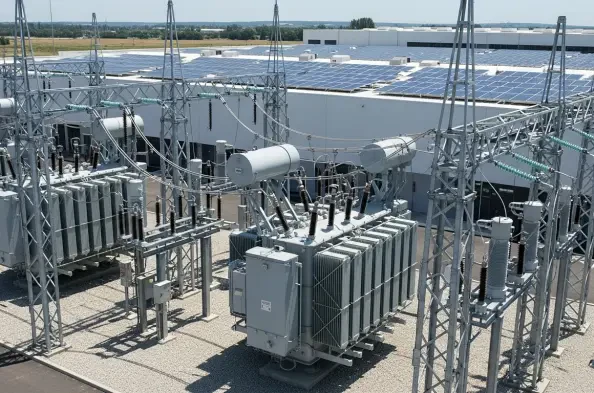
The central nervous system of this energy undertaking revolves around the deployment of 765-kilovolt transmission lines, which represent the pinnacle of high-voltage efficiency currently available. These lines are capable of carrying significantly more electricity than standard regional transmission systems, making them uniquely suited for the concentrated power demands of a 10-gigawatt hub. By utilizing this ultra-high-voltage technology, American Electric Power can minimize energy losses during transit across vast distances, which is essential when powering hardware for advanced AI services.
Integrating such a high-capacity system requires sophisticated engineering to prevent disruptions to existing utility services. The installation of 765-kilovolt lines provides a backbone that is significantly more resilient to fluctuations in demand, a common characteristic of large-scale digital infrastructure operations. Moreover, the project leverages existing energy corridors in southern Ohio, optimizing land use while maximizing throughput. As these lines become operational, they will facilitate a seamless flow of power from diverse sources, including renewables increasingly being co-located with data campuses.
Economic Protections: Safeguarding Local Utility Rates
A fundamental shift in utility management is evident in the agreement where SB Energy has committed to providing the full $4.2 billion required for the transmission infrastructure. This private funding model addresses a significant hurdle facing grid expansion: the fear of rising costs for the general public. In many previous large-scale projects, costs were socialized across the entire ratepayer base, leading to higher monthly bills. By shifting the financial responsibility to the developer, the project establishes a precedent where entities driving the demand are responsible for the upgrade costs.
Stakeholders recognized that the path forward necessitated a radical rethink of how massive industrial energy requirements were integrated into existing utility frameworks. The decision to pursue private funding provided a viable solution to the conflict between industrial expansion and consumer affordability. Planners emphasized the importance of engagement with regulatory bodies to streamline the transition to high-capacity transmission. It was determined that future developments should focus on co-locating energy generation with data centers to further reduce the strain on the national grid.