The global industrial sector is currently facing a high-stakes security crisis following the discovery of PHP2Shell, a duo of critical vulnerabilities that enable unauthenticated remote code execution within the PHP engine. These flaws, identified as CVE-2026-109618 and CVE-2026-109619, allow attackers to compromise systems without requiring prior authentication. The situation escalated rapidly when an untimely online leak bypassed traditional coordinated disclosure timelines, leaving organizations with little time to prepare.
As millions of automated exploitation attempts flood the digital landscape, the ripple effects are being felt across global supply chains. This crisis highlights the risks inherent in the convergence of legacy industrial systems and modern web languages. Leading automation and infrastructure providers are now forced into a rapid, coordinated defense to protect the world’s most sensitive operational environments from widespread disruption.
The High Stakes: PHP Vulnerabilities in Operational Technology
The discovery of PHP2Shell has thrust the operational technology (OT) sector into an immediate security emergency. These vulnerabilities are particularly dangerous because they reside in the PHP engine, a component often used to build the web-based management interfaces of industrial controllers and gateways. By exploiting these flaws, an attacker can gain full control over the underlying operating system of an industrial device, potentially leading to unauthorized process changes or physical damage.
Unlike standard software bugs, the premature leak of these vulnerabilities meant that attackers had working exploits before patches were even finalized. Many security analysts observed that the timeline for remediation was drastically compressed, forcing a shift from proactive planning to reactive firefighting. This incident demonstrates that even the most robust industrial hardware is only as secure as the web-based software used to manage it, making common web flaws a primary concern for critical infrastructure.
Deconstructing the PHP2Shell Threat Landscape
The Fragility: Open-Source Dependencies in Proprietary Systems
The PHP2Shell crisis exposes a fundamental paradox in industrial engineering regarding the heavy reliance on ubiquitous open-source software within proprietary environments. While PHP provides the backbone for countless management interfaces, its integration into OT creates a massive blind spot for many asset owners. The premature leak meant that hackers had a significant head start, initiating widespread scanning and honeypot attacks before many industrial giants could even inventory their software stacks.
This scenario has reignited the debate regarding the security of the software supply chain and the inherent risks of embedding generalized code into mission-critical infrastructure. Industry leaders recognize that managing these dependencies is no longer optional. When a vulnerability like PHP2Shell appears, the lack of transparency in how open-source components are used can delay response times, giving malicious actors an opportunity to exploit the delay between vulnerability discovery and patch deployment.
Mapping the Exposure: The Global Industrial Base
The scale of the threat is best illustrated by the diverse array of products currently under review by global industry leaders. Siemens identified cross-vendor risks where its Ruggedcom devices were vulnerable due to integrated third-party firmware, while ABB discovered that even auxiliary components, like help pages powered by DokuWiki, served as entry points. Schneider Electric and Johnson Controls are similarly auditing portfolios that range from building automation to manufacturing execution systems.
This widespread exposure underscores a shift in the threat landscape where the primary risk to a factory or power plant may not be a targeted virus, but a common web flaw found in a peripheral interface. Security professionals note that attackers are increasingly looking for these “low-hanging fruit” entry points to pivot into deeper parts of the industrial network. The diversity of affected devices shows that no single vendor is immune to the risks of shared software components.
Multi-Layered Firmware: Navigating the Complexity of Remediation
Patching industrial systems is rarely as simple as updating a desktop application because the process involves navigating convoluted layers of firmware. A single device might run multiple layers of third-party software—such as Palo Alto Networks’ PAN-OS running on Siemens hardware—creating what engineers call “dependency hell.” This complicates the remediation process, as vendors must wait for upstream patches from their partners before they can issue their own verified updates to end-users.
Companies like Belden and HMS Networks are managing these technical hurdles by providing specific workarounds for their NetModule and Netbiter lines. These challenges debunk the assumption that air-gapping or simple firewalls are sufficient defenses against modern remote code execution exploits. The interdependency of software components means that a vulnerability in one layer can quickly compromise the integrity of the entire device, requiring a more holistic approach to firmware security.
Collective Defense: The Evolution of Cybersecurity in Critical Infrastructure
Despite the severity of the flaws, the response to PHP2Shell reveals a significant maturation in the cybersecurity posture of the OT community. Unlike the opaque communication of previous decades, today’s industrial giants are practicing radical transparency by issuing real-time advisories. This collaborative effort not only aims to neutralize the current threat but also sets a new standard for how the sector handles the inevitable discovery of future vulnerabilities in open-source components.
By sharing practical workarounds, such as disabling web-based management consoles or implementing network segmentation, vendors are helping asset owners mitigate risks before a patch is even ready. This shift toward a proactive “security-by-design” mentality suggests that the industry is becoming more resilient. This transparency allows for a faster collective response, reducing the window of opportunity for attackers who rely on the slow pace of traditional industrial maintenance cycles.
Practical Strategies: Hardening Industrial Assets
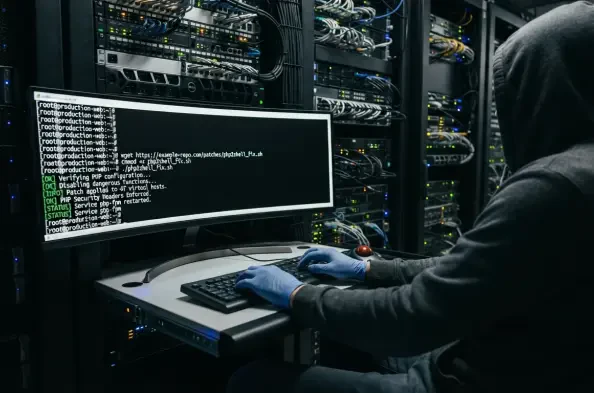
To mitigate the risks posed by PHP2Shell, organizations must prioritize a comprehensive asset inventory to identify every device running a web-based interface. Immediate application of vendor-specific patches for high-risk systems, such as Schneider Electric’s EcoStruxure or B&R’s APROL, is the most effective defense. In cases where patches remain unavailable, security teams should implement compensating controls like restricting access to management ports via strict Access Control Lists (ACLs).
Temporarily disabling non-essential web services can also provide a crucial buffer against automated exploitation attempts. Furthermore, integrating automated vulnerability scanning that specifically looks for these CVEs within embedded systems will be essential for maintaining long-term resilience. Organizations that focus on these foundational security practices will be better positioned to withstand the current crisis and prevent similar exploits from gaining a foothold in the future.
Securing the Future: Connected Industry
The PHP2Shell emergency served as a poignant reminder that the air gap was largely a myth in the modern era of Industry 4.0. As industrial giants continued to bridge the gap between information technology and operational technology, the security of the underlying code became a matter of national and economic safety. This race to patch was not merely a technical necessity; it functioned as a test of the global manufacturing sector’s ability to defend against the democratization of high-level cyber exploits.
Moving forward, the industry prioritized the adoption of Software Bill of Materials (SBOM) transparency to ensure that every component in a device is accounted for. Robust testing of open-source integrations became a standard practice to ensure that the backbone of the modern world remained secure. By treating software security as an integral part of industrial safety, the sector ensured that future digital threats would be met with a more prepared and unified defense.