Standard fiber optic cables in Geneva now utilize the Clavis XG QKD series to provide information-theoretic security based on the fundamental laws of physics. This sophisticated deployment by IonQ represents a definitive shift from theoretical quantum networking experiments to a fully operational, intercontinental security framework. By establishing a high-integrity link between research facilities in Geneva and administrative hubs in Seoul, the company has created a robust architecture capable of shielding sensitive information against advanced decryption techniques. This milestone addresses a critical vulnerability in global communication where data intercepted today could be decrypted by future quantum processors. The network serves as a foundational blueprint for multinational corporations that require immediate protection for their intellectual property. As the landscape of cybersecurity shifts, this intercontinental bridge proves that maintaining data sovereignty is achievable through a combination of physical hardware and advanced algorithmic defenses.
Hybrid Architecture: Integrating Physical and Algorithmic Security
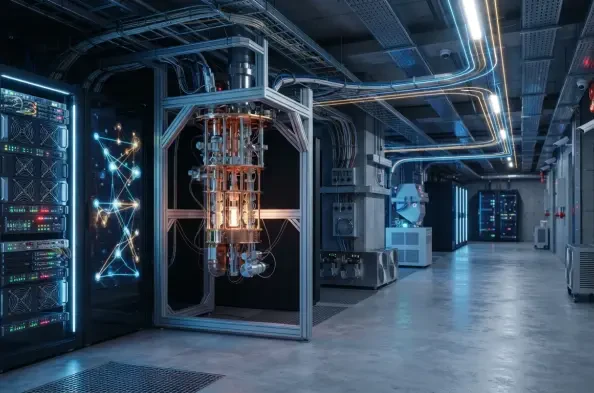
The metropolitan network in Switzerland serves as the high-assurance foundation for this global project, leveraging the inherent properties of single photons to generate unhackable keys. Because quantum signals naturally attenuate as they travel through standard glass fibers, the physical hardware is strategically positioned within a local footprint to ensure signal integrity across four operational sites. This localized enclave utilizes dark fiber and multiplexed channels, allowing the system to detect any attempts at eavesdropping through the fundamental principles of quantum mechanics. Unlike traditional encryption that relies on the mathematical difficulty of factoring large numbers, this approach provides a layer of protection that remains secure regardless of future computational power. By prioritizing the physical layer for regional transit, the architecture ensures that the most sensitive internal communications are shielded within a tamper-evident environment that alerts administrators to any intrusion immediately.
While physical quantum hardware secures the local loops, the vast distance between Europe and Asia necessitates a different strategy to maintain a secure end-to-end connection. To bridge the thousands of miles of subsea cables and public internet backbones where physical quantum repeaters are not yet available, the system incorporates NIST-standardized Post-Quantum Cryptography algorithms. These lattice-based mathematical structures are specifically designed to resist the cryptanalytic capabilities of even the most powerful quantum computers. By integrating these algorithms into software-defined VPN endpoints, the network creates encrypted tunnels that provide a formidable second layer of defense. This hybrid approach allows for the secure transmission of data across existing global infrastructure without requiring a complete overhaul of current telecommunications hardware. It demonstrates a practical path forward for organizations that must operate across continents while facing an evolving threat landscape.
Threat Landscapes: Addressing the Accelerated Timeline for Resilience
The urgency surrounding this deployment is fueled by the accelerating progress in quantum hardware, which has significantly shortened the projected timeline for reaching the critical milestone known as Q-Day. Industry experts and technical researchers have observed that the requirements for breaking 256-bit Elliptic Curve Cryptography are lower than previously estimated, with 1,200 to 1,500 logical qubits now seen as the threshold for executing Shor’s algorithm. As milestones are reached in late 2026, the window for migrating legacy systems to quantum-safe alternatives is closing rapidly for major financial institutions and government agencies. Waiting for a perfect solution is no longer a viable strategy, as the “Harvest Now, Decrypt Later” threat means that encrypted data stolen today remains at risk for the duration of its sensitive lifespan. This reality has transformed quantum-safe migration from a speculative research project into a high-priority operational requirement for global data security.
The assets protected by this intercontinental architecture represent the very core of modern technological innovation, including proprietary QPU telemetry and advanced algorithmic compiler intellectual property. By utilizing a defense-in-depth strategy, the network ensures that even if a specific mathematical algorithm is eventually compromised by a breakthrough in quantum analysis, the physical layer of quantum keys remains a steadfast barrier. This concept of cryptographic agility is central to the design, allowing administrators to swap out or update encryption standards as new threats emerge or as international bodies release updated guidelines. This flexibility is essential for maintaining long-term security in an environment where the capabilities of adversaries are constantly evolving. By securing cloud execution logs and internal strategic communications today, the infrastructure provides a necessary safeguard against the retrospective decryption of data that will remain confidential for decades.
Regulatory Standards: Global Compliance and Future-Proofing Data
Government mandates worldwide have recently intensified, pushing for a standardized transition to quantum-safe communication protocols to protect national security interests. In the United States, executive directives have set clear timelines for federal agencies to adopt Key Encapsulation Mechanisms, while the European Commission has urged member states to accelerate their PQC migration strategies. This intercontinental network validates these regulatory frameworks by providing a functional model that complies with emerging international standards for data protection and sovereign integrity. The project demonstrates that the necessary tools for this transition are already available and can be scaled to meet the needs of complex, multinational organizations. As sovereign institutions look to secure their digital borders, the integration of high-assurance local links with quantum-resistant long-haul transit offers a repeatable and verifiable method for ensuring that critical infrastructure remains resilient against quantum-enabled threats.
The deployment of this intercontinental network provided a definitive roadmap for organizations navigating the complexities of the modern cryptographic landscape. Successful implementation required a thorough inventory of existing cryptographic assets and a commitment to re-architecting security modules for long-term resilience. Enterprises that initiated these migration cycles early found themselves better positioned to defend against the rising tide of sophisticated cyber threats. By prioritizing the integration of physical and algorithmic safeguards, the initiative demonstrated that securing global data flows was both technically feasible and operationally necessary. Moving forward, the focus shifted toward expanding these networks to include a wider array of satellite locations and integrating more diverse sets of post-quantum algorithms. This proactive stance ensured that sensitive intellectual property remained protected, allowing for continued innovation within a safe and verified digital environment that withstood the challenges of the quantum age.