The silent server humming in a lead-lined room within a subterranean facility no longer guarantees the absolute immunity that it once did in the early days of network security. Sophisticated adversaries have demonstrated that physical disconnection is merely a hurdle rather than an impenetrable wall, using techniques like acoustic data exfiltration and electromagnetic side-channel attacks to bridge the void. For decades, the concept of the air gap served as the ultimate safeguard for critical infrastructure, military intelligence, and industrial control systems, but the sheer complexity of modern data requirements has eroded this traditional fortress. Today, the demand for real-time telemetry, predictive maintenance, and constant security patching makes a state of total, permanent isolation almost impossible to maintain without significantly degrading operational efficiency. Consequently, the industry is witnessing a fundamental shift where the rigid binary of connected or disconnected is replaced by a nuanced understanding of risk.
The Evolution of System Isolation
Understanding the Modern Isolation Spectrum
Security professionals now view isolation as a sliding scale of restrictive measures designed to meet specific operational goals while minimizing exposure to external threats. This isolation spectrum ranges from the classic, physically severed environment to modern virtual gaps that leverage advanced software-defined perimeters to govern every bit of data that crosses the boundary. Instead of assuming that a lack of a wire ensures safety, teams are implementing highly granular controls that permit only specific, verifiable payloads to transition between security zones. From 2026 to 2028, the industry expects a move toward these hybrid models where air-gapping is achieved through cryptographic verification and one-way data diodes rather than just physical distance. This evolution reflects a growing realization that even the most secure systems require some form of interaction with the outside world to remain functional and relevant in an increasingly automated industrial environment.
Digital Barriers: Redefining Boundaries with Software
Building on this foundation of flexible boundaries, organizations must move away from a one-size-fits-all strategy to identify which specific assets require total physical isolation. While a primary control system for a power grid might necessitate a complete break from any external network, ancillary monitoring systems can often function safely using software-defined barriers that provide near-total isolation with high utility. These virtual gaps allow for the secure transfer of logs and performance data to centralized security operations centers without providing a return path for malicious commands. This strategic segmentation ensures that critical processes remain untouchable while supporting the data-driven decision-making processes that modern enterprises rely on for survival. By clearly defining these boundaries, security architects can allocate their most expensive physical protection resources to the most sensitive nodes. This methodical approach transforms isolation from a static, inconvenient barrier into a dynamic tool for risk management.
Identifying Hidden Risks in Gapped Environments
Human Factors: The Vulnerability of Physical Security
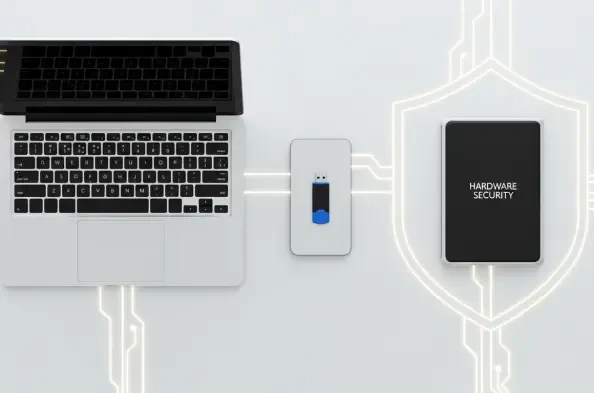
Despite the perceived strength of a physical disconnect, the human element continues to be the most persistent and unpredictable vulnerability in any air-gapped environment. Many organizations fall into a false sense of security, assuming that the absence of an internet connection mitigates the risk of social engineering or insider threats. However, history has shown that a single infected USB drive or a misplaced maintenance laptop can bridge the gap in seconds, often bypassing every digital firewall in the process. Malicious actors frequently target personnel with physical access to secure areas, enticing them to use unauthorized hardware or to circumvent strict protocols for the sake of convenience. These “sneakernet” attacks are particularly dangerous because they occur within the trusted zone where monitoring is often less rigorous. The reality is that no system is truly isolated as long as a person must interact with it, making human behavior a critical component of the isolation strategy that requires constant training.
Infrastructure Weakness: Supply Chains and Legacy Systems
Beyond human error, hidden risks often reside within the supply chain and the legacy hardware that populates these highly secure, disconnected environments. It only takes one vendor providing a pre-infected component or one technician bringing a compromised diagnostic tool into a restricted area to create a catastrophic failure. Many isolated systems run on specialized, aging hardware that was never designed with modern cybersecurity principles in mind, making them susceptible to firmware-level rootkits. Furthermore, because these systems are air-gapped, they often miss the routine security patches that connected systems receive, leaving them vulnerable to exploits that have been common knowledge for years. This creates a paradox where the most sensitive systems are often the most technically fragile and the hardest to defend against modern weaponized exploits. Organizations must therefore treat every piece of hardware entering the secure zone as a potential carrier of infection, regardless of the manufacturer.
Hardening the Network Through Advanced Defense
Strategic Controls: The Case for Application Whitelisting
Hardening these environments requires a transition toward a defense-in-depth strategy where isolation is treated as just one layer among many rather than a standalone solution. One of the most effective methods for securing these nodes is the implementation of strict application control or whitelisting, which ensures that only pre-approved and cryptographically signed software can execute. By preventing the execution of unauthorized code, organizations can effectively neutralize the threat of malware introduced via portable media or compromised peripherals. This approach is particularly vital for high-stakes government and military installations where the cost of a breach is catastrophic. Furthermore, these controls must be integrated with robust physical security measures, such as port blocking and the disabling of unused hardware interfaces, to reduce the physical attack surface. When isolation is combined with rigorous software controls, the difficulty for an attacker to achieve a successful breach increases exponentially.
Local Visibility: Monitoring Disconnected Systems
Modern visibility tools play an equally important role in protecting air-gapped systems by providing real-time detection and response capabilities without requiring an internet connection. Advanced Endpoint Detection and Response systems have evolved to operate in private clouds and on-premise data centers, allowing security teams to monitor for unusual behavior locally. These specialized tools use machine learning models trained on vast datasets to identify patterns associated with lateral movement or unauthorized data access within the isolated network. By deploying these sensors, organizations can gain the visibility necessary to react quickly to an intrusion before the damage becomes irreversible. Additionally, maintaining a regular schedule of offline updates via managed, scanned repositories ensures that the systems remain resilient against the latest known vulnerabilities. This proactive monitoring turns an air-gapped environment from a black box into a transparent and manageable component of the broader security infrastructure.
Strategic Resilience: Enhancing Operational Integrity
The transition away from traditional air-gapping proved that physical isolation alone was insufficient for the complexities of the modern threat landscape. Organizations that successfully adapted prioritized the implementation of Zero Trust principles within their most secure zones, ensuring that every user and device was continuously verified. They moved toward a model where physical audits and hardware integrity checks were performed with the same frequency as digital scans, closing the gap between physical and cyber security. It was discovered that the most resilient systems were those that integrated one-way data transfer technologies to maintain visibility without compromising the integrity of the core environment. Moving forward, security leaders established strict protocols for supply chain verification and the sanitization of all incoming data assets. By treating the air gap as a managed security control rather than a set-it-and-forget-it barrier, professionals ensured that their critical infrastructure remained resilient against incursions.