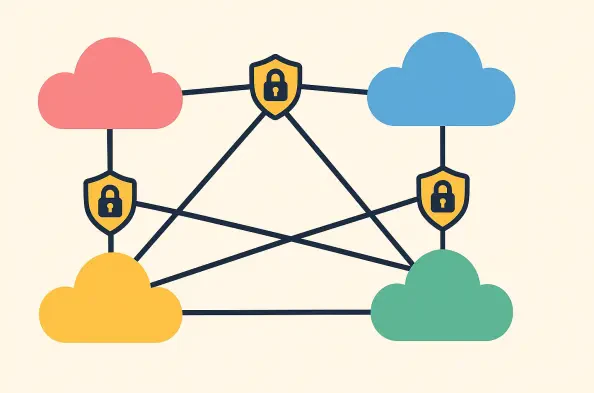
Security teams often face a drift problem where manual fixes in a live environment are overwritten by the next automated deployment from configuration files. This specific challenge highlights the growing complexity of modern multi-cloud architectures, where organizations frequently juggle diverse services from Amazon Web Services, Microsoft Azure, and Google Cloud Platform simultaneously. While a centralized dashboard might offer a superficial sense of control, the technical realities of identity management, storage exposure, and logging vary significantly between these providers. This fragmentation makes it increasingly difficult for security operations centers to maintain a consistent posture. Consequently, Cloud Security Posture Management has transitioned from a niche tool to a strategic necessity for any enterprise operating at scale in 2026. These platforms allow for the continuous auditing of cloud configurations against established security policies, effectively bridging the visibility gap that naturally occurs in a heterogeneous environment where manual oversight is no longer feasible for data integrity.
Integrating Security into Developer Workflows
Pipeline-Driven Remediation: Strategies for Infrastructure Code
Aikido Security addresses the human element of cloud security by focusing on the developer persona through a deep integration with Infrastructure-as-Code. By tracing vulnerabilities back to original configuration files, it ensures that security becomes a permanent part of the development lifecycle rather than an afterthought. This method effectively transforms security from a reactive barrier into a proactive design principle. When a developer identifies a flaw, the fix is applied at the source, ensuring that the remediation survives through subsequent deployment cycles and remains robust across different environments.
The evolution of these developer-centric tools has fundamentally changed how teams approach the lifecycle of a vulnerability. Instead of dealing with a never-ending list of alerts in a production dashboard, engineers can resolve issues within their familiar integrated development environments. This shift reduces the friction between security and development teams, fostering a culture where security is seen as a shared responsibility. By automating the verification of infrastructure files before they are even deployed, organizations can drastically reduce their window of exposure and ensure that only hardened configurations reach the production stage of the multi-cloud pipeline.
Technical Accountability: Transparency and Open-Source Auditing
Prowler offers a different kind of flexibility, serving engineering-heavy teams that prioritize transparency and open-source logic above all else. As both a command-line tool and a hosted platform, it allows for highly customizable security audits that can be tailored to the specific risk profile of an individual organization. This level of transparency allows engineers to inspect the exact logic behind every security assessment, fostering a culture of technical accountability where security checks are not “black boxes” but understood components of the infrastructure. It is particularly effective for teams that need to script specific responses to unique cloud setups.
While utilizing such transparent tools requires a higher level of internal maturity to manage credentials and custom checks, the benefits of this granular control are substantial. Engineering teams can write their own rules to cover proprietary configurations or specific compliance requirements that off-the-shelf products might overlook. This flexibility ensures that the security posture is not just a generic template but a bespoke shield designed for the specific architectural nuances of the company. Furthermore, the ability to run these checks locally via a command-line interface provides immediate feedback to engineers during the prototyping phase, long before any code is committed to a shared repository.
Advanced Visibility and Enterprise Operations
High-Context Risk Visualization: Graphs and Agentless Scanning
Wiz and Orca Security lead the market in high-context risk visualization and agentless visibility, providing a bird’s-eye view of the entire cloud estate. Wiz creates a complex graph of potential attack paths by connecting resources, workloads, and code identities, which helps teams prioritize critical production exposures over minor errors. This context is vital in an era where the sheer volume of alerts can overwhelm even the most experienced analysts. By understanding how a misconfigured bucket connects to a vulnerable virtual machine, security teams can focus their limited resources on the threats that pose the greatest risk to the business.
Similarly, the agentless-first approach pioneered by Orca Security provides immediate visibility across thousands of accounts without the friction of installing traditional software on every virtual machine. This methodology allows organizations to see “inside” their cloud workloads and identify hidden risks like dormant malware or neglected patches that external scans might miss. The efficiency of agentless scanning means that even the largest, most sprawling multi-cloud environments can be indexed and assessed in a matter of hours. This rapid time-to-value is essential for modern enterprises that are constantly spinning up new resources and need to ensure that no part of their infrastructure remains a blind spot.
Strategic Integration: Ecosystem Alignment and Future Considerations
For organizations seeking to align with existing corporate ecosystems, Microsoft Defender for Cloud and Cortex Cloud offer specialized enterprise-scale solutions. Defender for Cloud provides a standardized operating model for those already invested in the Microsoft stack, extending its reach to cover AWS and GCP with consistent policy enforcement. This alignment is particularly beneficial for large corporations that require a single pane of glass for both their productivity suites and their cloud infrastructure. It simplifies the licensing and training requirements for the staff, allowing the existing security workforce to leverage their current expertise across multiple new cloud platforms.
Cortex Cloud by Palo Alto Networks bridges the gap between posture management and active runtime security, making it an ideal choice for large-scale programs. This integration ensures that the preventive measures identified by posture management are informed by the real-time threats seen during execution. By consolidating diverse security operations into a single platform, enterprises achieved a more cohesive defense strategy that was able to adapt to the rapidly changing threat landscape of 2026. The shift toward these consolidated platforms demonstrated that long-term resilience depends on the ability to move beyond isolated tools and toward a unified security fabric that spans every provider and workload.