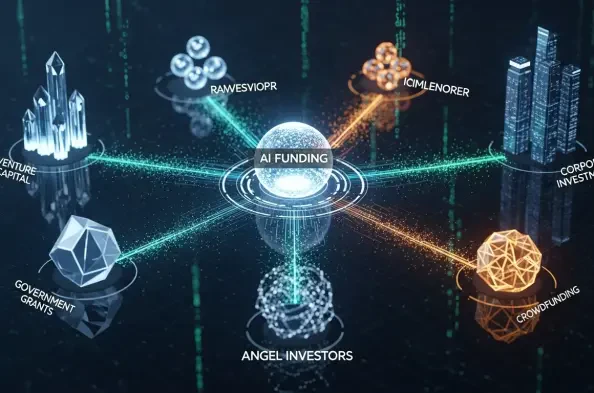
The staggering velocity of capital moving through the artificial intelligence sector has created a financial atmosphere where billion-dollar valuations are no longer outliers but standard entry requirements for survival. This high-stakes environment operates within a self-reinforcing loop that has generated both intense market enthusiasm and significant structural skepticism. Central to the current discourse is the “funding dance,” a cycle where massive capital injections originate from tech titans that simultaneously serve as the primary vendors for the startups they are funding. With recent valuation milestones for market leaders reaching $122 billion, supported by a coalition of hardware and cloud providers, the scale of investment has moved beyond traditional venture capital into a realm of deep corporate integration. This analysis explores the mechanisms driving this capital flow, the physical constraints of global infrastructure, and the market realities that will define long-term viability.
The High-Stakes Reality of Artificial Intelligence Investment
The current investment climate is defined by an unprecedented concentration of wealth and resources among a few dominant players. This concentration is not merely a byproduct of success but a strategic necessity, as the cost of developing frontier models continues to escalate. Investors are no longer just looking for the next software breakthrough; they are betting on the ability of these companies to secure the massive compute power required to maintain a competitive edge. This has created a bifurcated market where those with access to capital and hardware thrive, while smaller entities struggle to navigate the rising costs of entry.
Sustainability in this context remains a polarizing topic. Some observers view the current trajectory as a precarious money pit, suggesting that the industry is inflating a bubble that lacks a clear path to profitability. However, others argue that the investment is a rational response to the transformative potential of the technology. By examining the current landscape, it becomes clear that the sector is transitioning from a period of experimental fervor to a phase where economic outcomes and physical limitations will dictate the winners and losers. This shift marks a critical turning point for the industry as it seeks to move from theoretical promise to tangible enterprise value.
Historical Context and the Evolution of Tech Capital
To grasp the current dynamics, one must reflect on the foundational shifts that have shaped modern financial strategies in the technology sector. The recent surge in artificial intelligence investment is frequently compared to the fiber-optic boom of the late 1990s. During that period, telecommunications companies engaged in capacity swaps to bolster revenue figures artificially, leading to a spectacular market correction. While the modern “funding merry-go-round” shares some superficial similarities with past cycles, the underlying economic drivers are markedly different. Past developments focused on building infrastructure in anticipation of demand; today, the expansion is a frantic effort to keep pace with an existing and insatiable appetite for compute power.
Understanding these historical shifts reveals why modern investors are willing to participate in a circular economy. In previous cycles, infrastructure was often overbuilt, leading to a surplus that depressed prices. In the current environment, the demand for high-end chips and data center space consistently exceeds supply. This fundamental difference suggests that the capital being poured into the sector is chasing a scarce resource rather than a speculative future. Consequently, the historical lesson for today’s market is not necessarily about the inevitability of a crash, but about the importance of aligning infrastructure growth with actual utility and revenue generation.
The Circular Economy and Structural Challenges
Strategic Investments and the Recycled Capital Loop
A defining feature of the modern artificial intelligence sector is the circular nature of its funding. Major hardware providers frequently act as both primary financial backers and the sole vendors of the high-end processing units necessary for model development. Critics have pointed out that this creates a closed-loop system where capital is essentially recycled back to the original investor as revenue. However, a deeper analysis suggests these transactions are legitimate equity plays rather than deceptive accounting practices. The investor benefits from the equity growth of the startup while simultaneously securing a major customer for their own products, creating a vertically integrated risk profile that is unique to this era of tech development.
Physical Infrastructure and Public Opposition
The progress of artificial intelligence is tethered to the physical world through the massive data centers required to process complex models. An emerging trend disrupting industry momentum is the increasing public and legislative pushback against these facilities. In several states, residents have successfully contested construction projects, citing concerns over massive energy consumption and local community impact. Some regions have even moved toward temporary moratoriums on large-scale data center development. These physical constraints suggest that the “invisible” cloud has real geographic and environmental limitations that could eventually throttle the speed of deployment and increase the cost of compute power for everyone involved.
Volatility in Product Development and Revenue Streams
The volatility of the sector is further evidenced by the rapid rise and fall of high-profile initiatives. The decision to shut down advanced generative applications or APIs due to extreme running costs and legal hurdles serves as a sobering reminder that capital alone cannot guarantee success. Even the most well-funded projects are subject to rigorous cost-benefit analyses, and many are finding that the price of maintaining these systems outweighs their immediate revenue potential. Furthermore, securing large-scale government and military contracts has proven difficult, as the ethical guardrails of developers often clash with the specific requirements of defense agencies, limiting a potentially massive stream of income.
Emerging Trends and the Future of AI Economics
As the industry moves forward from 2026, the focus is shifting from “proof of concept” to “production revenue.” The current cycle is driven by genuine demand, where capacity is consumed as soon as it becomes available. This suggests that the market is moving into a more disciplined phase where investors will demand evidence of sustainable income. Experts predict a transition toward long-term contracts for specialized compute and the rise of agentic workflows that provide specific business value. These developments indicate that the industry is maturing, and the “build it and they will come” philosophy is being replaced by a more pragmatic approach to scaling and monetization.
Future technological and regulatory changes will likely introduce new pressures on the funding ecosystem. The rising costs of hardware and cloud services are forcing companies to find more efficient ways to train and deploy models. We are also seeing a shift toward smaller, more specialized models that require less compute power but provide higher utility for specific industries. This trend could democratize the field, allowing smaller players to compete without the need for the astronomical capital required for frontier models. Navigating these complex economics will be the primary challenge for the sector as it matures over the next few years.
Strategic Takeaways for Navigating the AI Landscape
For businesses and professionals, the current landscape requires a shift in strategy. It is no longer enough to experiment with artificial intelligence; organizations must account for the hidden costs associated with long-term infrastructure and specialized labor. Best practices suggest prioritizing applications that offer a clear path to return on investment rather than chasing every new technological trend. Staying adaptable in a resource-constrained environment is vital, and companies should monitor global compute availability as a key indicator of future costs. A disciplined approach to scaling will be the primary differentiator between organizations that thrive and those that fall into the “money pit” trap.
Professionals must also stay informed about regulatory shifts that could impact the feasibility of deploying autonomous agents. As legislative bodies around the world begin to grapple with the implications of the technology, new compliance costs could emerge, further straining existing funding models. Guidance for the future includes building flexibility into technical architectures to allow for the use of different hardware or cloud providers as market conditions change. By focusing on sustainable growth and operational efficiency, enterprises can better position themselves to weather any potential market corrections or infrastructure bottlenecks.
The Long-Term Outlook for AI Sustainability
The investigation into the financial ecosystem revealed that the sector successfully navigated a period of intense skepticism by grounding its growth in tangible demand. While the circular nature of funding raised initial concerns, the industry demonstrated that these strategic partnerships were necessary to secure the massive resources required for modern computation. Organizations that focused on enterprise-grade solutions rather than speculative consumer applications found themselves in a much stronger position as capital became more discerning. The transition toward agentic workflows and specialized compute allowed the market to move past simple chat interfaces and into the realm of true operational utility.
As the industry matured, the focus shifted away from raw model size and toward the efficiency and reliability of deployment. Legislative hurdles and physical infrastructure constraints forced developers to innovate in the realm of energy efficiency and distributed computing. These adaptations provided the necessary foundation for the technology to become a permanent fixture in global business operations. The strategic insights gathered during this period showed that the sustainability of the ecosystem depended on balancing the pursuit of innovation with the physical and economic realities of the world. Ultimately, the industry moved from a phase of unchecked exuberance to a disciplined era of profitable integration.