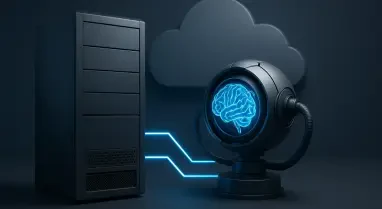
Hardware-based Trusted Execution Environments provide a critical defense mechanism against unauthorized access by cloud administrators or high-level system users. For years, cybersecurity strategies focused almost exclusively on the twin pillars of data at rest and data in transit. Security leaders invested heavily in storage encryption and secure communication protocols like TLS 1.3 to ensure that information remained protected while sitting in a database or moving across a network. However, as the digital landscape shifted toward pervasive cloud utilization and high-performance computing, a significant gap emerged: data in use. Traditionally, for an application to process data, that information had to be decrypted in system memory, leaving it vulnerable to memory scraping, administrative snooping, and kernel-level exploits. This vulnerability became a glaring liability as organizations moved sensitive workloads into shared environments where they no longer maintained physical control.
1. Identify High-Stakes Operations for Strategic Implementation
Prioritizing where to deploy confidential computing requires a nuanced understanding of risk profiles rather than a blanket application across all enterprise assets. CISOs must first categorize workloads that involve highly sensitive artificial intelligence inference or proprietary intellectual property that provides a competitive edge. For instance, in the financial sector, high-frequency trading algorithms and fraud detection models represent critical assets where exposure would result in catastrophic loss or regulatory failure. By isolating these specific operations within secure enclaves, organizations ensure that even if the underlying operating system or hypervisor is compromised, the sensitive logic and associated data remain shielded from unauthorized visibility. This targeted approach allows security teams to manage costs and complexity while providing the highest level of protection to the business components that are most likely to be targeted by nation-state actors or organized crime syndicates.
Beyond financial data, the healthcare and pharmaceutical industries face unique challenges that necessitate hardware-level isolation for data processing. Patient records and genomic data are subject to increasingly strict privacy laws, yet they are also essential for training the next generation of diagnostic AI models. Confidential computing enables multi-party computation where multiple hospitals or research institutions can collaborate on a single dataset without any party ever seeing the raw, unencrypted information of others. This collaborative security model ensures that the processing of regulated customer records happens in a black-box environment, satisfying both innovation needs and legal mandates. When identifying these high-stakes operations, security leaders should evaluate the potential impact of a data breach not just in terms of immediate financial cost but also regarding the long-term damage to brand reputation. Selecting these initial use cases provides a roadmap for a broader hardware rollout.
2. Evaluate Vulnerabilities in AI Workflows for Data Safety
The rapid integration of large language models and specialized AI agents into business processes has introduced a new class of security vulnerabilities that traditional perimeters cannot address. Many organizations have deployed AI solutions without fully auditing the path that sensitive data takes during the inference process, often sending prompts and corporate secrets to third-party cloud providers. CISOs must determine where these models are hosted and assess whether the provider has the capability to inspect the inputs and outputs of the model. Prompt injection attacks and the potential for model weights to be stolen or manipulated pose significant risks to the integrity of business logic. Without a secure execution environment, the data provided to an AI model at runtime is essentially public to anyone with administrative access to the underlying hardware. Evaluating these workflows requires a deep dive into the technical stack to ensure that sensitive information never leaves a trusted environment in a plaintext format.
Establishing a secure architecture for AI is no longer a luxury but a fundamental requirement for maintaining a competitive advantage in a data-driven economy. Security leaders should scrutinize how inference data is handled at the edge and within centralized data centers, looking for gaps where information might be exposed in system memory. This evaluation involves identifying who has visibility into user prompts and whether the model outputs are stored or logged in ways that bypass standard encryption controls. By implementing confidential computing, businesses can create a “confidential AI” framework where the model itself and the data it processes are both locked inside an enclave during the entire execution cycle. This approach balances the need for rapid business growth with the necessity of stringent data safety, ensuring that the adoption of cutting-edge technology does not come at the expense of security. Continuous monitoring and auditing of these AI workflows will help detect any deviations from the established baseline.
3. Prepare for Hardware-Based Trust Models and Zero-Trust Strategy
The evolution of cybersecurity is currently witnessing a fundamental shift from software-defined protections to hardware-rooted trust models. As attackers become more proficient at bypassing traditional firewalls, endpoint detection systems, and even operating system kernels, the hardware layer represents the final frontier of defense. CISOs must familiarize their technical teams with concepts such as remote attestation, which allows a system to prove its integrity to a remote party before any sensitive data is transmitted. This process ensures that the software is running on genuine, untampered hardware and that the secure enclave is correctly configured. Incorporating these hardware-level protections into a long-term zero-trust strategy provides a robust defense against sophisticated threats that target system memory. By moving the root of trust from a fallible human administrator or a complex software stack to the silicon itself, organizations can achieve a level of assurance that was previously impossible in shared cloud or edge computing environments.
Preparation for this transition also involves a cultural shift within the security department and the broader IT organization. Teams must learn to manage cryptographic keys that are tied to hardware identities rather than just user credentials or certificates. Hardware-level isolation must be integrated into the deployment pipeline, ensuring that every sensitive application is automatically provisioned within a Trusted Execution Environment. This transition requires a re-evaluation of current vendor relationships to ensure that cloud providers and hardware manufacturers are committed to supporting open standards for confidential computing. As the industry moves toward a state where security is verified rather than assumed, the ability to provide cryptographically sound evidence of data protection becomes a major differentiator for service providers. Investing in the training and tools necessary to support these hardware-rooted models today will pay dividends in the future as the threat landscape continues to evolve toward invasive memory-based attacks and firmware exploits.
4. Strategic Integration of Confidential Computing for Long-Term Resilience
The implementation of confidential computing served as a transformative step for organizations seeking to maintain privacy while operating in an increasingly interconnected and AI-centric world. By shifting focus toward the protection of data in use, security leaders successfully addressed the final major gap in the traditional data protection lifecycle. The move to hardware-based trusted environments allowed for the secure processing of highly regulated information, even in public cloud settings where physical control was absent. Organizations that prioritized these technologies early on gained a significant advantage by enabling secure collaboration and the safe deployment of advanced AI models. This proactive stance not only mitigated the risks associated with insider threats and sophisticated external actors but also provided a clear framework for complying with rigorous global data sovereignty mandates. The transition to a hardware-rooted security model effectively laid the groundwork for a more resilient and trustworthy digital infrastructure.
Actionable next steps for the modern CISO involved a comprehensive audit of existing cloud contracts to ensure that confidential computing features were available and active. Many organizations found that while the hardware was already in place, the software configurations needed adjustment to take full advantage of secure enclaves. Integrating these features into the broader zero-trust framework allowed for more granular access controls and enhanced visibility into runtime operations. Furthermore, engaging with developers to ensure that new applications were designed with hardware isolation in mind proved essential for long-term success. By fostering a deep collaboration between security, IT operations, and business units, leaders ensured that security was a facilitator of innovation rather than a roadblock. The adoption of confidential computing ultimately moved beyond a technical checkbox to become a core component of the corporate risk management strategy, providing the necessary assurance that the most sensitive data remained private throughout its entire lifecycle.