Vernon Yai is a preeminent authority on the intersection of data governance and emerging technologies. As a seasoned expert in privacy protection and risk management, he has spent his career analyzing how the rapid expansion of artificial intelligence affects the fundamental rights of individuals. Today, he joins us to discuss the growing legal tension surrounding social media platforms and the non-consensual use of biometric data for AI development. We explore the massive legal battles currently unfolding in federal courts, the technical reality of “faceprints” found in hidden code, and the ethical implications when personal memories are rebranded as corporate assets for training generative models.
Social media platforms often treat user-uploaded images as a “data advantage” for training generative AI and developing biometric systems. How does this practice challenge current privacy laws and what risks does it pose to users who never intended their personal photos to be used in this manner?
We are witnessing a fundamental and somewhat jarring shift in how “public” data is defined by major tech corporations. When a chief product officer publicly describes your family photos and personal memories as a “data advantage,” they are essentially viewing your life as a proprietary fuel source for models like Emu and Muse Image. This creates a massive friction point with laws like the Illinois Biometric Information Privacy Act because most users consented to share a photo with friends, not to have their unique physical features harvested for a machine-learning training set. The risk here is that once these images are processed into biometric signatures, that data exists in a form that is far more sensitive and permanent than a simple digital snapshot. For the parents involved in these lawsuits, there is a deep, emotional concern that their children’s identities are being indexed into systems like NameTag without any clear path to opt out or delete that information.
The recent litigation specifically mentions “NameTag” and the use of “faceprints” extracted from millions of photos. From a technical and legal standpoint, why is the distinction between a simple photo and a biometric signature so critical for the outcome of these cases?
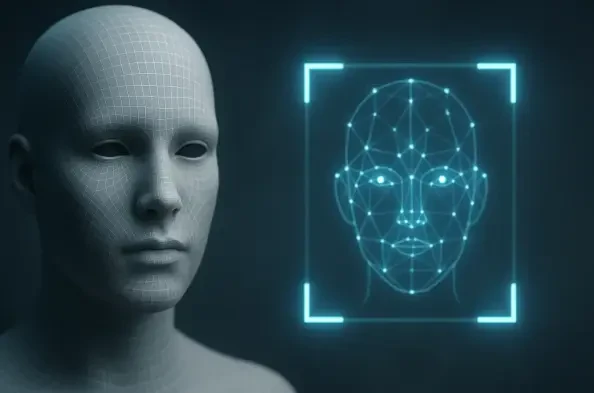
The distinction is everything because a “faceprint” is effectively the digital DNA of your identity, and that is why it sits at the center of the current federal case in Chicago. While a photo is just a static image, a biometric signature is a mathematical representation of your facial geometry that can be used to identify you across different platforms and even in the physical world via smart glasses. The complaint highlights that Meta’s NameTag system was designed to turn faces captured by glasses into these signatures and compare them against a database configured to receive updates directly from the company. By allegedly extracting this information from Facebook and Instagram images without explicit notice, the company moves beyond simple data hosting into the territory of high-stakes surveillance. This is why the plaintiffs are so adamant about the “biometric” label; it shifts the conversation from a copyright or terms-of-service dispute to a fundamental violation of bodily and digital privacy.
With potential damages reaching $5,000 per intentional violation under Illinois law, and a class size that could reach millions of people, we are looking at astronomical figures. How do these massive financial risks influence the way tech giants design their AI infrastructure and user consent protocols?
When you do the math on $5,000 for each intentional violation or $1,000 for negligent ones, multiplied by a class that could number in the millions, the potential liability is enough to threaten even the largest balance sheets. These figures are designed to be “liquidated damages,” meaning they serve as a massive deterrent to ensure companies don’t just treat privacy violations as a minor cost of doing business. From a governance perspective, these numbers should force a “privacy by design” approach where consent is the primary feature rather than a buried clause in a 50-page document. However, we still see situations where code for features like NameTag is secretly embedded in apps downloaded over 50 million times before any public announcement. It suggests a high-stakes gamble where companies weigh the potential for AI dominance against the risk of multi-billion dollar settlements for harvesting data dating back to September 4, 2021.
Meta claims they haven’t shipped a universal face database and that they are being transparent, yet code was found in an app downloaded 50 million times. How can regulators and users bridge the gap between corporate “transparency” and the reality of hidden code and non-consensual data harvesting?
The gap between corporate PR statements and the underlying binary code is where the most dangerous privacy violations tend to hide. Even if a spokesperson claims they aren’t building a “universal face database,” the discovery of hidden code in an app with 50 million downloads suggests a level of preparation and intent that contradicts the “transparency” narrative. To bridge this gap, we need much more rigorous, independent auditing processes where researchers can verify whether systems like NameTag are truly dormant or if they are quietly generating biometric data in the background. Transparency isn’t just about saying you’ll take a “thoughtful approach” in the future; it is about being honest about the training processes for Muse and Emu that have already occurred. Users are rightfully skeptical when they see features that allow people to generate images based on public accounts, only for the company to admit they “missed the mark” and remove the feature days later.
What is your forecast for the future of biometric privacy in the age of generative AI?
I believe we are entering a period of intense legal correction where the “move fast and break things” era of data harvesting will finally hit a brick wall of mandatory “opt-in” requirements. Over the next two years, the “data advantage” that companies currently enjoy from scraping social media will likely be curtailed by a patchwork of stringent state laws that treat biometric signatures as strictly protected personal assets. We will see a surge in lawsuits similar to those filed by the Alvarez and Wahl families, which will eventually force the industry to move toward using synthetic data instead of relying on millions of real-life faces. The massive financial risks associated with biometric laws will make it too expensive to be reckless, leading to a future where AI development is much more segmented and respectful of individual boundaries. Ultimately, the era of treating user uploads as a free-for-all resource for generative AI is coming to a very expensive and legally mandated end.