
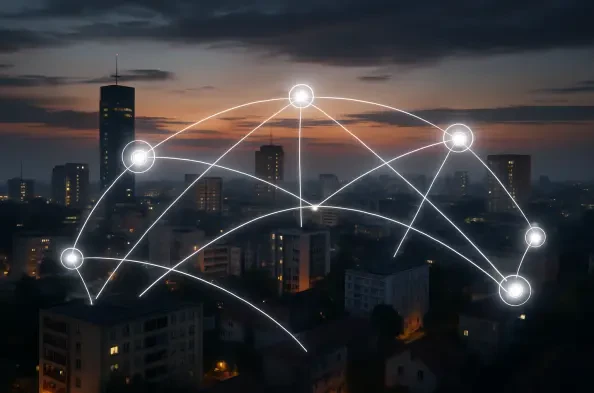
As the Russian digital landscape undergoes a radical transformation characterized by tightening state control and the systematic dismantling of traditional circumvention tools, a growing segment of the population is turning toward decentralized communication technologies that do not rely on a central internet backbone. While the Kremlin has intermittently delayed aggressive measures like charging fees for virtual private network traffic, the broader campaign to isolate the domestic network remains a top priority for state regulators. In response, a grassroots movement of tech-savvy citizens is deploying mesh networks and radio-based messaging systems to ensure that communication remains possible even if the national gateway is completely severed. These tools, which range from specialized hardware nodes to innovative software protocols, represent a significant shift from traditional censorship-evasion techniques. Already, it is estimated that more than 10,000 individuals in the Moscow metropolitan area alone have integrated these decentralized solutions into their daily routines. This surge in interest is not merely the domain of professional hackers; it increasingly involves a diverse demographic of amateur radio enthusiasts, civil society volunteers, and those preparing for a potential total internet blackout. By bypassing the centralized infrastructure of major telecommunications providers, these users are creating a parallel digital reality that is exceptionally difficult for state sensors to monitor or disable through conventional means.
1. Overview of the Decentralized Communication Movement
The contemporary Russian internet environment has entered a period of extreme volatility where traditional methods of accessing restricted information are being systematically neutralized by the authorities. For years, citizens relied on standard encryption and proxy services to navigate around the growing list of blocked websites and social media platforms. However, as the government implements more sophisticated deep packet inspection and whitelisting protocols, the vulnerability of centralized networks has become painfully obvious. This realization has sparked a widespread interest in decentralized communication tools such as Meshtastic, MeshCore, and DeltaChat, which offer alternatives to standard messaging applications that are beholden to server availability and state-controlled gateways. These tools are being framed by the community as essential infrastructure for a digital apocalypse, where the goal is to maintain a baseline of connectivity through any available medium. The movement is particularly strong among groups who prioritize privacy and autonomy, seeing decentralized mesh technology as the ultimate safeguard against the total collapse of digital freedom in the country.
What began as a niche interest for radio enthusiasts and “preppers” has rapidly expanded into a broader social phenomenon as the threat of a complete network collapse becomes more tangible. In Moscow and other major urban centers, the density of users is now high enough to support a functioning peer-to-peer infrastructure that operates entirely independently of cellular towers and fiber-optic cables. This user base is increasingly organized, sharing technical knowledge through encrypted channels and physical meetups to build a resilient network that can withstand aggressive state interference. The adoption of these technologies is driven by a profound lack of trust in official communication channels and a desire for tools that cannot be deactivated with a single command from a central authority. As more people join the network, the effectiveness of the mesh system increases, creating a snowball effect where the utility of the hardware grows in tandem with the size of the community. This evolution marks a transition from individual acts of digital resistance to the creation of a collective, self-sustaining communication ecosystem that operates in the shadows of the state-controlled internet.
2. Deploying Meshtastic Hardware and Software
To establish a functional radio-based communication link within this decentralized ecosystem, users typically begin by sourcing a specific set of hardware components designed for low-power, long-range data transmission. The primary building block for such a setup is an ESP32 LoRa board, with the Heltec V3 being one of the most widely recommended models due to its balance of cost and performance. Once the core board is acquired, it must be paired with a compatible antenna—often upgraded from the basic versions included in kits to ensure better signal penetration in dense urban environments. Users then typically add a lithium-polymer battery and a protective case, which can be 3D-printed or purchased separately, to create a portable “node.” The total cost for such a setup remains relatively accessible, often ranging from 2,000 to 10,000 rubles depending on the level of assembly and the quality of the peripherals. This affordability is a key factor in the rapid proliferation of the technology across various socioeconomic groups who are eager to maintain a secondary line of communication.
The second phase of deployment involves retrieving and installing the necessary software to turn the hardware into a specialized communication device. Users must download the latest firmware from the official Meshtastic project website and flash it onto the ESP32 board using a standard computer connection. Following this, the mobile application is installed on a smartphone, which serves as the primary interface for composing and reading messages. The radio module is then synced to the phone via Bluetooth or Wi-Fi, allowing the handheld device to act as the brain of the operation while the radio node handles the physical transmission of data. A critical step in the setup process is the calibration of regional parameters, where users must set their devices to the unlicensed 868 MHz frequency band to avoid unwanted attention from regulatory bodies. They must also adjust the transmitter’s power settings to ensure they comply with local laws that limit unlicensed broadcasts to 25 mW. Once these steps are complete, the user can broadcast and receive encrypted text messages that are converted into radio signals and relayed across the growing web of neighboring nodes.
3. The Mechanics of the “Mesh” Relay System
The fundamental strength of the mesh network lies in its ability to facilitate communication over distances far exceeding the range of a single transmitter by utilizing a cooperative relay process. When a user initiates a transmission, their node sends out an encrypted data packet that is designed to be picked up by any other active node within a 5-to-15-kilometer radius. Because the signal propagates via radio waves in the LoRa standard, it can penetrate obstacles more effectively than standard high-frequency signals, though urban density still plays a significant role in determining the effective range. Once a nearby node identifies the incoming packet, it automatically begins the process of passing the message along to the next device in the vicinity. This intermediate device does not have the keys to decrypt the content of the message, but it serves as a crucial link in the chain, recording the relay and rebroadcasting the signal to expand its reach. This collaborative architecture turns every user into a miniature cellular tower, creating a collective infrastructure that is owned and operated by the community itself.
As a message travels through the network, the system carefully tracks the number of “hops” it has taken between individual nodes to prevent the network from becoming congested with redundant signals. By default, most Meshtastic configurations allow for up to three hops, though advanced users often increase this limit to seven to enable communication across larger geographical areas like the sprawling suburbs of St. Petersburg or Yekaterinburg. Each relay point along the path ensures that the signal remains strong enough to reach the next recipient, effectively creating a “bucket brigade” for digital data. When the packet finally reaches the node of the intended recipient, the device recognizes the unique address and converts the radio signal back into a readable text message on the user’s smartphone app. This final delivery confirms the success of the peer-to-peer transmission, proving that meaningful communication can occur without a single byte of data passing through a government-monitored internet exchange point. The decentralized nature of this system means that even if half of the nodes in a city were to be deactivated, the network would simply reroute messages through the remaining active devices.
4. Bridging Mesh Networks with the Internet
While the primary appeal of mesh networks is their independence from the traditional internet, enthusiasts have developed ingenious ways to expand their utility by creating bridges between the two worlds. One of the most practical applications involves integrating radio nodes with email protocols, allowing users to fetch and send brief electronic messages without a direct cellular or fiber connection. This is achieved by designating certain nodes as gateways that possess intermittent or secondary access to the global network, perhaps through a satellite link or a highly restricted but functional wired connection. These gateways act as a post office for the mesh network, collecting outgoing messages from radio users and forwarding them to the broader internet when possible. Conversely, incoming emails can be compressed into small data packets and broadcast over the mesh, providing a lifeline for those who are otherwise completely cut off from international communication. This hybrid approach ensures that the local mesh does not become an isolated island but remains a resilient extension of the global information space.
Another sophisticated method of information dissemination within the mesh involves the use of single-board computers, such as the Raspberry Pi, to scrape content from popular platforms like Telegram and rebroadcast it over radio waves. Because Telegram remains a central hub for news and coordination despite repeated blocking attempts, maintaining access to its data streams is a top priority for the decentralized community. Users configure these small computers to monitor specific channels for text updates, which are then automatically reformatted and injected into the Meshtastic network. This allows anyone with a simple radio node to receive live news feeds and emergency alerts even if their smartphone has no data service and their home internet is disabled. By turning individual nodes into information hubs, the community ensures that critical data can flow from the few remaining points of internet access to thousands of users across a city. This bridging technology transforms the mesh from a simple walkie-talkie replacement into a powerful tool for maintaining social awareness and organizational capacity during periods of intense digital censorship.
5. Advanced Alternatives: MeshCore and Reticulum
As the community of decentralized network users grows, more advanced protocols are emerging to address the limitations of early mesh technologies. One such development is the MeshCore protocol, which introduces a more sophisticated architectural distinction between different types of devices on the network. In this system, a clear line is drawn between “companions,” which are the end-user devices like smartphones and handheld nodes, and “repeaters,” which serve as dedicated infrastructure components designed for high-volume traffic. This distinction allows for much longer and more stable transmission chains, with some configurations supporting up to 64 hops between the sender and the recipient. By optimizing the way data is routed through the network, MeshCore significantly reduces the latency and collision issues that can plague simpler mesh systems as they scale. This makes it an ideal solution for creating a regional backbone that can connect entire districts or even small neighboring towns, providing a level of connectivity that rivals traditional telecommunications for basic text-based interactions.
Beyond the specific hardware of LoRa devices, the Reticulum protocol represents an even more ambitious vision for a fully decentralized and medium-agnostic digital world. Reticulum is designed to function as a networking stack that can run over almost any physical layer, ranging from standard ethernet cables and Wi-Fi to amateur radio frequencies and even laser-based optical links. Its primary goal is to build a “web” that is inherently resilient to centralized control and surveillance, using end-to-end encryption and a lack of central directories as its core principles. Unlike the traditional internet, which relies on a hierarchical system of IP addresses and domain names, Reticulum uses a flat address space that allows devices to find each other and establish secure links regardless of their physical location or connection method. This makes it an exceptionally powerful tool for those looking to build a permanent, unblockable infrastructure that can adapt to whatever technical restrictions the state might impose. For the Russian tech community, Reticulum offers a glimpse into a future where the concept of a “sovereign internet” becomes irrelevant because the underlying network is owned by everyone and no one at the same time.
6. Operating via Bluetooth and Email Messengers
For individuals who may not have the technical expertise or the physical components to build dedicated radio nodes, software-only solutions provide a vital alternative for maintaining proximity-based communication. Tools like BitChat have gained significant traction by utilizing the Bluetooth mesh capabilities already built into modern smartphones to create a serverless messaging environment. This technology allows people in close physical proximity, such as those attending a public gathering or living in the same apartment complex, to link their phones into a temporary network. Each phone acts as a relay, passing encrypted messages to other users within Bluetooth range until the data reaches its intended destination. This method was famously utilized during periods of civil unrest in regions like Uganda, and it has since been adapted by Russian users as a quick-deployment tool for local coordination. While the range is limited compared to radio-based systems, the lack of specialized hardware makes it an extremely accessible option for the general population.
Another highly effective strategy for bypassing digital restrictions involves the use of DeltaChat, a unique messenger that operates over the existing global email infrastructure. To the user, DeltaChat looks and feels like a standard instant messaging app, but every message sent is actually formatted as an email and transmitted via SMTP and IMAP protocols. The setup process is straightforward: a user installs the application and links it to an existing mailbox from a provider like Yandex or Mail.ru. To enhance security and privacy, advanced users often configure the app to use specialized “chatmail” servers and encryption relays that ensure the content appears as unreadable, non-standard data to the email provider. This approach is particularly powerful because it leverages the “whitelist” strategy often used by state censors; while authorities might block the servers of dedicated messaging apps like WhatsApp or Signal, they are much more hesitant to block major email providers that are essential for business and government operations. By hiding messenger traffic inside ordinary email activity, users can maintain reliable communication even when the most popular social apps are completely inaccessible.
7. Expert Recommendations for Total Shutdowns
As the possibility of a total severance from the global internet becomes a matter of serious discussion, security experts have begun providing a roadmap for maintaining connectivity under the most extreme conditions. One of the primary recommendations for high-stakes users is to coordinate with international contacts to host private, dedicated servers in countries with unrestricted internet access. Unlike commercial VPN services, which are easy for state regulators to identify and block due to their large user bases and predictable traffic patterns, a private server is a much smaller target. A friend or colleague abroad can set up a custom entry point that is known only to a few individuals, making it significantly harder for automated censorship systems to flag the connection. This personal tunnel serves as a secret doorway to the outside world, providing a level of security and reliability that public tools simply cannot match in a highly restricted environment.
Building on the idea of private servers, technical experts also emphasize the importance of using non-standard, custom protocols that are specifically designed to evade detection. Standard VPN traffic has a distinct digital signature that is easily recognized by deep packet inspection tools, but custom tunnels can be configured to look like entirely different types of activity. This often involves masking data streams to resemble ordinary web browsing, video streaming, or even the metadata generated by common household smart devices. By disguising the nature of the traffic, users can slip through “whitelist” filters that only allow certain approved protocols to pass through the national gateway. Additionally, establishing multiple redundant paths for data—using different protocols and different entry points—is recommended to ensure that the failure of one method does not result in a total loss of connectivity. These advanced obfuscation techniques are the final line of defense for those who must maintain access to the global information flow regardless of the state’s efforts to isolate the domestic digital space.
8. Security Risks and Future Considerations
While decentralized and radio-based networks offer a powerful means of bypassing digital censorship, they are not without significant security risks that users must carefully navigate. One of the most immediate threats is the physical nature of radio transmissions, which can be tracked using specialized direction-finding equipment. Authorities can deploy vehicles equipped with sensitive antennas to triangulate the physical location of a transmitter by analyzing signal strength from multiple points. This means that while the content of a message might be encrypted and unreadable, the location of the person sending it could be compromised. In an environment where the state views unauthorized communication as a threat to national security, the simple act of operating a node could lead to unwanted legal attention. Users are often advised to be mindful of their transmission patterns and to avoid operating powerful antennas from fixed, easily identifiable locations for extended periods of time to minimize the risk of being discovered by signal intelligence units.
The legal landscape surrounding amateur radio and decentralized networking is also becoming increasingly treacherous, with authorities drawing on both new regulations and historical precedents. In neighboring Belarus, for instance, there have been cases where amateur radio operators faced severe charges, including treason, for allegedly intercepting or interfering with official state communications. Many observers in Russia fear that the legal framework is returning to a restrictive, Soviet-style model where all civilian radio equipment is strictly monitored and any unauthorized data transmission is viewed with suspicion. Enthusiasts developed a resilient roadmap for the future that emphasized the need for even greater decentralization and the integration of mobile, low-profile hardware that could be easily hidden or discarded if necessary. By prioritizing these safety measures and staying informed about the evolving tactics of state monitoring, the community successfully maintained its autonomy through the mid-2020s. This proactive approach to security ensured that the decentralized movement remained a viable alternative for those seeking to protect their digital rights in an increasingly isolated nation.





