
Data Segmentation & Isolation

The traditional perimeter has not just moved; it has effectively vanished in an landscape where 79% of cybersecurity professionals now cite the sheer velocity of automated exploitation as their primary existential threat. For decades, the Virtual Private Network (VPN) served as the undisputed backbone of remote connectivity, relying on the simple

The sudden realization that a software license might be costing more than the value it generates has sent a shiver through the modern executive suite. As artificial intelligence evolves from a novelty into a core operational layer, the traditional Software-as-a-Service (SaaS) model is facing a reckoning that many industry analysts describe as an

The long-standing reliance on massive, centralized data centers has finally met its match in the uncompromising laws of physics and the skyrocketing costs of moving terabytes of raw telemetry across the globe. For years, the industry operated under the assumption that the cloud was an infinite, frictionless bucket for data, but the reality of 2026
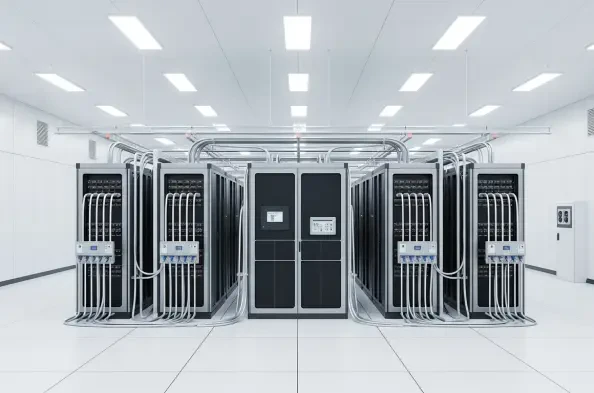
The era of migrating every conceivable enterprise workload to the public cloud has officially reached its zenith, giving way to a more calculated and physically grounded infrastructure philosophy. In the current landscape, the blind rush toward off-site abstraction is being replaced by a sophisticated "post-cloud" framework where the data center

Modern corporations have spent the last few years feeding their most sensitive data into massive, general-purpose neural networks only to realize that a model trained on the entirety of the open internet often fails to grasp the specific vernacular of a specialized semiconductor lab or a Swiss private bank. While the first wave of generative AI

The traditional boundary between maintaining corporate records and executing business logic is dissolving as enterprise platforms move toward a model defined by autonomous agency rather than manual data entry. At the heart of this shift is Workday’s recent strategic acquisition of Sana, a move valued at $1.1 billion that signals a departure from