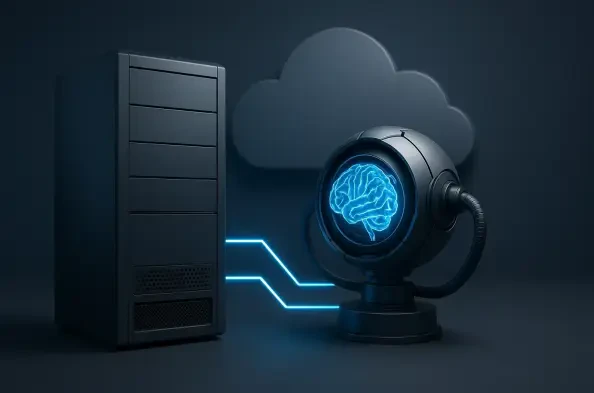
Strategic alliances with firms like Sarvam and Guardian Life indicate a growing trend where Tier-1 IT firms seek deep technical integrations to capture dedicated digital transformation budgets. This shift reflects a move away from generic consulting toward high-stakes technological collaboration that secures the very core of enterprise operations. As organizations rush to deploy large language models and autonomous agents, the vulnerability surface has expanded beyond traditional boundaries, necessitating a more robust defense mechanism. HCLTech has addressed this urgency by deepening its relationship with CrowdStrike, integrating the Falcon Guardian platform into its global cybersecurity infrastructure. This alignment is not merely a software procurement but a fundamental reimagining of how managed service providers handle model-specific governance and resilience in an era where data integrity is the primary currency. By merging advanced threat detection with specialized AI security, the partnership aims to close the visibility gap that often hampers digital adoption within the Fortune 500 landscape.
The Strategic Response: Protecting the Neural Networks
Real-Time Model Governance: Guarding the Core
The technical backbone of this initiative relies on the deployment of CrowdStrike Falcon Guardian across HCLTech’s extensive network of Cybersecurity Fusion Centers. These centers now utilize automated model-specific governance to protect against emerging threats like prompt injection, data poisoning, and unauthorized model inversion. Unlike traditional endpoint security, which focuses on hardware and user access, this integration monitors the internal logic and data flow of AI applications in real-time. By observing how large language models interact with sensitive corporate databases, the system can identify anomalous patterns that suggest a breach of protocol or an adversarial attack. This proactive stance ensures that the data used for training and fine-tuning remains uncorrupted, which is vital for maintaining the accuracy of generative outputs. Furthermore, the collaboration leverages continuous monitoring to ensure that AI agents do not exceed their authorized operational boundaries during complex tasks.
Shadow AI Exposure: Expanding Visibility
Beyond immediate threat detection, the integration focuses on the broader resilience of the AI lifecycle, from initial data ingestion to the deployment of autonomous agents. HCLTech has expanded its Continuous Threat Exposure Management services to provide comprehensive visibility into the hidden risks associated with shadow AI—instances where employees use unauthorized tools that bypass corporate security. By embedding CrowdStrike’s telemetry directly into their managed service workflows, HCLTech allows enterprises to maintain a unified security posture across hybrid cloud environments. This approach effectively mitigates the risks associated with the rapid decentralization of compute power and the proliferation of local AI instances. The strategy involves a shift from reactive patching to a sophisticated, data-driven defense that anticipates potential vectors of exploitation before they can be weaponized. Consequently, businesses can experiment with advanced automation with the confidence that their data are shielded.
Economic Foundations: The Cost of Intelligence
Fiscal Performance: Revenue in the AI Era
The financial implications of this strategic pivot are already visible in HCLTech’s recent performance metrics, marking a departure from the low-margin commodity outsourcing model. For the first quarter of the current fiscal period, the company reported a consolidated revenue of ₹34,579 crore, representing a substantial 13.9% increase compared to the previous year. Net profits reached ₹4,626 crore, supported by an EBIT margin of approximately 16.86%, which underscores the profitability of specialized cybersecurity and AI consulting services. This growth suggests that global enterprises are willing to pay a premium for managed services that offer both technological depth and operational security. By positioning itself as a high-value consultant, HCLTech has insulated its revenue streams from the automation-driven commoditization that has impacted standard application development. The investment in the ₹14,257 crore AI Data Center in Bhubaneswar exemplifies a commitment to building the physical infrastructure.
Operational Resilience: Lessons from Implementation
Stakeholders recognized that the synthesis of advisory services and technical implementation provided a necessary bridge for navigating the complexities of modern LLM deployment. The decision to secure the entire AI ecosystem rather than just the perimeter allowed organizations to move forward with sovereign AI initiatives that maintained strict compliance with regional data regulations. It was clear that the successful integration of Falcon Guardian had established a new benchmark for managed security service providers, moving the industry toward a model of shared responsibility and proactive governance. Leaders who adopted this integrated framework observed a marked reduction in security incidents and a faster time-to-market for their internal AI projects. Looking toward future developments, the focus transitioned toward refining autonomous defense mechanisms that could self-heal in response to vulnerabilities. This evolution suggested that the most resilient enterprises were those that viewed security as a foundational enabler.