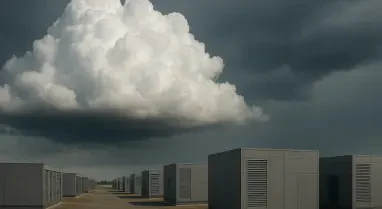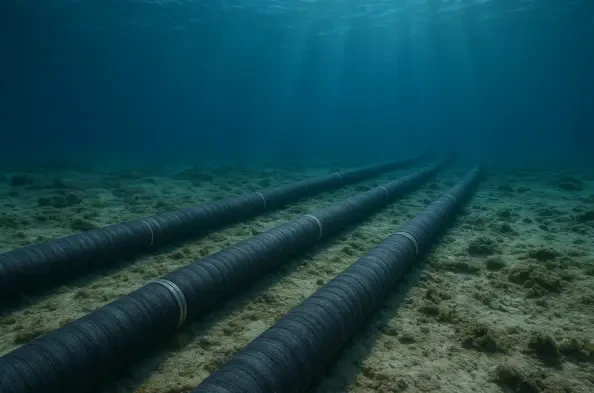
The British-led Nordic Warden initiative aims to coordinate maritime surveillance and share intelligence regarding suspicious vessel activity near sensitive pipelines. This operational shift acknowledges a harsh reality: the global economy does not float in an ephemeral “cloud” but rests on thousands of miles of fiber-optic cables snaking across the ocean floor. These submerged lines represent the true nervous system of the twenty-first century, facilitating trillions of dollars in transactions and securing military communications. While satellites often capture the public’s imagination, they lack the massive bandwidth necessary to sustain the current digital age. Approximately 95% of all intercontinental data traffic flows through these cables, many of which are no thicker than a garden hose and remain largely unprotected in international waters. This physical vulnerability has transformed the seabed into a critical theater of national security, where the ability to disrupt information flow serves as a potent weapon of modern statecraft. As geopolitical tensions rise, the realization that these vital arteries can be severed with relative ease has forced a comprehensive reevaluation of maritime defense strategies across the Western world, shifting focus from digital firewalls to the physical protection of the ocean floor.
The Strategic Anatomy: Subsea Sabotage
Infrastructure: A Geopolitical Lever
The integration of undersea fiber optics into the foundational operations of modern nations has fundamentally altered the concept of critical infrastructure. Beyond simple telecommunications, these cables are now inextricably linked to national power grids, emergency response systems, and the underlying architecture of government services. When a cable is compromised, the disruption cascades through various sectors, causing immediate friction in international banking and high-frequency trading where even a few milliseconds of latency can result in catastrophic financial losses. This systemic dependence means that an adversary does not need to launch a kinetic strike on a capital city to induce chaos; instead, they can target the invisible conduits that sustain the daily functionality of a digital society. By manipulating or threatening these lines, a state actor can exert profound geopolitical pressure, effectively holding a nation’s economic and social stability hostage without firing a single shot on land. The strategic value of this infrastructure has surpassed its commercial origins, evolving into a primary lever for power projection in an era defined by global interconnectivity.
The Svalbard Incident: Case Study in Sabotage
A significant escalation in maritime tension occurred recently near the Svalbard archipelago, where Russian specialized units were observed conducting highly irregular maneuvers. The Main Directorate for Deep-Sea Research, known as GUGI, utilized advanced deep-sea vehicles to simulate the disabling of the vital fiber-optic links connecting Svalbard to mainland Norway. This region is of paramount importance because it hosts SvalSat, one of the world’s most critical ground stations for polar-orbiting satellites. These satellites are essential for environmental monitoring, global navigation, and, most importantly, high-level military intelligence. By demonstrating the capability to strike these specific cables, Russia sent a clear signal about its ability to “blind” Western surveillance networks and sever Arctic communications at will. This exercise was not merely a patrol but a sophisticated rehearsal for a new type of warfare that targets the junction points between space-based assets and terrestrial infrastructure. The incident underscored the reality that remote geographic locations, previously thought to be safe due to their isolation, are now primary targets in the expanding scope of maritime hybrid confrontation.
Gray Zone Warfare: Mechanics and Strategy
Ambiguity: The Logic of Plausible Deniability
Undersea sabotage is a textbook example of “gray zone” warfare, consisting of hostile actions designed to remain just below the threshold of open military conflict. Unlike a traditional missile strike or a naval blockade, which are unmistakable acts of aggression, a severed cable is shrouded in ambiguity. Damage can often be attributed to “accidental” causes such as a dragging anchor from a commercial fishing vessel, a shifting tectonic plate, or a technical malfunction in the cable’s outer shielding. This inherent lack of clarity allows an adversary to inflict severe economic and psychological damage while maintaining a level of plausible deniability that complicates a formal military response. For the victimized nation, the challenge lies in the difficulty of rapid attribution; by the time the source of the “accident” is identified through forensic underwater analysis, the geopolitical damage is already done. This strategy exploits the legal and operational gaps in international maritime law, creating a persistent state of insecurity where the boundary between a commercial mishap and a deliberate act of war becomes dangerously blurred.
Mapping Vulnerabilities: Patterns of Systematic Interference
Recent data analysis suggests that the increase in cable damage across the Baltic Sea and North Atlantic is far from coincidental. Between 2023 and 2025, the frequency of “unexplained” cable breaks reached levels that point toward a systematic testing of Western response times and repair capabilities. Maritime intelligence has tracked several “ghost vessels”—ships with disabled transponders—drifting suspiciously over areas where critical energy pipelines and data cables intersect. This activity indicates a long-term Russian strategy of mapping out a comprehensive target list for potential use during future escalations. By identifying the exact coordinates of the most vital nodes, an adversary can prepare to execute a coordinated multi-point strike that could overwhelm existing redundancy measures. This methodical preparation for sabotage serves as a psychological deterrent, forcing Western governments to divert immense resources toward patrolling thousands of miles of seabed. The objective is to create a constant sense of vulnerability, reminding NATO members that their domestic digital stability depends on a physical foundation that is being watched and cataloged by hostile actors every single day.
Structural Fragility: Economic and Social Impacts
Financial Stability: The High Cost of Latency
The financial implications of a coordinated campaign against subsea cables are staggering, given that modern global markets rely on microsecond-level synchronization to function. Any disruption to the primary links between financial hubs like New York, London, and Tokyo could trigger immediate market instability and erode investor confidence. Beyond the immediate loss of connectivity, the long-term economic damage stems from the specialized and sluggish nature of undersea repairs. There are a remarkably limited number of cable-laying and repair vessels available worldwide, and many of these ships are operated by private consortia with limited security protections. A persistent sabotage campaign could easily outpace the international community’s capacity to maintain the network, leading to a prolonged degradation of global trade. If the “repair-to-damage” ratio falls out of balance, the resulting digital gridlock would drive up the cost of doing business globally, potentially leading to a fragmentation of the internet as nations seek to build more localized and protected internal networks.
Global Inequity: The Risk to Isolated Nations
While large, technologically advanced nations may possess enough redundancy to reroute data through alternative paths or satellite backups, smaller states and island nations face a far more precarious situation. For these regions, the loss of even a single backbone line can lead to total digital isolation, effectively severing their connection to the global economy and essential international services. This creates a strategic imbalance where an aggressor can pick off “soft targets” to demonstrate power and resolve without necessarily confronting the full military weight of a major alliance. In such scenarios, the digital isolation of a small state serves as a warning to others, showcasing the fragility of the modern digital existence. This form of “connectivity coercion” allows a dominant maritime power to exert influence over the foreign policies of smaller nations by threatening their only link to the outside world. The protection of these vulnerable nodes has therefore become a humanitarian and economic necessity, as the digital divide between the well-protected and the exposed continues to widen under the pressure of hybrid maritime threats.
Defensive Integration: Securing the Digital Frontier
Militarized Surveillance: The New Maritime Doctrine
In response to these pervasive threats, Western military alliances have undergone a significant doctrinal shift, elevating undersea infrastructure to a primary defensive priority. Initiatives like Operation Baltic Sentry and the British-led Nordic Warden represent a new era of maritime security, where the protection of commercial hardware is no longer left solely to private telecommunications companies. This militarization of the seabed involves the deployment of sophisticated frigates, long-range maritime patrol aircraft, and specialized underwater drones capable of monitoring cable routes in real time. These unmanned underwater vehicles (UUVs) act as a persistent deterrent, patrolling the dark depths where human divers cannot reach and identifying unauthorized submersibles before they can reach their targets. This transition marks the end of an era of laissez-faire seabed management; the state has now stepped in to provide a necessary security umbrella for the physical assets that underpin the digital age. By integrating these assets into the national defense architecture, allies aim to transform the ocean floor from a vulnerable “no-man’s-land” into a monitored and defended space.
Intelligence Transparency: Deterring Hybrid Aggression
A key component of the current defensive strategy involves the deliberate declassification and publication of intelligence regarding Russian naval movements and specialized units like GUGI. By naming specific ships and detailing their suspicious activities near undersea nodes, Western agencies are attempting to strip away the anonymity that hybrid warfare relies on. This transparency serves as a powerful deterrent; when an adversary knows that their “covert” operations are being tracked and publicized in real time, the value of “plausible deniability” vanishes. Furthermore, this approach helps to build international consensus and legal justification for more robust maritime responses. Identifying the logic behind these undersea operations—paralleling the tactics used against civilian infrastructure in the Ukrainian theater—allows the international community to frame cable sabotage as a clear violation of international norms. This collective awareness is essential for creating a “resilient” digital backbone, where the political and economic cost of an attack is made so high that the risk to the aggressor eventually outweighs the perceived strategic benefits.
Establishing a Resilient Seabed Framework
The strategy for securing the digital backbone moved beyond mere observation and toward a proactive model of integrated deterrence and structural redundancy. Policymakers and military leaders recognized that physical guarding of every mile of cable was impossible, so they focused on creating a “self-healing” network through increased investment in diverse routing and rapid-deployment repair drones. The international community also pushed for a more robust legal framework that treated deliberate interference with undersea cables as a violation of sovereign territory, regardless of where the damage occurred. Enhanced public-private partnerships allowed for the installation of advanced sensors directly onto new cable segments, providing real-time data on nearby acoustic signatures and physical disturbances. These measures successfully elevated the risks for any actor attempting to exploit the “gray zone” of maritime conflict. By prioritizing the physical security of the internet as a fundamental component of national survival, the alliance established a new standard for maritime stability that protected both economic prosperity and collective security. This shift ensured that the invisible arteries of the modern world remained resilient against the rising tide of hybrid aggression.