The Hidden Toggle That Fixes Your VPN’s Biggest Performance Flaws
Navigating the digital landscape in 2026 requires a delicate balance between ironclad security protocols and the seamless speed necessary for high-performance computing tasks. Most users treat a Virtual Private Network as an all-or-nothing switch, assuming that total encryption must inevitably come at the cost of speed and local connectivity. This binary approach often results in significant frustration, as the very tools designed to protect personal data end up hindering productivity or entertainment. However, there is a specialized feature hidden in the settings menu of many modern applications that eliminates this compromise entirely, allowing individuals to stay protected where it counts while keeping high-bandwidth activities in the fast lane.
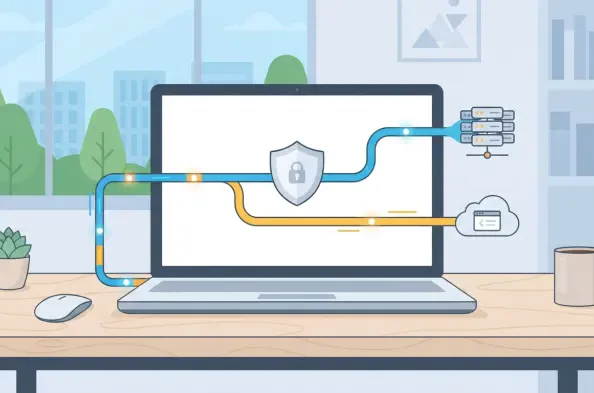
This feature, known as split tunneling, represents a logical advancement in the evolution of personal cybersecurity. It functions as a sophisticated traffic controller that allows specific data packets to travel through an encrypted tunnel while others move freely across the standard internet connection. By effectively managing this traffic, users can ensure that sensitive information, such as financial transactions or private communications, remains shielded from prying eyes without forcing every single background application to suffer the latency associated with heavy encryption. This versatility is essential for maintaining a modern digital lifestyle that demands both safety and efficiency.
Why One-Size-Fits-All Encryption Often Fails the Modern User
While the security benefits of a VPN—such as spoofing a location and thwarting ISP tracking—are undeniable, the “always-on” approach creates significant friction with modern digital services. A standard connection routes every single bit of data through an encrypted tunnel, which inherently increases latency and can lead to “VPN fatigue.” This phenomenon occurs when users, tired of slow loading times or blocked content, simply disable their security software altogether. Such an action leaves the device completely exposed to trackers and hackers, defeating the purpose of having a privacy tool in the first place.
Furthermore, total encryption often severs the connection to local network peripherals and smart home gadgets. When a VPN is active, a computer may lose the ability to “see” a wireless printer or a media server located in the same room, as the device is virtually transported to a different network. This creates a functional barrier for those who work from home or rely on a connected ecosystem. Additionally, banking applications and local news sites often flag foreign IP addresses as suspicious, leading to constant identity verification loops that disrupt the user experience.
Deciphering the Mechanics: App-Based vs. URL-Based Routing
Split tunneling functions as an intelligent traffic controller for an internet connection, creating a dual-pathway system for data. The most common iteration is app-based split tunneling, which allows a user to designate high-security programs, like a web browser or a financial app, to use the VPN while letting “low-risk” programs bypass the encryption. For instance, a resource-heavy video game can run on the direct internet line to minimize ping, while a browser remains hidden behind the VPN. This ensures that the most critical data is encrypted without sacrificing the performance of other software.
For those who prefer more granular control, some premium services offer URL-based tunneling, where rules are set based on specific domain names rather than entire applications. This allows a user to stay on a local network for most browsing but automatically trigger the VPN when visiting a specific social media site or an international streaming platform. While more advanced methods like route-based or policy-based tunneling exist, they are typically reserved for enterprise-level network management. For the average user, the ability to sort traffic by app or website provides more than enough flexibility to customize their digital footprint.
Expert Perspectives on Maintaining Privacy Without the Performance Hit
Security professionals often highlight that the best security tool is the one that remains active. By utilizing split tunneling, users avoid the common mistake of disabling their VPN for a quick task and forgetting to re-enable it. Industry experts note that this feature is a vital component of a permanent security posture, providing the necessary flexibility to keep the protection running in the background at all times. This “set-it-and-forget-it” convenience ensures that sensitive data remains shielded behind an encrypted bridge while local traffic remains unobstructed, effectively solving the usability debate.
Moreover, experts argue that this technology encourages better digital hygiene by forcing users to think about which applications actually handle sensitive data. Instead of blindly encrypting everything, individuals become more aware of their data flow and the specific risks associated with different platforms. This granular awareness, combined with the performance benefits of lower latency, creates a sustainable environment where privacy and speed coexist. As digital threats continue to evolve, the ability to selectively apply encryption has become an indispensable strategy for anyone serious about their online safety.
Practical Implementation: How to Configure Your Custom Tunnel
Setting up this feature is a straightforward process, although the interface varies slightly across different providers. In desktop environments like Windows, the procedure typically involves navigating to the settings or “cog” icon to find a dedicated Split Tunneling toggle. From there, it is possible to create a “whitelist” of apps to be protected or a “blacklist” of apps to be excluded. Once these rules are established, the software automatically manages the routing, ensuring that the user never has to manually intervene again.
The implementation of these granular controls moved the needle toward a more sustainable security model. Users who took the time to audit their application lists achieved a personalized digital environment that responded to specific security needs rather than applying a blanket solution. This proactive stance allowed for the seamless integration of privacy tools into daily life, proving that the most effective protection was the one that did not interfere with primary objectives. Consequently, the transition to a customized tunnel became the definitive method for balancing the scales of the modern web.