The rapid evolution of generative models and neural networks has reached a critical juncture where the physical distance between a researcher’s workstation and the primary compute cluster can no longer be ignored. For the better part of a decade, the narrative of digital transformation favored the total migration of enterprise assets to the cloud, yet the inherent friction of remote infrastructure has recently sparked a counter-movement toward local empowerment. This shift is not merely a rejection of cloud services but a calculated strategic response to the logistical bottlenecks that emerge when high-intensity creative work is tethered to a shared, distant resource. By bringing raw processing power back to the desk, organizations are effectively reclaiming the last mile of the development cycle, ensuring that the momentum of an inquiry is never stalled by network latency or scheduling queues that separate an engineer from their immediate computational goals. Proximity to power fosters a more fluid and rapid experimentation phase for all research.
Data Sovereignty: The Shield Against Compliance Bottlenecks
One of the most pressing catalysts for the return to local computing is the complex landscape of data governance and digital sovereignty. The most valuable assets an organization possesses—ranging from proprietary source code and trade secrets to sensitive medical records—are frequently subject to strict legal and compliance regulations that mandate strict localized storage. These rules often prohibit sensitive datasets from leaving a secure, physical facility, meaning that reliance on external cloud providers can bring critical development projects to a standstill. When engineers cannot upload their data to a remote cluster due to security protocols, the localized workstation becomes the only viable environment for meaningful work. Consequently, the ability to perform high-level inferencing and training on-site allows companies to maintain a rigorous security posture while continuing to innovate. This avoids the risk of data leaks and ensures that the intellectual property remains within the company’s control.
Beyond the legal constraints of data handling, the actual velocity of innovation is heavily dependent on the duration of the iteration loop during experimental phases. Artificial intelligence development is fundamentally an experimental science that requires constant testing, failure, and fine-tuning to achieve optimal results. Cloud environments often introduce significant delays through deep hardware queues and unexpected network latency, which can turn a fresh idea into a stale backlog item within hours. Local hardware allows researchers to maintain their psychological momentum, ensuring that the spark of a new hypothesis is tested immediately rather than waiting for an available instance in a distant data center. When a developer can see the results of a change in real-time at their desk, the creative process remains unbroken. This immediate feedback loop is essential for refining complex algorithms where small adjustments can lead to massive breakthroughs, providing a competitive edge over those stuck in queues.
Technical Sovereignty: Hardware Advancements in Deskside Systems
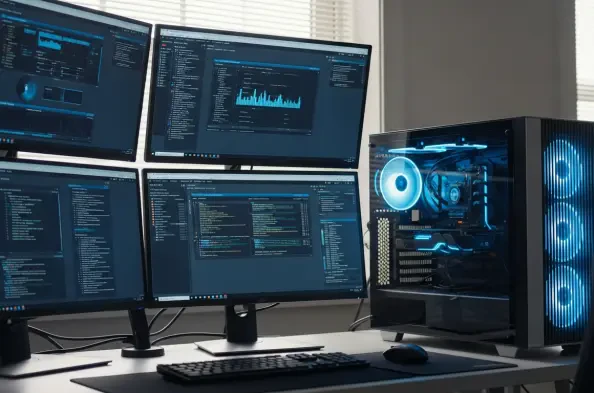
To bridge the gap between consumer workstations and massive enterprise data centers, a new category of deskside supercomputing has recently emerged. Systems like the ASUS ExpertCenter Pro ET900N G3 are specifically engineered to provide data-center-class capabilities directly within the developer’s immediate workspace. Equipped with massive unified memory and the cutting-edge NVIDIA Blackwell architecture, these machines allow specialized teams to develop and train models with hundreds of billions of parameters locally. This removes the logistical nightmare of transferring multi-terabyte datasets over external networks, which often consumes more time than the training process itself. By localizing these resources, organizations provide their best talent with the tools needed for frontier research without the overhead of remote management. This shift represents a democratization of supercomputing power, putting the performance of a server rack into a form factor that fits beside a desk, ready for deployment.
These local systems are built for professional-grade reliability and high-speed performance that rivals the capabilities of traditional remote clusters. By utilizing advanced interconnect technologies like NVLink, these workstations eliminate the internal data transfer bottlenecks that typically hinder consumer-grade personal computers. This hardware provides a secure, always-on environment where developers can build complex AI agents and autonomous assistants with absolute control over their local environment. Such stability is crucial for long-duration training sessions where even a minor network hiccup in a cloud environment could cause a complete failure of the job. Having the hardware physically present allows for direct monitoring and immediate hardware adjustments if necessary, ensuring that performance remains consistent throughout the project. The result is a dedicated, high-performance sandbox that is immune to the fluctuations of public internet traffic or shared resource contention found in public clouds.
Strategic Integration: Moving Toward a Hybrid Compute Ecosystem
The movement toward deskside compute is part of a broader trend of decentralization across the entire global technology sector in 2026. While the cloud remains an essential tool for training the most massive frontier models that require thousands of interconnected chips, the daily iteration and fine-tuning of models are shifting to a hybrid model. This approach offers significant strategic advantages for IT leadership by allowing them to optimize where specific workloads are executed based on cost and speed. By keeping the iterative phase local, organizations reduce their reliance on external providers for routine tasks, reserving expensive cloud credits for final, massive-scale deployment. This hybrid strategy ensures that the development pipeline is balanced between local exploration and global scaling. It empowers individual units to work independently, reducing the centralized burden on IT departments and allowing for more creative freedom across different departments within the larger enterprise.
The transition toward localized deskside compute established a new standard for organizational agility in the rapidly evolving landscape of machine intelligence. Leaders who identified the limitations of centralized structures early successfully integrated high-performance local hardware to bypass the inherent friction of the cloud. This strategic move ensured that the speed of innovation was limited only by the curiosity of the development team rather than the physical distance to a remote data center. Organizations sought to refine their hybrid strategies by auditing their current data workflows to identify which tasks benefited most from immediate local execution. They prioritized the acquisition of systems with unified memory and advanced interconnects to maintain compatibility with future model architectures. This proactive stance allowed teams to iterate without permission, turning local desks into the primary engines of creative breakthroughs while reserving the cloud for massive scaling efforts.